Leave Your Message
0%

Choosing the right Pp Containers in 2026 requires more than comparing prices or attractive product photos. Global buyers need dependable specifications, stable production, and clear communication. This guide examines ten leading options for food storage, household goods, laboratory supplies, and industrial packaging. Each selection is considered through practical buyer concerns, including material grade, wall thickness, lid fit, temperature tolerance, and shipping performance. Small details matter. A poorly fitted lid can damage an entire shipment.

The review also considers manufacturers such as Berry Global, Amcor, Jokey, and Plastipak, alongside specialized regional suppliers. Their products may differ in resin quality, molding precision, customization, and documentation. Buyers searching for Containers Plastic Containers should check whether polypropylene content is clearly identified. Food-contact claims should include appropriate testing records and market-specific compliance documents. Reputable suppliers should provide samples, factory information, quality procedures, and realistic lead times. Certification alone is not enough.

No ranking is flawless. Supplier capacity can change quickly, and online product pages sometimes hide important limitations. A container that performs well in a dry warehouse may struggle during humid ocean transport. That risk deserves attention. The final choices balance usability, durability, cost control, and responsible sourcing. They are intended as a practical starting point, not a substitute for sample testing or professional procurement review. Some buyers may prefer a less famous supplier after checking consistency, response speed, and after-sales support. That is a reasonable decision.

10 Best PP Containers for Global Buyers in 2026?

What Are PP Containers and Why Do Global Buyers Choose Them?

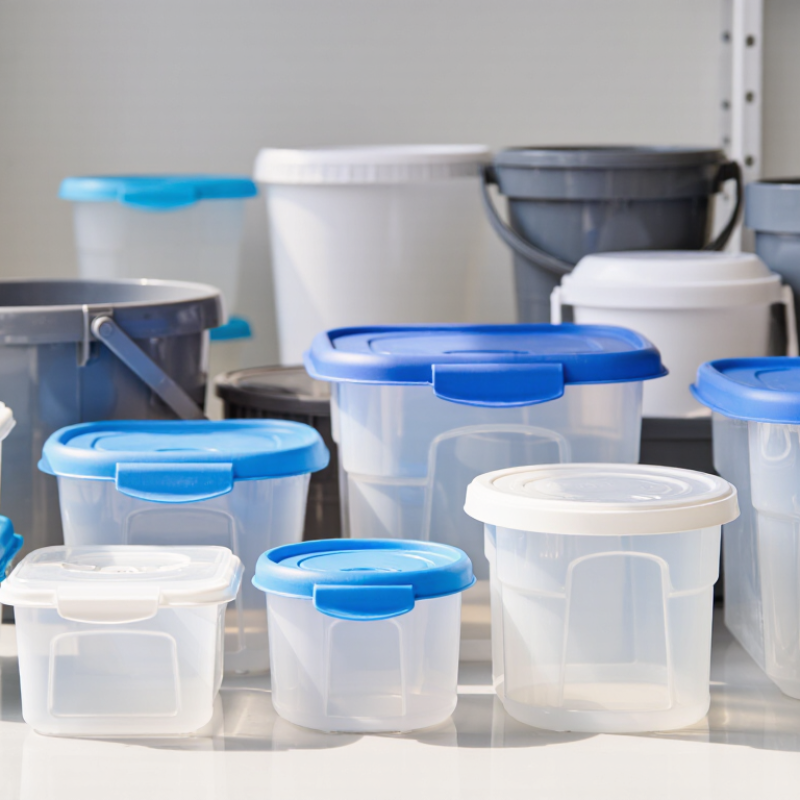
Pp Containers are made from polypropylene, a lightweight plastic valued for toughness and moderate heat resistance. Global buyers choose them for food storage, household goods, laboratory supplies, and industrial packaging. Their smooth surfaces support easy cleaning, while strong walls reduce damage during shipping. PP also resists moisture and many common chemicals, but performance depends on the exact formulation and container design.

In procurement work, I have seen buyers compare more than price. They check wall thickness, lid fit, stackability, and sealing performance. A container may look strong yet crack after repeated freezing. Another may survive heat but warp under pressure. Food-contact applications require suitable documentation and testing for the destination market. Recycling is another consideration, not a guarantee. Local collection systems may not accept every PP format.

Tips: Request samples before placing a large order. Test them with your actual product, temperature range, and transport conditions. Measure leakage after stacking and vibration. Check resin information, production consistency, and inspection records. Clear specifications prevent expensive surprises. Still, even careful testing has limits. I once underestimated how much a tight lid changed opening speed during warehouse packing. That small detail affected labor costs. Choose PP containers based on real handling conditions, not attractive catalog photographs.

Which PP Container Types Suit Different Products and Industries?

Choosing among the Top Containers requires matching the PP structure to the product, not simply comparing prices. Injection-molded tubs suit yogurt, sauces, and cosmetic creams because their wide openings support filling and easy access. Clear PP can improve shelf visibility, although it may not protect light-sensitive contents well.

For liquid detergents, shampoos, and household cleaners, blow-molded PP bottles offer useful strength and controlled pouring. A threaded cap reduces leakage during shipping. Small PP jars work well for balms, powders, and laboratory samples, while hinged lids help dry products such as spices or nutritional powders. They open quickly.

Industrial users often prefer PP pails with reinforced rims and secure lids. These containers handle powders, pellets, and maintenance materials with less risk of denting than thin packaging. However, PP is not an automatic solution for every chemical or high-barrier application. Compatibility testing remains essential, especially when contents are hot, oily, or highly concentrated.

In food and healthcare-related packaging, manufacturers should check migration requirements, closure performance, batch traceability, and cleaning conditions. I have seen a strong container fail because its lid warped during warehouse heat. That detail is easy to miss. Product weight, filling temperature, stacking height, and transport distance should guide the final design. A lighter package may reduce material use, but weak handles or thin walls can create more waste through damage.

10 Best PP Containers for Global Buyers in 2026? – Which PP Container Types Suit Different Products and Industries?

# PP Container Type Typical PP Structure and Capacity Best-Suited Products and Industries Main Advantages Key Limitations and Buying Checks Recycling and Compliance Considerations Overall Fit for Global Buyers
1 Injection-Molded PP Jar Rigid homopolymer or copolymer PP.
Typical capacity: 30 mL–1 L.
Cosmetics Skin care Food powders Nutraceuticals Household chemicals Wide-mouth access, good dimensional stability, low moisture absorption, and strong resistance to many dilute acids, bases, and alcohol-based formulations. Not ideal for high-barrier oxygen-sensitive products unless combined with a liner or multilayer design. Confirm closure torque, liner compatibility, and seal performance. Generally compatible with PP recycling streams when the jar, lid, and accessories are designed for material separation. Food or cosmetic contact requirements vary by destination market. Excellent for dry, semi-solid, and scoop-filled products requiring a premium appearance and convenient access.
2 PP Screw-Cap Bottle Blow-molded or injection-blow-molded PP.
Typical capacity: 100 mL–2 L.
Personal care Pharmaceutical liquids Cleaning products Edible oils Lightweight, durable, resistant to cracking, and suitable for liquid dosing. PP tolerates repeated handling and offers better heat resistance than many common commodity plastics. PP is not a high-barrier material for oxygen or aroma. Check stress-crack resistance, bottle drop performance, cap leakage, and compatibility with surfactants or solvents. Prefer mono-material PP bottles with PP closures and minimal labels. Product-contact regulations, tamper evidence, and child-resistant closure standards may apply. Strong all-purpose option for non-carbonated liquids and products requiring a resealable neck.
3 PP Food Storage Tub Injection-molded PP, often with a snap-fit or hinged lid.
Typical capacity: 250 mL–5 L.
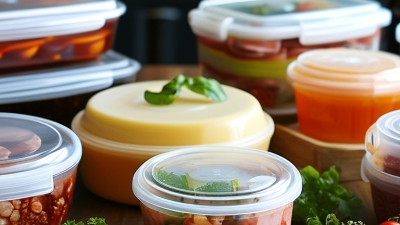
Ready meals Dairy foods Meal preparation Catering Good balance of stiffness, impact resistance, and heat tolerance. Many PP food tubs are suitable for reheating, subject to the specific design and food-contact instructions. Actual microwave, freezer, and hot-fill performance depends on wall thickness, additives, lid design, and geometry. Verify seal integrity after thermal cycling. Food-contact status must be verified for the target region. A clear recycling identification code 5 is commonly used for PP, but local collection systems differ. Excellent for chilled, frozen, or reheatable food formats where stackability and consumer convenience are important.
4 PP Hot-Fill Container Heat-stabilized or clarified PP with reinforced geometry.
Typical capacity: 100 mL–1 L.
Sauces Condiments Jams Liquid nutrition Better heat resistance than many lightweight packaging plastics and suitable for selected hot-fill processes. Low density helps reduce transport weight. PP containers can deform under uncontrolled heat or vacuum conditions. Validate fill temperature, cooling rate, paneling, cap application, and shelf-life performance. Use food-contact-compliant resin and additives. Avoid unnecessary mixed materials where recycling access is a priority. Very suitable when the filling process requires elevated temperatures but a lightweight container is preferred.
5 PP Pharmaceutical Bottle Medical- or pharmaceutical-grade PP, usually with a screw, snap, or child-resistant closure.
Typical capacity: 30 mL–1 L.
Tablets Capsules Oral powders Non-sterile liquids Good chemical resistance, low moisture uptake compared with some polymers, and compatibility with desiccants, induction seals, and tamper-evident systems. PP alone may not provide sufficient moisture, oxygen, or light protection for every medicine. Confirm extractables, leachables, closure fit, and stability data. Pharmaceutical packaging may require controlled disposal depending on contamination and local rules. Regulatory documentation and traceability are essential. Excellent for solid-dose and selected liquid pharmaceutical products when validated with the formulation and closure system.
6 PP Pail with Snap or Lever Lid Injection-molded PP with metal or plastic handle options.
Typical capacity: 3–25 L.
Paints Adhesives Construction chemicals Food ingredients High impact resistance, stackability, easy labeling, and broad availability in industrial formats. Suitable for many viscous and granular products. Seal performance varies significantly by lid design. Check stacking load, handle strength, drop resistance, leakage testing, and compatibility with aggressive chemicals. Empty and clean pails are commonly recyclable as PP; contaminated packaging may be subject to local hazardous-waste requirements. Excellent for medium-volume industrial, food-service, and construction products requiring rugged handling.
7 PP Drums Blow-molded or rotationally molded PP, normally with tight-head or open-head construction.
Typical capacity: 30–220 L.
Industrial chemicals Powders Resins Bulk ingredients Strong chemical resistance, low tare weight compared with metal, no rusting, and suitability for many solid or liquid industrial materials. Not universally suitable for strong oxidizers, aromatic hydrocarbons, or high-temperature contents. Confirm UN performance certification when shipping regulated dangerous goods. Reusable systems can reduce packaging waste. End-of-life recycling depends on contamination, additives, colorants, and local industrial-plastics infrastructure. Strong option for bulk products where corrosion resistance and lower shipping weight are priorities.
8 PP Crate or Distribution Tote Injection-molded PP, often ribbed or reinforced.
Typical capacity: 10–80 L.
Fresh produce Beverage logistics Automotive parts Warehouse handling Reusable, washable, stackable, and resistant to repeated impact. Ventilated designs support airflow for selected agricultural products. Higher initial cost than one-way packaging. Empty return logistics, cleaning procedures, and loss rates should be included in the total-cost calculation. Long service life supports reuse. At end of life, unfilled PP crates are generally suitable for mechanical recycling if collected separately. Best for closed-loop or repeat distribution systems with predictable return flows.
9 PP Flexible Woven Bag with Liner Woven PP fabric, commonly with an inner PE or PP liner.
Typical capacity: 10–50 kg.
Rice and grains Animal feed Mineral powders Fertilizers Low packaging weight, high tensile strength, efficient pallet utilization, and suitability for dry bulk goods. Printed outer fabric supports product identification. Moisture and fine-powder protection depend on the liner and closure. Woven fabric can be punctured or contaminated; test seam strength and drop performance. Mono-material PP construction is easier to recycle than PP fabric combined with incompatible laminates. Liners, coatings, and contamination can reduce recovery options. Excellent for dry bulk goods where low tare weight and economical international transport are critical.
10 PP Laboratory and Sample Container Small injection-molded PP vial, tube, cup, or specimen container.
Typical capacity: 5 mL–250 mL.
Laboratories Diagnostics Research chemicals Sampling Good resistance to many aqueous solutions, low breakage risk compared with glass, and useful temperature tolerance for selected laboratory procedures. Not suitable for every solvent, sterilization method, or analytical application. Check chemical compatibility, particulate limits, sterility, clarity, and dimensional tolerances. Used laboratory containers may require special handling because of biological, chemical, or pharmaceutical contamination. Uncontaminated PP is generally more recyclable. Highly suitable for routine sampling and non-glass laboratory applications after product-specific compatibility validation.

Note: Capacity ranges, temperature performance, chemical compatibility, food-contact status, pharmaceutical suitability, and dangerous-goods certification depend on the specific container design, resin grade, closure, manufacturing process, and destination-market regulations. Buyers should request technical data sheets, migration or compatibility documentation, and performance test reports before placing a production order.

How to Compare Material Quality, Safety, and Product Performance

Global buyers comparing the 10 best PP containers in 2026 should examine evidence, not glossy claims. Polypropylene grades differ in stiffness, impact resistance, heat tolerance, and odor retention. Request the resin specification, melt-flow rate, batch traceability, and food-contact declaration. A clear compliance file matters more than a polished sample.

The OECD Global Plastics Outlook reports that global plastic waste more than doubled between 2000 and 2019, while only 9% was recycled. This makes recycled content worth checking carefully. Ask whether it is suitable for the intended use, especially with hot food or oily products.

Test wall thickness, lid fit, drop resistance, and repeated opening. One weak corner can ruin shipment performance. Real testing is often less flattering.

Tips: Compare three production samples, not one. Check dimensions after heating and cooling. Review migration test conditions, including temperature and contact time. Verify claims against current food-contact rules in the destination market. The European Commission’s food-contact framework requires plastic materials to meet specific migration limits. U.S. requirements also depend on the substance and application. Keep signed test reports and production records.

A minor detail? Not really. Suppliers should explain failed tests honestly, though buyers sometimes overlook this under price pressure.

What Sizes, Shapes, Closures, and Custom Features Are Available?

For global buyers, PP containers should be selected by use, filling line, and shipping conditions. Common sizes range from 100 ml sample cups to 5-liter tubs. Round shapes stack efficiently, while square formats use warehouse space better. In food and household packaging, wall thickness matters. A thin 250 ml cup may reduce material use, but it can deform under heat or stacking pressure.

Closures include snap-on lids, screw caps, hinged lids, and tamper-evident bands. Each option changes sealing speed and user experience. A wide mouth suits powders and thick products. A narrow neck supports controlled pouring. Custom features may include handles, embossed volume marks, color matching, barrier layers, and printed measurement lines. According to PlasticsEurope’s Plastics—The Fast Facts 2024, global plastics production reached 413.8 million tonnes in 2023. That scale increases pressure to design lighter, simpler packaging.

Tips: Ask suppliers for drop tests, leak tests, and heat-resistance results. Request samples in the final resin grade. Factory samples can look stronger than mass production. This is easy to overlook. The OECD’s Global Plastics Outlook reports that only about 9% of plastic waste was recycled in 2019. Therefore, Cups Containers should avoid unnecessary mixed materials where local recycling systems cannot process them. Buyers should also confirm food-contact compliance, closure torque, labeling space, and pallet stability before approving a large order. A practical trial may reveal that the “perfect” shape wastes too much space.

How to Evaluate Suppliers, Certifications, Pricing, and Minimum Orders

For global buyers, a good PP container supplier offers more than an attractive catalog. Check how long the factory has produced similar containers. Ask for production photos, sample records, and recent customer references. A capable supplier should explain resin selection, wall thickness, lid fit, and sealing performance clearly. Vague answers deserve caution.

Certifications need careful verification. Request current food-contact declarations, migration test reports, and an ISO 9001 certificate when relevant. Check the issuing laboratory, test date, product code, and material grade. The certificate should match your actual container, not a similar model. Ask whether recycled content is used. This detail can affect compliance and odor performance. I have seen buyers accept impressive documents without checking the tested material.

Pricing should include more than the unit quote. Compare tooling, sample fees, packaging, inland transport, freight, duties, and payment terms. Ask for prices at several quantities, such as 5,000, 20,000, and 50,000 units. Confirm whether the quote includes lids and color matching. A low price may hide expensive molds. Review it carefully.

Minimum orders can reveal the supplier’s flexibility. Stock containers may allow a smaller trial order, while custom shapes often require higher volumes. Negotiate a pilot batch with written inspection standards. Specify dimensions, weight tolerance, drop testing, and acceptable color variation. Keep one approved sample for comparison. Even experienced teams miss small changes after mass production. My own reviews have shown that communication speed sometimes predicts reliability better than a polished quotation.

Which Ten PP Container Options Stand Out for Global Purchasing in 2026?

Global purchasing in 2026 demands more than a low unit price. Buyers should compare ten PP container options by use, wall thickness, closure design, and shipping efficiency. Food storage tubs suit repeated household use, while deli containers support portion control and quick stacking. PP jars work well for powders, creams, and dry goods. Wide-mouth canisters simplify filling and cleaning. Nestable boxes reduce empty-volume costs during ocean transport.

Industrial buyers may prefer stackable crates, lidded pails, screw-top drums, or reusable transport bins. Laboratory-style containers need accurate dimensions and dependable seals. Togo Containers may also interest buyers seeking practical, export-ready packaging options. However, every supplier should provide resin details, tolerance data, sample approvals, and test records. A container can look strong but deform under heat. I have seen this mistake before.

Tips: Request samples from two production lots. Check lid fit after cold storage and warm handling. Measure nesting height with the actual closure attached. Ask whether recycled content affects color, stiffness, or food-contact suitability. Do not trust photographs alone. No shortlist is perfect. A small pilot order can reveal cracking, odor, poor stacking, or labeling problems before a larger commitment.

10 Best PP Container Options for Global Buyers in 2026

Indicative buyer-fit scores based on versatility, export practicality, stackability, food-contact suitability, and recycling clarity. PP is identified by resin code 5 and typically offers a melting range of approximately 160–166°C.

Scores are comparative purchasing benchmarks rather than supplier quotations. Final performance depends on PP grade, wall thickness, closure design, additives, certification, and destination-market regulations.

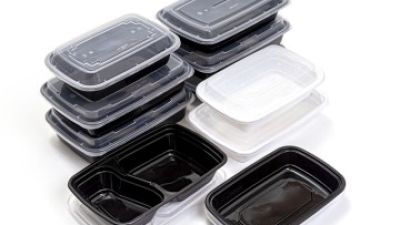
Recyclable Rectangular Microwavable Takeaway Containers: Insights from Grand View Research and Smithers Reports

Recent market analyses underline the growing demand for practical, recyclable food packaging. Grand View Research estimates that the global food packaging market was valued at approximately US$353 billion in 2022 and could expand at a compound annual growth rate of about 5.5% through 2030. Smithers’ packaging forecasts also identify sustainability and recyclability as major purchasing factors, particularly for takeaway and prepared-food applications. Rectangular polypropylene containers respond to these trends by combining food-safe, BPA-free materials with efficient stacking and storage.

Designed for temperatures from -20°C to 120°C (-4°F to 250°F), these containers support freezer storage, microwave reheating, and everyday meal preparation. Their tight-fitting lids help reduce leakage and preserve freshness during delivery, while pressure-resistant construction minimizes cracking or bending throughout shipping from the factory. The space-efficient rectangular format is suitable for office lunches, fast-food outlets, food trucks, catering operations, supermarkets, and meal-preparation suppliers. Recyclable polypropylene also offers businesses a durable alternative to less versatile single-use packaging, helping align operational needs with customers’ increasing interest in responsible food-service solutions.

FAQS

What are PP containers commonly used for?

PP containers suit food storage, household goods, laboratory supplies, and industrial packaging. They are lightweight and fairly tough. Moisture resistance helps during storage and transport.

Why do buyers check more than unit price?

Wall thickness, lid fit, stacking, and sealing affect real operating costs. A cheap container may crack after freezing or deform under heat. Price alone is incomplete.

Which container sizes and shapes are available?

Common sizes range from 100-milliliter sample cups to 5-liter tubs. Round containers stack efficiently. Square containers can use warehouse space better. The best shape depends on filling and transport conditions.

Which closure types can buyers choose?

Options include snap-on lids, screw caps, hinged lids, and tamper-evident bands. Wide mouths help with powders and thick products. Narrow necks support controlled pouring.

What custom features can PP containers include?

Buyers may request handles, volume marks, color matching, measurement lines, or barrier layers. Custom features should support actual handling needs. Extra details can increase cost and complicate recycling.

How should buyers test PP containers before a large order?

Request samples from the final resin grade and, when possible, two production lots. Test the actual product, temperature range, and transport conditions. Check leakage after stacking and vibration. Measure carefully.

What performance checks are important during testing?

Check drop resistance, heat stability, cold-storage performance, closure torque, and pallet stability. Attach the final lid before measuring nesting height. A factory sample may look stronger than mass production.

Are PP containers always recyclable?

No. Recycling depends on local collection systems and container design. Mixed materials may be difficult to process. Recycling is possible, not guaranteed.

How can buyers reduce shipping and warehouse problems?

Compare nesting height, stack strength, empty volume, and closure attachment. A visually attractive shape may waste pallet space. I would not approve it without a practical trial.

Conclusion

This guide explores why Pp Containers are a practical choice for global buyers seeking lightweight, durable, and cost-efficient packaging. It explains how polypropylene containers support different products and industries, from food and household goods to personal care, chemicals, and industrial materials. Readers will learn how to compare material quality, safety, impact resistance, temperature performance, and compatibility with various contents before making a purchase.

The article also reviews available sizes, shapes, closures, colors, labeling methods, and customization options, helping buyers match container designs with storage, transport, and usage needs. In addition, it outlines how to evaluate suppliers through production capability, quality control, certifications, pricing, lead times, and minimum order quantities. Finally, the guide presents ten notable PP container options for 2026, selected according to versatility, functionality, customization potential, and suitability for international purchasing.

Liam

Liam

Liam is a dedicated marketing professional at Fujian Seafancy Technology Development Co., Ltd., a leader in the food packaging industry with two decades of expertise. With a profound understanding of disposable and recyclable food containers, he is passionate about promoting sustainable packaging......
Previous 10 Tips for Choosing Food Packaging Boxes