Leave Your Message
Picking the right food-grade plastic containers in 2026? It's not just about price tags, colors, or shiny catalog photos. If you're buying globally, you've got to dig into material safety, manufacturing consistency, traceability, and how those containers actually perform during shipping. A container can look perfectly clean and still struggle when it meets heat, oil, acidity, or rough repeated handling. Looks can fool you.
This guide is all about practical buying decisions for Plastic Food Containers across retail, foodservice, catering, and industrial supply chains. We'll look at common materials like PET, HDPE, PP, and some biodegradable alternatives. Each one brings something different to the table. PP tends to handle hot filling better, while PET gives you that clear look for products you want people to see. HDPE earns its keep through toughness and chemical resistance. But honestly, those advantages still come down to formulation, wall thickness, closure design, and production control.
For reliable sourcing, you need documented food-contact compliance for the market you're selling into. Ask suppliers for migration test reports, batch records, resin details, and declarations. And yes, a recognized third-party lab can help you check the claims that matter most. Supplier audits should cover hygiene controls, storage conditions, mold maintenance, and lot traceability. Little things count too—lid fit, seal strength, odor, carton protection. Sometimes the smallest detail is the one that causes the biggest headache.
The best choice is rarely the cheapest one. It should protect the food, cut down on waste, and stay stable through transport. Even experienced buyers can miss temperature changes happening inside containers. That's a mistake worth paying attention to. Test your specs with the actual food, the filling process, and the real delivery route. This 2026 review gives you a balanced way to compare quality, compliance, sustainability, and long-term value. Still, no ranking can replace independent verification before you place a big order.
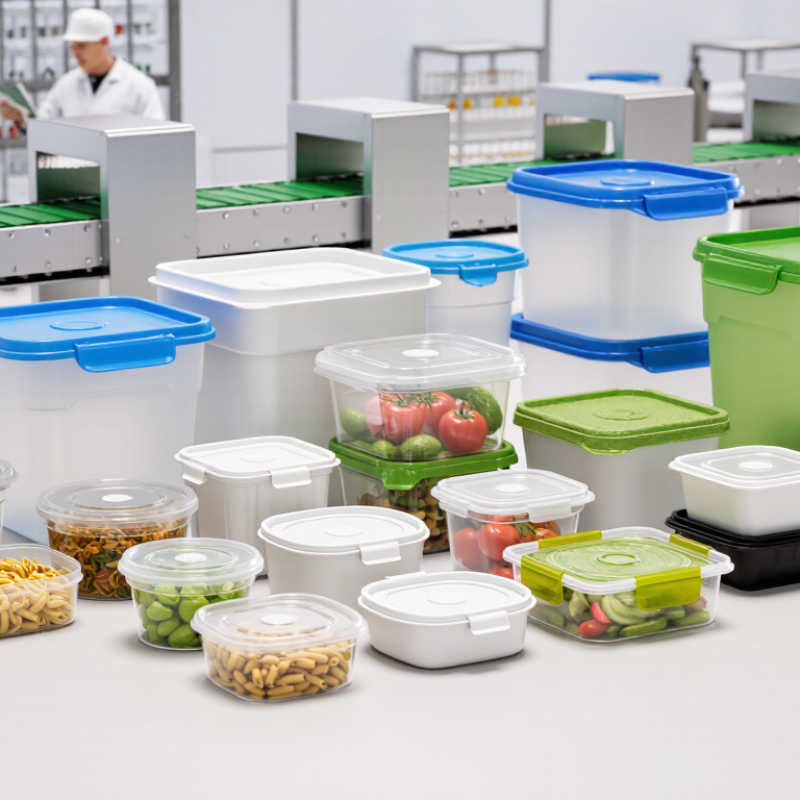
For global buyers, food-grade plastic means more than a clean-looking container. It means the material is suitable for its intended food contact use. Plastic Deli Food Containers may hold salads, sauces, dairy products, or heated meals. Each use can require different evidence.
In the United States, FDA 21 CFR requirements address permitted polymers, additives, colorants, and food-contact conditions. Buyers should check the relevant regulation and the manufacturer’s compliance statement. Temperature, contact time, and food type matter. A container approved for refrigerated vegetables may not suit hot oil. Use changes everything.
In the European Union, Regulation (EU) No. 10/2011 covers plastic materials and articles intended for food contact. It includes positive substance lists, migration limits, and testing conditions. Overall migration testing measures total transferred substances. Specific migration testing examines selected substances. Testing should match real use, such as acidic sauce stored for seven days at chilled temperatures. Details matter.
Experienced purchasing teams request declarations of compliance, test reports, resin information, and traceability records. They also verify dimensions after filling, because thin walls can deform under heat. A document alone is not enough. Supplier statements may be accurate, but outdated. Regulations and formulations can change. I would recheck critical documents before every major order, even when previous shipments passed inspection. The difficult part is interpreting intended use consistently across markets, especially when one product serves restaurants, retailers, and meal-delivery operations.
| Plastic Type | Common Resin Code | Typical Container Applications | Key Functional Properties | Typical Food-Contact Temperature Guidance | FDA 21 CFR Scope | EU Regulation 10/2011 Scope | Main Compliance Checks for Buyers |
|---|---|---|---|---|---|---|---|
| Polyethylene Terephthalate (PET) | 1 | Water, soft drinks, edible oils, sauces, dry foods, jars and clear food containers | High clarity, good stiffness, good carbon-dioxide barrier, low weight and recyclable in suitable systems | Generally selected for ambient and refrigerated packaging; standard PET is not automatically suitable for hot-fill or repeated high-temperature use | Must comply with the applicable FDA food-contact authorization for the intended use, including polymer composition, additives, food type and temperature conditions | Must use substances permitted under the Union list in Annex I and meet applicable migration limits and manufacturing requirements | Check resin and additive declarations, intended food types, time and temperature conditions, overall and specific migration test results |
| High-Density Polyethylene (HDPE) | 2 | Milk and juice containers, food buckets, bottles, jerrycans, caps, closures and dry-food tubs | Strong chemical resistance, good impact strength, moisture resistance and an opaque or translucent appearance | Commonly used for refrigerated, ambient and moderate-temperature applications; suitability depends on the exact grade and package design | Authorization is use-specific under relevant FDA indirect food-additive provisions; the finished article must match the listed conditions of use | Polymer and additives must be permitted under EU 10/2011; finished articles must comply with overall and applicable specific migration limits | Confirm density and melt-flow grade, pigments, slip agents, recycled content controls, closure compatibility and migration testing |
| Polypropylene (PP) | 5 | Microwaveable food tubs, yogurt cups, reusable food-storage boxes, hinged lids, caps and hot-fill containers | Good heat resistance, low moisture permeability, low density, fatigue resistance and good resistance to many food chemicals | Often selected for warm-fill and microwave-related applications, but the actual limit must be established for the specific grade, wall design and use cycle | Requires compliance with the relevant FDA authorization and conditions of use for the polymer, additives and intended food-contact application | Must comply with the Union list, applicable specific migration limits, overall migration limits and restrictions for repeated-use articles where relevant | Verify heat-cycle testing, repeated-use performance, microwave claims, seal integrity, additives and food-simulant test conditions |
| Low-Density Polyethylene (LDPE) | 4 | Flexible food pouches, liners, squeeze bottles, film, bags, flexible lids and inner seals | Flexible, moisture-resistant, good sealability and good impact resistance; lower stiffness than HDPE | Usually selected for ambient, refrigerated and moderate-temperature uses; high-temperature suitability is grade-specific | Finished articles must meet the relevant FDA provisions for polyethylene, additives and intended conditions of use | Must be manufactured from permitted substances and meet EU migration requirements for the intended food-contact conditions | Check sealant-layer composition, multilayer structure, additives, printing-ink or adhesive contact risk and migration from the complete article |
| Polystyrene (PS) | 6 | Cold-food cups, dessert containers, bakery trays, disposable tubs and protective food-service packaging | Lightweight, rigid, easy to thermoform and available in clear or foamed structures | Generally used for cold or ambient food service; standard PS is not normally chosen for high-temperature or microwave applications | Use is subject to applicable FDA food-contact regulations and conditions, including limitations associated with monomers and additives | All intentionally added substances must be permitted or otherwise covered under applicable EU rules, with migration limits demonstrated for the final article | Assess temperature exposure, fatty-food compatibility, residual monomers, foaming agents, colorants and disposal or recycling requirements |
| Expanded Polystyrene (EPS) | 6 | Insulated transport boxes, chilled-food trays and temperature-protection packaging | Very low weight, thermal insulation and cushioning performance | Primarily used for chilled or frozen distribution; direct food-contact suitability depends on the specific construction and regulatory documentation | Must meet the applicable FDA requirements for the polymer, blowing agents, additives and intended food-contact conditions | Must satisfy EU 10/2011 requirements where the EPS article is intended for food contact, including migration testing of the finished structure | Confirm direct-contact status, food type, temperature and duration, residual blowing agents, surface liners and transport-use conditions |
| Polycarbonate (PC) | 7 | Reusable water containers, rigid food-storage products, dispensing components and selected transparent reusable articles | High impact strength, clarity, dimensional stability and good heat resistance | May be used for repeated-use and elevated-temperature applications only when the specific grade and design are validated | Must comply with the applicable FDA authorization; composition and use conditions should be checked carefully, especially for repeated-use articles | Must comply with EU 10/2011 substance restrictions and specific migration limits; bisphenol-related restrictions must be evaluated for the intended market and use | Request current composition and migration declarations, repeated-use testing, dishwasher or heat-cycle data and market-specific restrictions |
| Polyamide (PA / Nylon) | 7 or multilayer designation | High-barrier multilayer films, vacuum packaging, retort structures and selected food-contact components | High mechanical strength, abrasion resistance and strong oxygen-barrier performance when appropriately designed | Can be used in demanding thermal applications in suitable grades and multilayer structures; validation is essential | Must comply with the applicable FDA provisions for the specific polyamide, additives, layer arrangement and conditions of use | Must comply with EU 10/2011 requirements for polyamide substances, multilayer construction, migration limits and intended conditions | Evaluate multilayer layer order, adhesive and ink interfaces, retort conditions, specific migration and barrier durability |
| Fluoropolymer Components | 7 or application-specific designation | Specialized seals, liners, gaskets and high-chemical-resistance food-processing components | Very high chemical resistance, low surface adhesion and strong resistance to heat in appropriate grades | Used only where the specific fluoropolymer grade and processing conditions support the declared temperature range | Authorization depends on the exact fluoropolymer, additives, processing aid and intended food-contact condition | Compliance depends on the exact substance identity, Union-list status, restrictions and migration assessment | Obtain exact chemical identity, processing history, extractables profile and evidence for the final article rather than relying on a generic resin name |
| Regulatory reference points: FDA 21 CFR food-contact compliance is generally based on the applicable regulation, food type, temperature, duration and conditions of use for the specific substance or article; it is not a single universal “food-grade plastic” certificate. EU Regulation (EU) No 10/2011 applies to plastic materials and articles intended to come into contact with food. The general overall migration limit is typically 10 mg/dm², while a limit of 60 mg/kg of food applies in the specified cases for materials and articles intended to contact food for infants and young children. Specific migration limits depend on the substance and applicable restrictions. Buyers should request a Declaration of Compliance, composition information, intended-use conditions, migration test reports and traceability records for the finished container. | |||||||
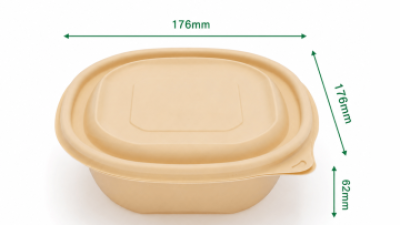
For takeaway businesses seeking a practical and sustainable packaging option, an 800ml creamy beige corn starch meal box offers a balanced combination of capacity, convenience, and environmental awareness. Made from eco-friendly corn starch, this container is suitable for serving rice dishes, pasta, salads, noodles, snacks, and other prepared meals. Its neutral creamy beige color creates a clean, natural presentation that works well with a variety of food styles, while the generous 800ml capacity allows customers to enjoy satisfying portions without requiring multiple containers.
Weighing approximately 46g, with a tolerance of ±2g, the box is lightweight for staff to handle and convenient for delivery orders. Its dimensions of 17.6 × 17.6 × 6.2cm provide useful space for arranging food neatly while allowing efficient storage in kitchens, display areas, and delivery bags. The container can withstand temperatures from -20°C to 120°C, making it suitable for both chilled desserts and hot meals. Takeaway operators can use it across different menus and service periods, helping simplify packaging choices and maintain a consistent customer experience.
For businesses managing busy food preparation routines, the durable structure supports practical daily use. The product is manufactured in China and supplied directly by an experienced factory, making it suitable for restaurants, cafés, catering services, meal-preparation companies, and food delivery operations seeking versatile disposable meal packaging.
Empty containers can appear perfect. Test them after filling, closing, and temperature conditioning. Use leak checks to detect slow failures. Record failed units, not only successful results.
Vacuum decay, pressure holding, and dye penetration can reveal weak seals. Each method shows different failure patterns. Keep damaged samples for later inspection. A clean test report may still miss handling damage.
Test filled containers from several heights. Include base, edge, and corner impacts. Repeat testing after refrigeration and warming. Plastic may become brittle or softer. Real conditions matter.
Buyers should define a target, such as 50 or 100 washing cycles. Higher targets may suit demanding applications. There is no universal cycle number. That gap deserves more honest discussion.
Check seals, clarity, odor, warping, and closure force. Use the same detergent and water temperature each time. Keep loading weight and drying methods consistent. Small cracks are easy to miss.
Request test records, material declarations, and migration reports. Batch codes should connect finished containers with production data. Retain sample seals and failed units. A defect log can reveal more than a polished certificate.
Ask for the resin origin, polymer type, collection region, and processing site. Require batch identification and documented chain of custody. Review contamination controls, odor, color, and migration results. Recycled materials are not automatically interchangeable.
Define acceptable limits for color, surface marks, and stiffness before production. State when virgin material is needed for safety or performance. High recycled content may change appearance. That tradeoff is sometimes ignored.
Choosing the right Food-Grade Plastic Containers for global markets requires more than selecting a convenient shape or price point. This guide explains how food-contact plastics are defined under FDA 21 CFR and EU 10/2011, then compares PP, HDPE, PET, and LDPE by temperature tolerance, durability, and barrier performance. It also highlights safety verification, including the EU overall migration limit of 10 mg/dm², and outlines key compliance considerations for FDA, EU, and GB 4806 requirements, together with common import documentation.
Reliable quality depends on practical testing, such as seal integrity, drop resistance, and performance across repeated reuse cycles. The guide also addresses sustainable sourcing through PCR material traceability and considers the OECD’s reported global recycling rate of approximately 9%. By combining material selection, regulatory preparation, testing procedures, and responsible sourcing, buyers can develop safer, more consistent, and environmentally conscious container programs for international food applications.