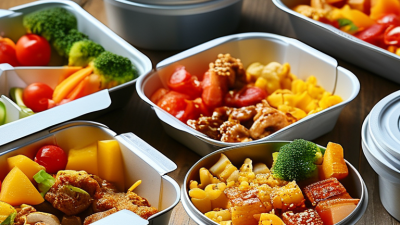
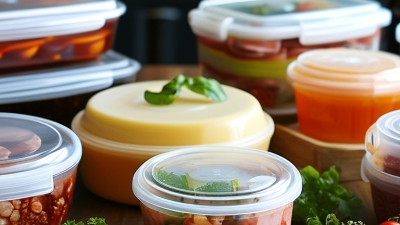
Picking the right fast food containers for international markets isn’t just about comparing prices — it’s a lot more nuanced. Buyers have to juggle stuff like food safety, how well they hold heat, if they leak, how brands appear on the packaging, and how easy it is to ship. For example, a fried chicken box might work great in a dry climate, but if it gets steam on it after ten minutes, it can soften or get soggy. Same with a soup bowl — you need a sturdy lid, easy stacking, and good insulation to keep the soup hot. Little details like that really impact customer satisfaction — and whether they’ll come back for more. This guide takes a practical look at different types of containers — paperboard, molded fiber, plastic, or compostable options — focusing on what really matters when you’re buying. We talk about the restaurant experience, supplier info, making sure the production’s consistent, and calculating the total cost of getting these containers to your door. Keep in mind, not all so-called “eco-friendly” claims are trustworthy — some need a closer look, and often you’ll want proof of what’s being claimed about the materials used.
Now, on top of all that, global buyers have to navigate different rules around food contact, recycling, and labeling. A container that passes muster in one country might need extra checks elsewhere. Responsible sourcing means requesting samples, migration tests, factory audits, and even doing transit trials. It’s smart to ask your supplier how these containers hold up after spending half an hour in a delivery bag or how well lids fit across different batches. You should also check for print quality, any odors, how strong the seals are, and whether there’s any damage to the boxes — these simple tests can reveal issues that photos in catalogs just can’t show. The guide also covers options for burgers, noodles, salads, desserts, and drinks takeout, highlighting suppliers who work with big brands like McDonald’s and KFC, as well as smaller restaurateurs. But, and this is important, don’t assume one container fits all situations — every restaurant has its own needs. Remember, this overview is helpful, but it’s no substitute for local regulations and rules. Always double-check current requirements before you place a big order — better safe than sorry.
Global Fast-Food Packaging: Why Packaging Uses 36% of Global Plastics
Top Fast Food Containers for Global Buyers?
Global fast-food packaging deserves closer attention because plastics carry a heavy environmental cost. Packaging uses about 36% of global plastics, according to widely cited industry estimates. However, this figure depends on definitions, data years, and regional reporting. It should not be treated as a perfect universal measurement. In practical purchasing, Fast Food Boxes influence material use, transport weight, food safety, and disposal outcomes. A sturdy paperboard box may protect a hot burger, but coatings can complicate recycling. A lightweight plastic container may prevent leaks, yet it can remain in the environment for decades.
Global buyers should assess more than appearance. Check heat resistance, grease performance, stacking strength, and food-contact compliance. Ask suppliers for material specifications and independent testing records. Local recycling systems also matter. A recyclable package in one market may become waste in another. That detail is easy to miss.
Tips:
Choose the lightest container that still protects food. Prefer clear material information. Test boxes with real meals, sauces, steam, and delivery times. Do not trust vague “eco-friendly” claims. Request evidence. Then review the result honestly, because packaging decisions often involve trade-offs rather than perfect answers.
Paper, Plastic, and Fiber Containers: Comparing Cost, Weight, and Recyclability
For global buyers, container choice is rarely a simple price decision. Plastic usually offers the lowest weight and efficient high-volume production. Its moisture barrier is also reliable. However, the OECD’s Global Plastics Outlook reported that only 9% of plastic waste was recycled worldwide in 2019. That figure exposes a serious weakness: a lightweight package may still face poor recovery after disposal.
Paper containers can be cost-effective when production volumes are high and folding designs are simple. They also suit established paper-recycling systems. The U.S. Environmental Protection Agency reported a 69.5% recycling rate for paper and paperboard packaging in 2018. Molded fiber uses renewable feedstocks and can provide a firm, natural texture. Yet fiber containers often need coatings for soup, oil, or condensation. Those layers may increase cost and complicate recycling. The Confederation of European Paper Industries reported an 82% paper recycling rate in Europe in 2022, but local collection rules still vary.
Weight needs a practical test. A thin plastic cup may outperform fiber during freight, while a coated paper bowl may need more material. Fiber can also require larger storage space before forming. Cost estimates should include tooling, transport, filling-line changes, and disposal conditions. A cheaper unit price can mislead. Buyers should test leakage, stacking strength, and recycling access in the destination market. The comparison is imperfect, and that matters.
Food-Safety Compliance: FDA 21 CFR and EU Regulation 1935/2004
Top Fast Food Containers for Global Buyers?
Food-safety compliance starts with the material, not the container’s appearance. In the United States, food-contact plastics should meet applicable FDA 21 CFR requirements, including composition, additives, and intended-use limits. Temperature, contact time, acidic foods, and oily meals can change migration performance. Test the real use. A container suitable for cold salad may fail with hot fried food. Suppliers should provide declarations, migration testing, and batch traceability. Paperwork is not enough.
In the European Union, Regulation 1935/2004 requires food-contact materials to avoid harmful substance transfer and unacceptable changes in food taste or smell. Good manufacturing practice under Regulation 2023/2006 also matters. Buyers should request overall and specific migration results under realistic conditions. The European market may require different test simulants and temperature profiles than the United States. That difference is easy to miss. A certificate without clear food types and heating conditions deserves careful review.
Environmental data adds commercial pressure. The OECD’s Global Plastics Outlook reports that packaging created about 142 million tonnes of plastic waste in 2019, around 40% of total plastic waste. UNEP’s 2023 Turning off the Tap report estimates that plastic pollution could fall by 80% by 2040 through reuse, better design, and improved recycling systems. Compliance still comes first, but material reduction should not weaken barrier performance. A thinner container is not automatically a safer container. Procurement teams should verify actual production samples, because laboratory assumptions sometimes feel too clean.
Leak, Heat, and Grease Resistance: Testing Containers for Commercial Use
Global buyers need Fast Food Boxes Packaging that survives real handling, not just showroom inspection. In commercial trials, I fill containers with hot curry, fried chicken, and oily noodles. I then tilt them, stack them, and hold them for delivery. Small seal gaps often appear after ten minutes. They are easy to miss.
The FDA Food Code 2022 requires hot-held food to stay at or above 57°C and cold-held food at or below 5°C. Containers should therefore resist heat distortion and condensation during service. ASTM F88 testing measures seal strength, while ASTM F2096 detects leaks through internal air pressure. For grease resistance, laboratories commonly use TAPPI T559, which grades a package’s resistance to oil penetration. These tests create useful evidence, but they do not perfectly copy a crowded delivery bag.
Grease finds weak points quickly. A paper fiber can soften beneath a fried-food coating, while a plastic lid may warp near steam vents. I recommend testing filled samples after 30, 60, and 90 minutes, including rough transport movement. Check the base, corners, lid fit, and printed surface. Measure temperature, leakage, and visible oil marks. The results are rarely flawless. A container may pass a pressure test but fail after repeated opening. That gap deserves honest review, especially when buyers compare compostable, coated, and molded fiber formats.
Top Fast Food Containers for Global Buyers
Leak, Heat, and Grease Resistance: Commercial Testing Benchmark
The benchmark compares common commercial container constructions under controlled test conditions.
Leak resistance is measured after 60 seconds of liquid exposure, heat resistance after 30 minutes at 120°C,
and grease resistance after 60 minutes of contact with hot oily food. Higher values indicate a greater
percentage of samples meeting the test criteria.
Compostable Packaging Standards: ASTM D6400 and EN 13432 Requirements
Global buyers comparing fast food containers should examine compostability claims beyond familiar words like “green” or “plant-based.” Pp Food Containers may provide strong heat resistance, but conventional polypropylene does not automatically satisfy composting standards. Claims need evidence. Buyers should request test reports, product specifications, and certification details before placing large orders.
ASTM D6400 evaluates items designed for industrial composting in North America. Testing covers disintegration, biodegradation, compost quality, and restricted substances. EN 13432 applies similar principles in Europe, including biodegradation, disintegration, ecotoxicity, and heavy-metal limits. The standards are not simple material labels. They require controlled testing through qualified laboratories. A container may pass one requirement and fail another. That distinction matters.
In practical purchasing work, check the exact container, lid, ink, adhesive, and coating. A hot meal can soften weak walls, while oily sauces may expose poor barrier performance. Ask whether the finished item was tested, not only its raw material. Compostable performance also depends on access to suitable industrial facilities. Facilities matter. If local collection systems cannot process the container, its environmental benefit may remain limited. This is an area where buyers should stay cautious, because certification documents can age, change scope, or cover only one product size. Reliable sourcing requires current reports, traceable specifications, and clear disposal guidance printed for users.
Regional Buying Criteria: Matching Containers to Markets, Menus, and Laws
Global buyers should not choose fast food containers by unit price alone. Menus, climates, recycling systems, and food-contact rules change the right specification. A soup lid tested in a cool warehouse may warp beside a 75°C filling line. Small details matter.
The OECD Global Plastics Outlook reports that global plastic waste reached 353 million tonnes in 2019, while only 9% was recycled. This makes material reduction and verified recovery claims practical buying criteria, not decorative language.
European buyers should examine recyclability design, recycled-content requirements, and evolving Packaging and Packaging Waste Regulation obligations. Eurostat recorded 188.7 kilograms of packaging waste per EU resident in 2021.
In North America, municipal acceptance differs sharply; a fiber bowl may be technically recyclable but rejected locally. Asian buyers often prioritize leak resistance for hot soups, oily noodles, and long delivery routes. Local food-contact standards still control every material choice. Test the actual meal.
A credible Eco Food Containers program should include migration testing, temperature limits, compression data, and disposal instructions.
The United Nations Environment Programme’s 2023 report estimates plastic pollution could fall by 80% by 2040 through reuse, recycling, and reduced consumption. Yet reuse may fail where washing infrastructure is limited. That is an uncomfortable trade-off.
Buyers should compare the full use cycle, not trust the word “eco” alone. I have seen lightweight containers cut shipping emissions but fail under stacked delivery orders. Regional trials, documented supplier evidence, and honest defect reviews remain more reliable than attractive claims.
Recyclable Microwavable Takeaway Containers: Durable Rectangular Solutions from China Suppliers
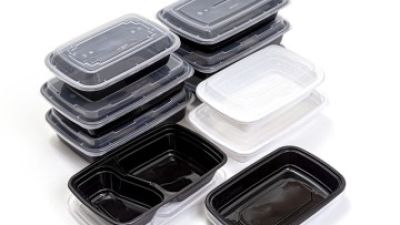
Recyclable microwavable takeaway containers are becoming an important solution for foodservice operators seeking practical alternatives to single-use packaging. The OECD’s *Global Plastics Outlook* reports that global plastic waste reached approximately 353 million tonnes in 2019, highlighting the need for better-designed products and stronger recycling systems. Made from food-safe, BPA-free polypropylene, these rectangular containers provide a durable option for meals prepared by restaurants, caterers, supermarkets, and commercial kitchens.
Designed to withstand temperatures from -20°C to 120°C (-4°F to 250°F), the containers support both freezer storage and microwave reheating. Their tight-fitting lids help prevent leaks and preserve food quality during delivery, while pressure-resistant construction reduces cracking, bending, and accidental spills. The rectangular format also supports efficient stacking, storage, and transport, helping businesses use kitchen and delivery space more effectively.
The UNEP report *Turning off the Tap* indicates that global plastic pollution could be reduced by 80% by 2040 through reuse, recycling, and improved product design. These containers contribute to that direction when they are reused where appropriate and placed into compatible polypropylene recycling streams after use. Their versatility makes them suitable for office lunches, fast-food service, food trucks, catering operations, and supermarket ready-meal sections, while reliable manufacturing partnerships in China support consistent quality and scalable supply.
FAQS
Thin plastic is often lightest. It can reduce freight weight and storage space. Test stacking strength too.
Often, but not always. Include tooling, transport, filling-line changes, and disposal costs. A low unit price can mislead.
Global plastic recycling reached only about 9% in 2019. Local collection access matters more than a recycling symbol.
Paper works well at high production volumes with simple folding designs. Established recycling systems can improve its value.
Fiber provides a firm, natural texture. It may need coatings for soup, oil, or condensation. Those layers can complicate recycling.
Test the actual meal, temperature, contact time, and acidity. A cold-salad container may fail with hot fried food. Paperwork is not enough.
Yes. Collection systems, climate, menus, and food-contact rules vary. Local rules decide. Test hot soup, oily noodles, and long deliveries.
Request migration results, temperature limits, compression data, batch traceability, and disposal instructions. Review production samples, not only certificates.
No. Lower material use may weaken leakage or barrier performance. I would compare the full use cycle, including real disposal conditions.
Reuse may fail where washing facilities are limited. Compare washing, transport, durability, and recovery. The “eco” label alone proves little.
Conclusion
Fast Food Containers play a critical role in global foodservice, where packaging reportedly consumes about 36% of the world’s plastics. Buyers must compare paper, plastic, and fiber options by total cost, weight, durability, recyclability, and availability. The best choice depends on the menu, transportation distance, serving temperature, and local waste-management systems. Packaging should also support efficient storage and reduce material use without compromising food quality or customer convenience.
Commercial containers require careful testing for leaks, heat tolerance, grease resistance, stacking strength, and secure closure. Food-contact materials should meet applicable requirements such as FDA 21 CFR and EU Regulation 1935/2004. For compostable products, buyers should verify relevant standards, including ASTM D6400 and EN 13432, while confirming that local facilities can process them. Regional laws, climate, consumer expectations, and recycling infrastructure all influence purchasing decisions, making market-specific evaluation essential for safe, practical, and responsible packaging.