Leave Your Message
0%

When you're sourcing a Plastic Container supplier, a nice catalog is just the starting point. What buyers really need is steady quality, sourcing they can see through, and delivery they can actually rely on. I mean, a container can look pretty simple, right? But the resin grade, wall thickness, closure fit, and production controls? Those details affect every single shipment.

So, here's the thing: Grand View Research pegged the global plastic packaging market at USD 427.98 billion back in 2023, and it expects growth to keep rolling through 2030. Meanwhile, the OECD says global plastic waste hit 353 million tonnes in 2019. Put those two numbers together, and you get a pretty clear picture: there's real commercial opportunity here, but also real environmental responsibility. And the suppliers you choose these days can affect everything from cost and product protection to recyclability and customer trust. Details matter.

Even a tiny uneven rim on a food container? Yeah, that can leak somewhere out on the ocean. And a weak cap? It can mess up a whole pallet. So experienced buyers tend to look at things like mold capability, testing records, MOQ, and how quickly the supplier actually responds. Stuff like ISO 9001 systems, food-contact docs, and material traceability is definitely worth checking too. That said, certifications alone don't always mean the supplier will perform well.

Steve Russell from the American Chemistry Council put it like this: “Plastics packaging helps protect products, reduce food waste, and lower transportation emissions.” And yeah, he’s got a point. But it’s only part of the picture. Whether packaging actually delivers those benefits really comes down to smart design, logistics that work efficiently, and a realistic plan for what happens to it after we’re done using it.

So, this guide takes a look at ten of the top plastic container suppliers out there for buyers working globally. We compare them on things like product range, customization options, how big their manufacturing operation is, quality assurance, sustainability efforts, and export experience. Just keep in mind—some of the rankings are still going to be subjective. Market data shifts, and a supplier's performance can differ depending on the region. And before you sign anything, it's worth double-checking current certificates, samples, pricing, and delivery commitments.
10 Best Plastic Container Suppliers for Global Buyers?

What Defines a Leading Plastic Container Supplier for Global Buyers

A leading plastic container supplier must offer more than attractive unit pricing. Global buyers need stable dimensions, verified materials, and reliable delivery records. The OECD’s Global Plastics Outlook reported 353 million tonnes of plastic waste in 2019. Packaging created a major share. This makes material efficiency a purchasing requirement, not a marketing detail.

Experienced suppliers provide resin specifications, batch codes, inspection records, and migration or performance test results when relevant. They should explain wall thickness, closure torque, drop resistance, and temperature limits in plain language. ISO 9001-based quality systems can support consistency, but certification alone proves little. Buyers should review recent audit findings and sample results. Small details matter.

Supply resilience also defines leadership. A supplier should show realistic production capacity, mold ownership, backup processes, and documented corrective actions. The 2024 Smithers market analysis projects continued growth in global plastic packaging demand, increasing pressure on capacity and lead times. However, market reports use different definitions, so forecasts are not promises. I would request pilot batches before approving large orders. That step can reveal warping, leakage, or labeling problems that polished presentations hide.

Sustainability claims require equal scrutiny. Suppliers should disclose recycled-content percentages, design-for-recycling choices, energy data, and relevant third-party evidence. The Ellen MacArthur Foundation reports that packaging represents about 40% of global plastic use. Reusable formats may reduce waste, but only when transport distances, washing systems, and actual reuse rates support the claim. The best supplier is measurable, candid, and willing to expose weaknesses.

Key Criteria for Evaluating Plastic Container Manufacturers

Choosing among the 10 Best Plastic Container Suppliers for Global Buyers requires more than comparing quotations. A Plastic Container should be assessed through resin traceability, dimensional accuracy, closure performance, and production consistency. The OECD Global Plastics Outlook reports that global plastic waste reached 353 million tonnes in 2019, with packaging among the largest contributors. This makes material selection and waste reduction practical evaluation points, not marketing language.

Request resin specifications, migration test results, and recent batch records. Ask whether the supplier can provide production samples from different runs. Small differences in wall thickness can cause leakage, denting, or unstable stacking. Audit the factory’s quality system, calibration records, mold maintenance, and corrective-action process. ISO 9001 certification can support reliability, but it should not replace an on-site or independent audit. Certificates expire. Processes drift.

Logistics also deserve evidence. Check pallet patterns, carton strength, lead-time history, and replacement procedures for damaged goods. The UN Environment Programme estimates that plastic pollution could nearly triple by 2040 without major intervention, so reusable designs and recycled-content claims need documented verification. A low unit price still attracts buyers, including experienced ones. That shortcut can fail. No scorecard is perfect. Weight supplier capacity, technical communication, testing discipline, and transparency together, then review those scores after the first shipment.

Profiles of the 10 Best Plastic Container Suppliers Worldwide

Profiles of the 10 Best Plastic Container Suppliers Worldwide

The global plastic packaging market reached about USD 437.6 billion in 2023, according to Grand View Research. Demand is strongest in food, healthcare, personal care, and industrial packaging. The ten supplier profiles below reflect different purchasing needs, not a single ranking. One North American supplier focuses on food-grade tubs. A European producer specializes in recyclable bottles. An East Asian factory offers high-volume injection molding. A Southeast Asian exporter serves cosmetics and household products. A South Asian supplier provides pharmaceutical containers with controlled production records.

Another profile covers a Middle Eastern producer with strong chemical resistance. An African supplier supports regional distribution and shorter delivery routes. A Latin American manufacturer offers custom closures and labels. One global contract producer combines molding, printing, and assembly. The final profile represents a smaller specialist with flexible minimum order quantities. This variety matters. Large factories may reduce unit costs, but smaller suppliers can respond faster to design changes.

According to the OECD Global Plastics Outlook, annual plastic waste could nearly triple by 2060 without stronger policy action. Buyers should therefore verify recycled-content claims, resin traceability, testing documents, and end-of-life guidance. Ask for batch samples before approving a full shipment. Check wall thickness around handles and corners. Weak areas often appear only after transport. A supplier may look excellent online, yet communication delays can undermine a reliable product. Buyers searching “Use Plastic Container” should compare certifications, tooling ownership, lead times, and complaint handling. Sustainability claims also require careful reflection; recyclable does not always mean recycled.

Comparison of Product Ranges, Materials, and Customization Services

10 Best Plastic Container Suppliers for Global Buyers

Comparing product ranges, materials, and customization services helps global buyers avoid expensive mistakes. The strongest ten suppliers usually cover bottles, jars, tubs, pails, drums, and closures. Some focus on food packaging, while others serve cosmetics, cleaning products, or industrial storage. A broad catalog is useful, but range alone does not prove reliability.

Material selection should match the product and shipping conditions. PET offers clarity and a polished appearance for beverages and personal care. HDPE provides strength and chemical resistance for household and industrial applications. PP handles heat better and suits caps, tubs, and reusable containers. Recycled content can support sustainability goals, though color and consistency may vary. Samples matter.

Customization separates capable suppliers from simple stock distributors. Buyers should compare mold development, color matching, embossed logos, labels, printing, closure design, and packaging options.

Ask about minimum order quantities, tooling ownership, sample approval, and production lead times. A supplier may offer excellent design support but require a large first order. That can challenge smaller buyers.

Reliable suppliers provide material specifications, dimensional tolerances, safety documentation, inspection records, and clear shipping terms. Factory audits and third-party testing add useful evidence. However, no supplier is perfect. Some promises sound strong before production begins. Confirm every detail in writing, especially wall thickness, cap fit, leak resistance, and batch consistency. Details decide.

Global Certifications, Quality Standards, and Regulatory Compliance

For global buyers comparing the 10 best plastic container suppliers, compliance should come before appearance or price. A supplier of Plastic Container Pp should provide material specifications, batch traceability, and migration-test results. Food-contact products may require alignment with EU Regulation 1935/2004, EU Regulation 10/2011, or FDA 21 CFR requirements. These rules differ by market. One certificate cannot cover every destination.

The OECD Global Plastics Outlook reported 353 million tonnes of plastic waste in 2019. It projects this figure could reach 1,014 million tonnes by 2060 without stronger action. This data makes recycled content, design efficiency, and documented environmental controls increasingly important. ISO 9001 supports process consistency, while ISO 14001 addresses environmental management. Neither certificate automatically proves product safety. A practical supplier audit should examine test dates, production records, calibration logs, and corrective-action reports. A polished certificate folder can still hide weak controls.

Tips: Request a current Declaration of Compliance, not a generic brochure. Match the test report to the exact resin, colorant, closure, and intended use. Check whether the laboratory holds ISO/IEC 17025 accreditation. Ask for samples from normal production, not hand-selected pieces. Confirm audit scope and certificate validity independently. Some suppliers may provide excellent documents, yet struggle with lot consistency. That uncomfortable gap deserves careful review.

Shipping, Minimum Orders, Pricing, and International Support

Choosing among the 10 Best Plastic Container Suppliers for Global Buyers requires more than comparing catalog prices. The Plastic Container should be assessed for wall thickness, closure fit, resin grade, and transit performance. Plastics Europe reported global plastics production at 430.9 million tonnes in 2023, showing the scale of this market. However, scale does not guarantee consistent batches.

Shipping terms can change the real purchase cost. Ask whether quotes use EXW, FOB, or DDP terms, and request carton dimensions before approval. UNCTAD reports that maritime transport carries over 80% of world merchandise trade by volume. A small dimensional error can therefore create expensive freight surprises. Confirm pallet counts, container loading plans, export documents, and delivery responsibilities. Ask for photos of packed cartons. Small details matter.

Minimum order quantities should match your testing budget and warehouse space. A supplier offering 1,000 units may be more practical than one requiring 50,000. Request samples from the same production line, not only showroom pieces. Pricing should separate tooling, printing, caps, packaging, inspection, and freight. OECD research projects that global plastic waste could nearly triple by 2060, so buyers should also request material specifications and recycling information. I still distrust unusually low quotes. They often omit something. International support should include responsive communication, production updates, quality records, and clear escalation procedures. A spreadsheet helps, but it cannot replace a physical sample or a careful factory conversation.

How to Select the Right Plastic Container Supplier for Your Needs

Choosing the right plastic container supplier requires more than comparing unit prices. Start with the container’s purpose, filling temperature, chemical exposure, and expected shelf life. A supplier should explain how its resin choice fits those conditions. Ask for material specifications, migration data where relevant, dimensional drawings, and recent quality records. Vague answers are warning signs.

Request physical samples before approving production. Check the cap fit, wall thickness, sealing surface, drop resistance, and label area. A container that looks excellent in a catalog may deform during transport. Test samples under realistic conditions, including warehouse heat and repeated opening. Small failures matter.

Evaluate production capacity, minimum order quantities, tooling ownership, lead times, and backup plans. Reliable suppliers provide batch traceability and investigate defects with documented corrective actions. They should also communicate clearly when specifications change. Certifications can support trust, but they should be verified rather than accepted at face value.

Cost is only one part of the decision. Include molds, freight, inspection, rejected units, and storage in the comparison. A cheaper quotation may hide inconsistent dimensions or weak closures. It is also wise to review the supplier’s environmental claims and recycled-content documentation carefully. Claims need evidence.

No supplier is perfect. Your evaluation may miss something. Keep a written scorecard and revisit it after pilot production, because real performance often challenges early assumptions.

Two-Compartment 27OZ Plastic Meal Containers: A Practical Guide to Quality Food Storage from China

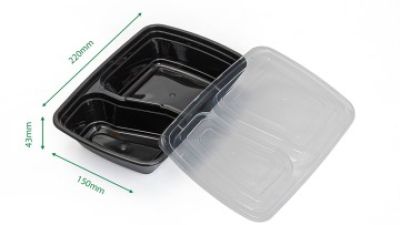
Two-compartment 27oz plastic meal containers offer a practical solution for portion control, meal preparation, and organized food storage. The FH28B provides an 800ml capacity, with separate sections that help keep main dishes and side foods apart, preserving texture and presentation. Its clear lid supports quick identification of contents, while the base is available in black or white. According to the UNEP Food Waste Index Report 2024, an estimated 1.05 billion tonnes of food were wasted globally in 2022, making reliable storage and portion management increasingly important for households, catering services, and takeaway operations.

Manufactured in China, the FH28B combines lightweight construction with everyday durability. It weighs approximately 45.6g and measures 8.66 × 5.91 × 1.69 inches (22 × 15 × 4.3cm), making it convenient for packed lunches, prepared meals, and refrigerator organization. Its stated operating range of -20°C to 120°C (-4°F to 250°F) supports use across common chilled and heated food-storage environments, provided handling follows the relevant food-contact and temperature guidelines for the intended application. Data from the Food and Agriculture Organization also indicates that significant food loss occurs before retail, highlighting the value of dependable containers throughout preparation, distribution, and consumption. For importers and food-service suppliers, consistent dimensions, color options, and separated compartments can simplify packaging programs while supporting practical kitchen routines.

FAQS

What should buyers assess before choosing a plastic container supplier?

Assess resin traceability, dimensions, closure performance, production consistency, and communication. Price alone is not enough.

Which material documents should a supplier provide?

Request resin specifications, migration data where relevant, and recent batch records. Claims need evidence.

Why are physical samples important?

Samples reveal cap fit, wall thickness, sealing quality, drop resistance, and label space. Catalog images can mislead.

How should containers be tested before production approval?

Test samples with the actual filling conditions. Include warehouse heat, repeated opening, transport drops, and stacking pressure.

What production details should buyers confirm?

Confirm capacity, minimum order quantities, tooling ownership, lead times, and backup plans. Ask about different production runs.

How can buyers check manufacturing quality?

Review calibration records, mold maintenance, quality procedures, and corrective-action reports. Certificates help, but they do not replace verification.

What logistics details deserve attention?

Check pallet patterns, carton strength, delivery history, and damaged-goods procedures. Weak cartons can ruin good containers.

How should the total cost be compared?

Include molds, freight, inspection, rejected units, storage, and replacements. A low quotation may hide expensive failures.

How should environmental claims be reviewed?

Request evidence for recycled content and reusable designs. Waste reduction sounds useful, but documentation matters more.

Should the supplier scorecard be updated later?

Yes. Review it after pilot production and the first shipment. Initial assumptions may be wrong. No scorecard is perfect.

Conclusion

Choosing the right Plastic Container supplier is essential for global buyers seeking dependable quality, competitive pricing, and consistent delivery. A leading supplier should offer a broad range of containers in suitable materials, sizes, shapes, and closures, while also providing flexible customization, reliable production capacity, and responsive international support. Buyers should evaluate manufacturing experience, quality control systems, product durability, and the supplier’s ability to meet specific packaging requirements.

This article explains how to compare ten leading supplier types worldwide by examining product variety, material options, customization services, certifications, regulatory compliance, minimum order quantities, pricing structures, shipping capabilities, and after-sales communication. It also highlights the importance of checking documentation, production timelines, sample approval procedures, and export experience before making a decision. By balancing quality, cost, service, and supply-chain reliability, businesses can select a Plastic Container partner that supports long-term growth and meets the practical demands of different international markets.

Liam

Liam

Liam is a dedicated marketing professional at Fujian Seafancy Technology Development Co., Ltd., a leader in the food packaging industry with two decades of expertise. With a profound understanding of disposable and recyclable food containers, he is passionate about promoting sustainable packaging......
Previous 10 Best PP Containers for Global Buyers in 2026?