Leave Your Message
0%

If you're a wholesale buyer heading into 2026, you've got a pretty practical problem on your hands: picking packaging that actually keeps food safe, doesn't blow the budget, and can keep up at service speed. The National Restaurant Association’s 2025 report? It projected U.S. restaurant sales to hit $1.5 trillion that year. At that scale, reliable takeout packaging isn't just some tiny supply detail—it's a real purchasing priority.

Honestly, there’s no single “best” to-go container—it really depends on what you’re serving and how far it has to travel. If you’re sending out soup, you need a lid that locks on tight and won’t leak. But crispy fried food? That needs breathing room, otherwise the steam turns everything soggy. So before you commit to a big order, do some homework: compare capacity, heat tolerance, stackability, how well the lids fit, case quantities, and what you’ll actually pay after shipping. And please, get samples. Don’t just eyeball them either—test with real portions, real sauces, and simulate your longest delivery time. Because a polished catalog photo won’t show you that the hinge snaps the first time someone carries it.

Material claims deserve a careful look too, honestly. The EPA’s 2018 Advancing Sustainable Materials Management report, for instance, counted about 82.2 million tons of containers and packaging in municipal solid waste—that’s 28.1% of the total. Okay, that number isn’t a direct measure of foodservice packaging specifically, but it still shows why material choice and disposal guidance matter. Paper, molded fiber, and plastic all have their trade-offs, and at the end of the day, local waste systems really influence the outcome. So, you’ll see “Containers Plastic Containers” pop up in a lot of product listings, but honestly, don’t just take that at face value — you really want to double-check the actual material and specs. There’s no single winner that works for everyone. This guide walks you through wholesale options, questions to ask suppliers, and the trade-offs, and we’ll also flag where the evidence is still a bit fuzzy and you’ll have to use your own judgment.
What Are the Best To Go Containers for Wholesale in 2026?

What To-Go Containers Are and How They Are Used

What Are the Best To Go Containers for Wholesale in 2026?

What To-Go Containers Are and How They Are Used

To-go containers hold prepared food for takeaway, delivery, and meal storage. Restaurants use them for hot entrées, chilled salads, sauces, and side dishes. The right shape helps prevent spills and keeps foods separate during a busy delivery. Some containers include divided compartments or clear lids, making portions easier to identify. Pp Containers, commonly made from polypropylene, are one option for foodservice packaging. Check each container’s product specifications; heat tolerance and microwave suitability can vary. Keep it simple. A lid that fits securely matters more than a complicated design.

Tips: Match the container to the food, portion, and service temperature. Test samples with a typical meal before ordering wholesale. Check stacking stability, lid fit, and storage space. Only use containers in a microwave or freezer when their instructions allow it.

A shallow container can suit rice bowls, while a deeper one may hold soup more securely when paired with a suitable lid. But no package solves every delivery problem. Sauces can still shift, and condensation may soften crisp foods. Staff feedback can reveal practical issues that a product sheet misses, such as lids slowing down packing. Track those details during a short trial, then compare unit cost, storage needs, and performance before placing a larger order.

Which Materials Are Commonly Used for To-Go Containers

What Are the Best To Go Containers for Wholesale in 2026?

Which Materials Are Commonly Used for To-Go Containers

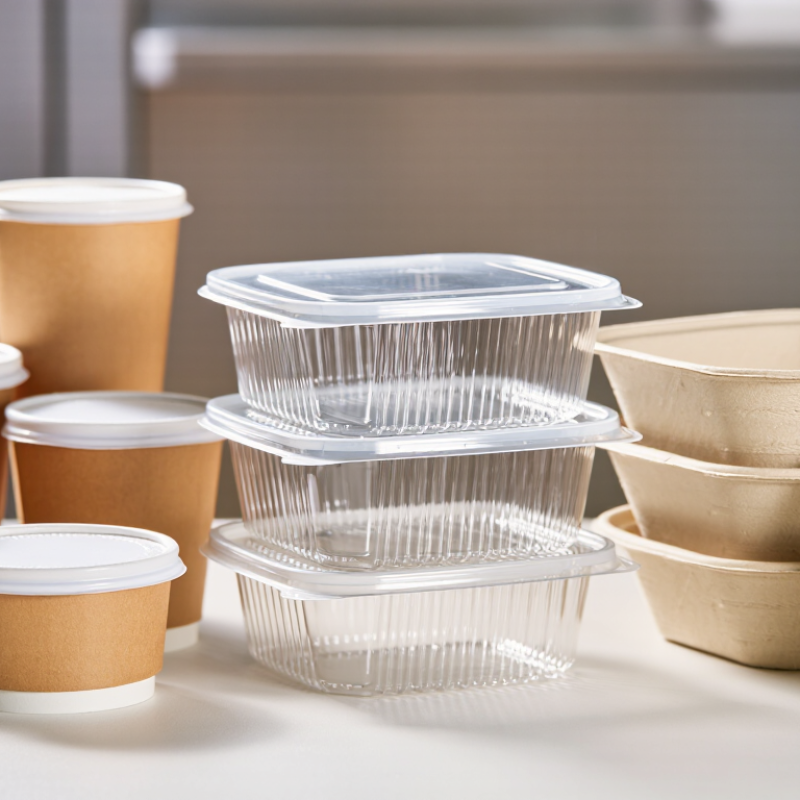
Choosing Top Containers starts with matching material to the food, serving temperature, and delivery time. Paperboard is light and printable, making it common for sandwich boxes and meal trays. Molded fiber has a textured surface and suits many dry or moderately moist foods. Plastic containers, including polypropylene, are valued for their durability and resistance to moisture; clear PET lets customers see chilled foods. Aluminum handles heat well, but is unsuitable for some microwave use. No material is perfect.

The U.S. Environmental Protection Agency’s Advancing Sustainable Materials Management report found that containers and packaging made up 28.1% of U.S. municipal solid waste in 2018. That figure covers packaging broadly, not just takeaway foodware, but it highlights why material choices matter. Compostable options such as PLA may require suitable commercial composting facilities; the label alone does not guarantee local processing. A common mistake is choosing by unit price without checking leakage, stacking strength, or disposal access.

Tips: Test containers with your actual menu. Pour hot soup into a sample, tilt it, and leave it for 20 minutes. Check the lid fit and condensation, too. Ask suppliers for food-contact specifications and verify that claimed recycling or composting options exist where customers will dispose of the packaging.

How to Match Container Types to Foods and Service Needs

Wholesale buyers should match containers to food texture, temperature, and travel time. The National Restaurant Association’s 2024 State of the Restaurant Industry reported that 75% of restaurant traffic is off-premises. That makes leak control and heat retention practical purchasing concerns, not small details.

For soups, curries, and saucy noodles, choose rigid, leak-resistant tubs with secure lids; test them filled and tilted.

For fries or crisp-fried items, use vented packaging. Steam needs an exit. Sealed containers can soften crisp coatings during even a short drive.

Salads travel better in sturdy bowls, with dressings and crunchy toppings kept separate. Use compartment trays when meals include foods that should not touch.

Match material and size to service conditions. Paperboard can suit dry or lightly sauced foods, while heat-tolerant plastic tubs may work better for hot, wet meals. Cups Containers should also stack securely and fit existing lids, storage shelves, and packing routines.

The FDA Food Code 2022 sets hot holding at 135°F or above and cold holding at 41°F or below; packaging alone cannot maintain safe temperatures.

Test samples with your actual menu and delivery routes. Test before scaling. A container that performs well at the counter may fail after a bumpy ride.

How to Assess Durability, Food Safety, and Leak Resistance

What Are the Best To Go Containers for Wholesale in 2026?

Wholesale buyers should test containers with the meals they will actually carry. Press the base and rim gently, then stack filled samples to check for warping or cracks. A sturdy container should hold its shape during packing and delivery, not just look rigid on a shelf. Feel the hinge and lid closure, too. Weak corners can split after repeated handling.

Food safety starts with clear documentation. Ask suppliers for food-contact material information and instructions for temperature limits, refrigeration, and reheating. Do not assume a container is microwave-safe because it feels thick. Check the stated use. If paperwork is vague, pause and ask for clarification. That can slow a purchase, but guessing is worse.

Leak resistance needs a practical test. Fill samples with warm soup, oily dressing, or a saucy entrée, close them, and tilt them over a tray. Check the seams and lid after a short delivery-style ride. No container is perfect. Very hot food, overfilling, or a misaligned lid can still cause trouble. Repeat the test with different staff members; closing pressure is not always consistent. A small test batch may reveal flaws that a catalog photo cannot.

How Wholesale Pricing, Minimum Orders, and Supply Affect Purchasing

Wholesale pricing for to-go containers is more than the price per piece. The quote may exclude lids, printing, freight, or protective packaging. A carton that looks inexpensive can cost more once delivery and storage are included. Ask for a written breakdown, including carton quantity and shipping terms. Compare the landed cost per usable container, not just the headline rate.

Minimum orders can strain cash flow and warehouse space. A low unit price may require buying several months of stock at once. Check whether the supplier allows mixed sizes or split deliveries. Request samples before committing. Test them with the actual menu: hot soup can expose weak seams, while a snug lid matters during delivery. Small details count.

When sourcing Togo Containers, confirm current stock, production lead time, and reorder timing in writing. Ask how the supplier handles shortages or delayed shipments. A container that fits today’s menu may not be available next month, and changing sizes can disrupt portion control. Keep a modest buffer for busy weeks, but avoid tying up cash in slow-moving stock. Forecasts are useful, though they are rarely perfect.

How to Choose To-Go Containers for Your Business in 2026

Choosing to-go containers in 2026 starts with your menu, not a catalog photo. A container that works for a dry sandwich may fail with curry or dressing. Match the shape and capacity to real portions. A 24-ounce bowl, for example, should hold your usual serving without leaving a tall, unstable stack. Check whether lids stay secure during a short delivery ride. Test it first.

Material affects heat retention, condensation, and handling. Paperboard, molded fiber, and plastic containers each perform differently, so review supplier specifications rather than relying on appearance. Confirm microwave suitability only when it is clearly stated. For hot noodles, check whether steam softens the base; for crisp foods, look for ventilation that helps release moisture. Small details matter. Still, one test meal will not represent every busy shift.

Compare wholesale cost per usable container, including lids, damaged pieces, and storage space. Measure your shelves and delivery bags before ordering a large quantity. Ask suppliers for food-contact documentation and clear recycling or compostability information; local collection options can differ. Run a small trial with staff, then inspect containers after packing, stacking, and transport. Keep notes on leaks, fit, and customer feedback. The first choice may be imperfect, and that is useful information. Purchase larger volumes only after the packaging fits your menu and workflow.

Wholesale Corn Starch Rectangular Food Packing Containers: Growth in a $637.6B Market by 2032 (Fortune Business Insights)

As food businesses look for packaging that combines practicality with lower reliance on conventional materials, corn starch-based rectangular containers offer a useful option for everyday service. Fortune Business Insights projects the market referenced in its report title to reach $637.6 billion by 2032, underscoring the scale of opportunity across food packaging. For wholesalers, restaurants, caterers, supermarkets, and food retailers, this growth makes it important to source containers that balance material considerations with dependable performance.

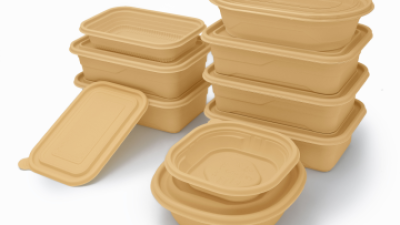
Made from corn starch-based material, these containers provide an eco-conscious alternative for packing a range of foods. Their food-grade construction is suitable for direct food contact, while the lightweight yet sturdy body supports storage, takeaway, and delivery. A matching lid fits securely to help protect meals and reduce spills during handling and transport. The rectangular format also works well for prepared meals, meal prep, catering portions, and retail food displays. As demand for convenient food service continues to shape packaging choices, wholesale buyers can consider these containers as a versatile option for businesses seeking reliable, easy-to-handle packaging.

FAQS

Which materials are commonly used for to-go containers?

Paperboard is light and printable, so it suits sandwich boxes and meal trays. Molded fiber works for dry or moderately moist foods. Plastic and aluminum offer other useful properties.

Which containers work well for hot or wet foods?

Polypropylene resists moisture and is durable. Aluminum handles heat well, but may not suit some microwave uses. Test the container with your actual menu.

Why choose clear PET containers?

Clear PET lets customers see chilled foods before opening the container. It is a practical choice when product visibility matters.

Are compostable containers always processed locally?

No. PLA may require suitable commercial composting facilities. A compostable label alone does not guarantee local processing. Check local disposal options.

How should I test a container before ordering?

Fill a sample with hot soup, tilt it, and wait 20 minutes. Check for leaks, lid fit, and condensation. Small details matter.

How can I compare wholesale prices fairly?

Include lids, printing, freight, and protective packaging in the calculation. Compare the landed cost per usable container, not only the unit price. It is easy to miss extra costs.

What should I check before accepting a minimum order?

Consider cash flow and storage space. Ask whether mixed sizes or split deliveries are available, and request samples before placing a large order.

How can I reduce supply problems?

Confirm stock, production lead time, and reorder timing in writing. Ask how shortages or delays are handled. Keep a modest buffer; forecasts are rarely perfect.

Conclusion

To Go Containers are essential for takeout, delivery, catering, and food preparation, helping businesses package meals for convenient transport and serving. This article explains common material options, including paper, molded fiber, plastic, and foil, and considers how each may suit different foods and service needs. Matching a container’s size, shape, and design to the menu can help preserve presentation and make meals easier to carry.

The guide also covers practical factors to review before purchasing, such as durability, food safety, heat tolerance, and resistance to leaks or grease. For wholesale buyers, pricing is only one part of the decision: minimum order quantities, storage space, supplier reliability, and steady availability can affect overall value. By weighing these considerations against the needs of their menu, customers, and operations, businesses can choose containers that are dependable, functional, and suitable for 2026.
Oliver

Oliver

Oliver is a seasoned marketing professional with extensive expertise in food packaging solutions, representing a company that has been at the forefront of the industry for over 20 years. With a passion for sustainability and innovation, he specializes in the promotion of disposable and recyclable......
Previous 10 Best Plastic Container Suppliers for Global Buyers?