China has really become a major hub for making polypropylene containers, especially for stuff like food, healthcare, household items, and industrial packaging. The demand for these containers is pretty high, thanks to polypropylene’s lightweight nature, chemical resistance, and how easily it can be molded into different shapes. According to Grand View Research, the global market for polypropylene was worth over USD 126 billion in 2022, and it looks like packaging will stay a leading use through at least 2030. That’s a strong sign of market potential, but honestly, it doesn’t automatically mean you’re getting quality suppliers.
In this guide, I’ll walk you through how to spot the good Chinese manufacturers based on real criteria. Things like their molding capabilities, whether they can trace their resins, their factory certifications, experience with exports, and their quality control processes all matter. We’ll also look at whether they can provide food-contact documentation, maintain consistent dimensions, perform leak testing, and offer custom tooling if needed. Companies like those studied by Smithers are now focusing on sustainability, making containers lighter, and using recycled materials, so you’ll see some of these trends reflected—though results definitely vary.
A trustworthy supplier should be able to share test reports, material specifications, samples, and clear inspection procedures. Having ISO 9001 certification helps show their processes are solid, but it’s not the whole story. It’s a good idea to double-check their actual factory capacity—photos and catalogs can sometimes be a bit misleading. This is where things often get tricky because publicly available info can be outdated or incomplete, and rankings can change fast with new machinery or customer feedback. So, I’m presenting these companies as practical options to consider—not as permanent winners. Their suitability really depends on your specific needs—like your order size, compliance requirements, and delivery deadlines. Bottom line: always do your homework before you sign any deals!
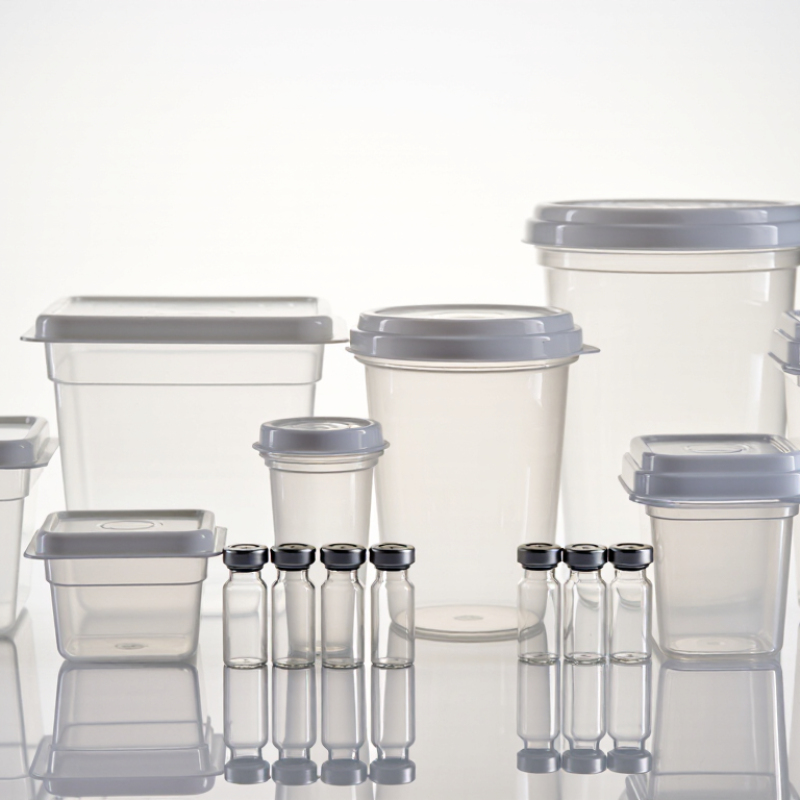
China’s top polypropylene container manufacturers are judged by more than price and production capacity. Reliable suppliers maintain clean molding areas, documented inspections, and stable resin sourcing. Their factories should show practical experience with injection molding, lid fitting, and high-volume packaging orders.
Polypropylene Deli Containers require accurate dimensions and dependable sealing. Buyers should request food-contact declarations, migration test reports, and batch traceability records. Useful checks include wall thickness, lid retention, stack strength, and performance under refrigeration. Samples matter more. A container may look sturdy but warp after repeated temperature changes. Factory audits can reveal problems hidden in polished catalogs, such as poor storage conditions or inconsistent labeling.
Leading manufacturers often provide custom colors, printed surfaces, compartment designs, and tooling support. However, customization can increase minimum order quantities and create longer approval cycles. Ask for pilot samples before approving mass production. Review material specifications, carton packing, delivery terms, and corrective-action procedures in writing. No factory is perfect. Even experienced producers may need improvements in mold maintenance or inspection frequency. The most dependable partner responds openly, records issues, and adjusts processes instead of making vague promises.
Polypropylene containers are lightweight, tough, and suitable for many everyday storage tasks. Their low moisture absorption helps protect dry goods, laboratory materials, and household products. The plastic also tolerates repeated handling without cracking easily. However, performance depends on wall thickness, additives, molding quality, and the intended temperature range.
In manufacturing, injection molding creates precise shapes with consistent dimensions. Engineers inspect surface finish, lid fit, weight, and resistance to impact. Food-contact applications require controlled materials and suitable testing records.
Clear specifications matter, including capacity, stackability, color, closure style, and operating temperature. A container may look strong but still deform under heat.
They are widely used for food storage, medical packaging, laboratory organization, and industrial components. Some designs include hinged lids, tamper-evident features, or measurement markings. Reusable versions need smooth interiors and durable hinges. I have found that small details often affect daily usability more than appearance. A tight lid is helpful, but excessive force can frustrate users. Polypropylene is recyclable in many systems, yet local recycling access varies. That limitation deserves honest consideration. Choosing a suitable Chinese manufacturer means reviewing material traceability, production samples, dimensional reports, and quality procedures before placing large orders.
Selecting Chinese polypropylene container manufacturers requires more than comparing quotations. Packaging creates about 40% of global plastic waste, according to the OECD’s Global Plastics Outlook 2022. Material efficiency should therefore be checked early. Ask for resin certificates, recycled-content records, melt-flow data, and batch traceability. A reliable factory can connect one container to its production date, mold, and raw-material lot.
Quality evidence matters more than polished presentations. Review ISO 9001 procedures, incoming-material checks, dimensional reports, leak tests, and sampling plans based on ISO 2859-1. For food-contact applications, request current compliance documents for the destination market. Inspect wall thickness around corners, lid fit, hinge performance, and stacking strength. Small defects often appear after transport, not during a showroom visit.
Capacity claims also need practical verification. Check mold ownership, machine tonnage, shift patterns, maintenance records, and recent delivery performance. The UNEP report Turning off the Tap (2023) states that plastic pollution could be reduced by 80% by 2040 through reuse, recycling, and material reduction. Ask whether the design reduces resin use without weakening the container. A cheaper quotation may hide higher scrap or unstable production. It can still look attractive. No audit is perfect, and sustainability documents may require independent confirmation. A pilot order, third-party inspection, and retained samples provide stronger evidence than promises.
Top Polypropylene Container Manufacturers in China
Leading Manufacturing Regions and Industrial Clusters in China
China’s polypropylene container industry is concentrated in several practical manufacturing regions. Zhejiang, especially Ningbo and Taizhou, has dense networks for injection molding, tooling, and household storage products. Factories there often share skilled technicians, mold suppliers, packaging services, and nearby ports. This shortens development cycles and supports flexible order volumes.
Guangdong remains important for food, chemical, and industrial containers. Foshan and Dongguan provide strong access to automated molding equipment, color masterbatch suppliers, and export logistics. In Jiangsu, cities such as Suzhou and Wuxi support precision production through advanced machinery, testing laboratories, and organized industrial parks. Shandong also serves buyers seeking larger containers, agricultural packaging, and dependable domestic transport links.
Regional advantages can be easy to overstate. A strong cluster does not guarantee consistent quality. Factory assessments should examine resin traceability, mold maintenance, wall-thickness control, and batch sampling records. Ask to see recent dimensional reports. Check the production floor, not only the showroom. Containers may look identical while their lids fit differently after cooling. That detail matters.
Experienced buyers usually compare more than price. They review cycle times, storage conditions, food-contact documentation where relevant, and corrective-action procedures. A reliable manufacturer can explain its process clearly and provide dated inspection evidence. Some suppliers still depend heavily on manual checks, which can create uneven results. This weakness deserves honest discussion before long-term cooperation.
China’s leading polypropylene container manufacturers combine high-volume production with disciplined process control. Experienced plants inspect resin batches before molding. They check melt flow, color consistency, and moisture levels. Small deviations matter.
Modern injection molding lines produce Polypropylene Cups, food containers, and lids with stable wall thickness. Operators monitor temperature, pressure, cooling time, and cycle speed. Samples are measured with calibrated gauges. Finished containers undergo leak tests, drop tests, stack-load checks, and visual inspections. A cup that looks acceptable may still deform under heat. That is where testing becomes valuable.
Reliable manufacturers maintain traceable records from raw material intake to final packing. Lot codes connect products with machine settings, inspection results, and shipment dates. Many facilities operate under ISO 9001 quality systems and use food-safety controls aligned with recognized international standards. Product-specific declarations, migration testing, and material compliance documents should be reviewed before purchase. Certifications can support trust, but they do not replace factory audits or independent verification. Claims also need checking.
A strong supplier welcomes technical questions. It can provide sample reports, tolerance data, and corrective-action records. Yet no factory should promise perfection. Tool wear, operator changes, and transport conditions can still create problems. Honest communication often reveals more than polished certificates.
| Evaluation Dimension | Industry-Recognized Capability or Requirement | Typical Application in PP Containers | Relevant Quality-Control Evidence | Applicable Standard or Certification |
|---|---|---|---|---|
| Injection Molding | Suitable for repeatable, high-volume production of rigid polypropylene parts with controlled dimensions. | Food tubs, storage boxes, pails, lids, caps, laboratory containers, and industrial packaging. | First-article approval, cavity-to-cavity dimensional checks, short-shot inspection, flash inspection, and weight verification. | ISO 9001:2015 quality-management framework; customer-specific drawings and control plans. |
| Thin-Wall Injection Molding | Designed for lightweight PP packaging while maintaining stacking strength and functional performance. | Dairy cups, takeaway containers, deli tubs, disposable food packaging, and portion containers. | Wall-thickness measurement, top-load or compression testing, leak testing, visual inspection, and weight control. | Food-contact compliance may include EU Regulation (EU) No 10/2011, FDA 21 CFR 177.1520, or applicable Chinese GB standards. |
| Injection Stretch Blow Molding | Produces lightweight, hollow PP containers with controlled neck and body geometry. | Specialty bottles, jars, pharmaceutical containers, and selected personal-care packaging formats. | Capacity and overflow-volume checks, neck-finish inspection, torque testing, leak testing, and drop testing. | Material and migration requirements depend on the intended market and end use. |
| Extrusion Blow Molding | Appropriate for hollow containers requiring handles, larger volumes, or more complex body shapes. | Industrial bottles, chemical containers, wide-mouth jars, and selected household packaging. | Parison-control checks, wall-distribution measurement, leak testing, handle-strength testing, and dimensional inspection. | ISO 9001-based process control and application-specific chemical or food-contact compliance. |
| In-Mold Labeling and Decoration | Integrates labels or decorative graphics during molding, reducing separate labeling operations. | Retail food containers, branded tubs, promotional packaging, and tamper-evident presentation formats. | Print-registration checks, label-position inspection, adhesion testing, barcode verification, and appearance grading. | Packaging inks, coatings, and adhesives should be evaluated for the intended food-contact or non-food-contact use. |
| Material Traceability | Raw-material lots, colorants, additives, production dates, and finished-goods batches can be linked through documented records. | Important for food packaging, pharmaceutical packaging, export orders, and regulated industrial applications. | Supplier declarations, certificates of analysis, batch coding, incoming inspection, and retention samples. | ISO 9001:2015 principles; customer, regulatory, and product-specific traceability requirements. |
| Dimensional Control | Critical dimensions such as height, diameter, wall thickness, neck finish, lid fit, and stackability are measured against approved specifications. | All rigid PP containers, especially closures, snap-fit lids, and automated filling formats. | Calibrated gauges, coordinate-measuring equipment where required, sampling plans, and statistical process monitoring. | Customer drawings, approved samples, inspection standards, and calibrated measurement procedures. |
| Functional Performance Testing | Testing verifies that containers perform under expected filling, transport, storage, and handling conditions. | Leak-proof packs, stackable tubs, screw-cap bottles, snap-lid containers, and reusable storage products. | Drop, compression, impact, torque, seal-integrity, top-load, and temperature-conditioning tests as applicable. | Test methods are selected according to container design, customer specifications, and destination-market requirements. |
| Food-Contact Compliance | The finished article, raw materials, additives, and intended conditions of use must be assessed for the target market. | Containers for dairy products, sauces, ready meals, confectionery, produce, and other food applications. | Migration testing, supplier declarations, formulation review, production-hygiene records, and batch documentation. | EU Regulation (EU) No 10/2011; FDA 21 CFR 177.1520; China GB 4806.6-2016, where applicable. |
| Food-Safety Management | A documented system manages hygiene, hazards, prerequisite programs, and food-packaging risks. | Primary and secondary packaging intended for direct or indirect food contact. | Hygiene audits, environmental controls, pest-control records, foreign-body prevention, and corrective-action reports. | FSSC 22000 or BRCGS Packaging Materials may be used when required by customers or supply chains. |
| Environmental Management | Controls energy use, waste, emissions, water, and environmental compliance within manufacturing operations. | Relevant to export suppliers, sustainability programs, recycled-content projects, and corporate procurement policies. | Waste records, energy monitoring, recycling controls, environmental objectives, and internal audits. | ISO 14001:2015 environmental-management system. |
| Worker Health and Safety | Provides a structured approach to machine safety, chemical handling, emergency response, and occupational-risk control. | Applicable to molding, printing, assembly, warehousing, maintenance, and tool-room operations. | Risk assessments, safety training, personal-protective-equipment records, emergency drills, and incident monitoring. | ISO 45001:2018 occupational-health-and-safety management system. |
Note: Certification and regulatory requirements vary by product type, intended use, and destination market. The listed standards should be verified against current certificates, test reports, and product-specific declarations before procurement.
Top Polypropylene Container Manufacturers in China
Customization, Minimum Orders, and Export Services
Reliable sourcing starts with a clear specification, not a colorful catalog. For Polypropylene Boxes, buyers should define length, wall thickness, lid fit, load capacity, and surface finish. Food-contact and storage applications may require different grades and test documents. Ask for a drawing before requesting a quotation. This reduces vague pricing and later disputes. Custom colors are usually possible, but small batches may increase pigment and tooling costs. Printed logos may also require separate setup charges.
Minimum orders vary by mold, material color, and production schedule. Low MOQ sounds attractive. However, the unit price may rise sharply. Ask whether the factory uses an existing mold or needs new tooling. A sample can look excellent and still reveal weak hinges after repeated use. That risk deserves attention. Request samples from the intended production line, not only a showroom sample. Check stacking, lid closure, odor, and surface consistency.
Export service should include protective cartons, pallet options, and clear shipping terms. One detail is often missed: carton dimensions can affect freight costs more than the container price. Confirm commercial invoices, packing lists, test reports, and origin documents before production. A capable manufacturer should provide photos during packing and support pre-shipment inspection. No supplier gets every detail right on the first attempt. Written approvals, measured samples, and realistic delivery schedules prevent many avoidable problems.
Top Polypropylene Container Manufacturers in China
Selecting the right Chinese polypropylene container manufacturer requires more than comparing unit prices. Start by defining the container’s use, capacity, wall thickness, lid design, and temperature range. For Polypropylene Food Packaging, ask whether the material is suitable for direct food contact and request current test reports. Verify the report scope, laboratory details, and production site. Do not rely on a certificate image alone.
A capable manufacturer should explain its molding process, quality checks, and traceability system clearly. Ask how it controls warping, sharp edges, uneven color, and lid fit. Request samples from regular production, not only polished showroom pieces. Check the container after stacking, freezing, heating, and repeated opening. Small defects matter. They can become costly complaints.
Factory audits also deserve attention. Review equipment maintenance, inspection records, worker training, and change-control procedures. A supplier with stable export experience may understand documentation better, but experience does not guarantee consistency. I would compare at least three factories and record every response in one evaluation sheet. Price often looks attractive before tooling, packaging, inspection, and shipping are included. That comparison can expose uncomfortable gaps. Communication is another practical test: ask the same technical question twice, weeks apart, and check whether the answer remains precise. No supplier is perfect. A transparent manufacturer will admit limitations and propose a measurable correction.
Check molding experience, inspection records, resin sourcing, and lid-fitting capability. Ask for recent production samples. Catalog photos are not enough.
Request food-contact declarations, migration test reports, material specifications, and batch traceability records. Check the laboratory details and report scope. A certificate image alone proves little.
Test samples for wall thickness, lid retention, leakage, stacking, and temperature changes. Freeze, heat, and reopen them repeatedly. Small defects can become expensive complaints.
It should inspect resin batches, moisture levels, color consistency, and melt flow. Finished products need leak, drop, stack-load, and visual tests. Measurements should use calibrated gauges.
Lot codes should connect materials, machine settings, inspection results, and shipment dates. These records help locate problems quickly. Without them, investigation becomes guesswork.
No. Certifications can support confidence, but they do not prove daily consistency. An audit should review storage, equipment maintenance, worker training, and inspection records. Polished certificates can hide practical gaps.
Custom colors, printed surfaces, compartments, and tooling may increase minimum order quantities. Approval may also take longer. Request pilot samples before production.
Compare at least three factories using one evaluation sheet. Include tooling, packaging, inspection, shipping, quality controls, and delivery terms. The lowest unit price may not be the lowest total cost.
Ask the same technical question again after several weeks. The answer should remain precise and consistent. Honest suppliers admit limitations and suggest measurable corrections. No factory is perfect.
China has become a major source of Polypropylene Containers for food packaging, household storage, laboratory use, industrial materials, and logistics. These containers are valued for their light weight, chemical resistance, durability, and suitability for repeated use. When evaluating manufacturers, buyers should consider material quality, molding technology, production capacity, dimensional accuracy, hygiene management, and consistency between batches. Major industrial regions in China offer established supply chains for plastics, tooling, packaging, and transportation, helping manufacturers provide efficient and scalable production.
A suitable manufacturer should also demonstrate reliable quality control, clear testing procedures, and relevant certifications for the intended market. Buyers should discuss customization options such as shape, size, color, lid design, labeling, and packaging, while confirming minimum order quantities, sampling processes, lead times, and export support. Comparing communication efficiency, pricing transparency, production flexibility, and after-sales service can help companies select a dependable long-term partner that meets both technical requirements and international compliance expectations.