Leave Your Message
0%

When global buyers are on the hunt for a plastic container, they often run into a pretty practical challenge: finding something that’s not just good-looking but also reliable enough to survive the trip, fit the contents perfectly, and arrive in one piece every time. For example, a jar might look spot-on in the showroom, but after some handling, it could start leaking—small details really do make a difference.

The stakes here are pretty high. According to the OECD’s Global Plastics Outlook, in 2019, the world produced about 353 million tonnes of plastic waste—roughly 40% of which came from packaging. That’s a lot! It’s no surprise that people aren’t just comparing unit prices anymore. They’re also checking out production capacity, quality control measures, material specs, lead times, and whether the supplier can provide solid documentation. It’s all about making sure the supplier can keep up and deliver quality.

And let’s be real: there’s no one-size-fits-all “best” supplier. A food brand might care most about reliable closures and consistent sizes, while a personal care company might prioritize how well a container dispenses product and how good it looks on the shelf. So, it’s smart for buyers to verify claims by checking samples, reading technical documents, and having conversations directly with manufacturers. Company websites are a good starting point, but don’t take their word as gospel—sometimes they can oversell a bit. Always double-check.

This guide is here to introduce you to some plastic container suppliers that serve international clients and to give you a few practical tips for comparing them. It pulls together industry insights and supplier info, but keep in mind that things can change quickly—they might update their capabilities or offerings. Think of any shortlist as just that—your starting point. Make sure to double-check specs, order terms, and quality standards before you seal the deal. Good sourcing isn’t just about finding a supplier; it’s about asking the right questions—and sometimes, it means getting a second sample to be totally sure.

Top Plastic Container Suppliers for Global Buyers?

What Plastic Container Suppliers Provide to Global Buyers

Global buyers expect more than low prices from plastic container suppliers. They need stable dimensions, reliable closures, and documentation that survives customs checks. A Plastic Container may hold food, cosmetics, chemicals, or household goods. Each use requires different resin grades, wall thicknesses, and testing procedures.

Suppliers increasingly provide design support, mold development, color matching, and small pilot runs. They should also offer batch records, material declarations, and migration testing where applicable.

Grand View Research valued the global plastic packaging market at about USD 438.9 billion in 2023. Its report forecasts continued growth through 2030, increasing pressure on suppliers to improve capacity and consistency. In practical sourcing, buyers should request sample measurements, production tolerances, and inspection photographs before placing large orders.

Recycling information matters too. The OECD’s Global Plastics Outlook estimates that global plastic waste could rise from 353 million tonnes in 2019 to 1,014 million tonnes by 2060 without stronger action. Suppliers can respond with recycled-content options, mono-material designs, and lighter packaging.

However, sustainability claims are not always clear. Buyers should verify recycled content, certificates, and local recyclability instead of trusting attractive wording. ISO 9001-based quality systems help, but they do not replace independent testing. Some supplier websites look excellent, yet their samples may reveal uneven seams or weak caps. That gap deserves attention.

How Plastic Container Types Differ by Material and Use

Top Plastic Container Suppliers for Global Buyers?

Plastic container selection depends on material, product chemistry, temperature, and transport stress. PET offers strong clarity and reliable barrier performance for water, sauces, and personal-care liquids. HDPE handles impact well and suits detergents, powders, and larger industrial packs. PP tolerates higher filling temperatures and repeated handling, making it useful for food tubs and laboratory containers. These differences matter more than appearance.

The OECD Global Plastics Outlook reported 353 million tonnes of plastic waste worldwide in 2019, with only 9% recycled. Packaging created a major share of this waste. Therefore, global buyers should examine recycled content, local collection systems, and container weight together. A lighter bottle may reduce shipping emissions, yet it can deform during stacking. I have seen specifications overlook this practical failure. The cheapest resin is not always the lowest-cost choice.

Tips: Use Plastic Container only after checking compatibility tables, closure torque, wall thickness, and drop-test results. Ask suppliers for migration, food-contact, and recycled-content documentation from accredited laboratories. Also confirm whether the selected resin is actually recyclable in the destination market. The Ellen MacArthur Foundation reports that packaging design strongly affects circularity, but design alone cannot repair weak collection infrastructure. Small warning: “recyclable” does not guarantee recycling.

Which Industries Depend on Plastic Container Suppliers

Which Industries Depend on Plastic Container Suppliers

Plastic container suppliers support far more than retail shelves. Food and beverage manufacturers depend on them for bottles, tubs, jars, and sealed takeaway packaging. These containers must resist pressure, temperature changes, and repeated handling during transport. A weak closure can spoil products before they reach a store. This sounds simple. It is not.

Pharmaceutical companies require accurate dimensions, clean production areas, and dependable barrier performance. Small variations may affect filling equipment or dosage labeling. Cosmetic producers also need containers that protect creams, lotions, and liquids from light and air.

Household cleaning manufacturers often select strong plastic bottles with controlled dispensing caps. Industrial businesses use larger containers for lubricants, detergents, and maintenance fluids. Each sector needs different wall thickness, shape, and closure strength.

Reliable buyers examine more than price. They review material specifications, batch records, sample results, and supplier quality procedures. Food-related packaging may require migration testing and documented hygiene controls. Pharmaceutical packaging often needs tighter traceability and validation evidence. Recyclability matters too, although it can conflict with strength, appearance, or cost. That trade-off deserves honest discussion. In practice, supplier claims still need independent checking. Samples should undergo drop tests, leak checks, and storage trials before large orders. Regional transport conditions also matter, especially where heat, humidity, or long delivery routes can expose weak packaging.

How to Evaluate Suppliers for Quality and Compliance

Top Plastic Container Suppliers for Global Buyers?

Choosing a plastic container supplier requires more than comparing quotations. Review the supplier’s production experience, material controls, and inspection records. For Plastic Container Pp products, request the resin specification, batch number, and production date. Check whether each batch can be traced from raw material to finished cartons. A reliable supplier should explain its molding process clearly. Ask for sample containers before approving a large order. Inspect the lid fit, wall thickness, surface finish, and resistance to cracking. Small defects often appear after stacking or transport.

Compliance documents need careful verification. Request current test reports from competent laboratories, not only supplier-made declarations. Confirm that testing matches the container’s intended use and destination market. Relevant evidence may include migration testing, chemical composition records, and packaging safety assessments. Review factory quality procedures and calibration records. A remote video tour helps, but it cannot replace an independent inspection. This is where many buyers become too confident.

Tips: Compare samples from different production lots. Check carton labels against test documents. Ask how rejected products are separated. Confirm corrective actions after defects. Keep written approval records. If a supplier avoids specific answers, pause the purchase. A neat certificate is not proof of consistent quality. I would also recheck assumptions, because even experienced buyers can overlook changes in materials, tooling, or subcontracted production.

How Sourcing, Pricing, and Shipping Shape Supplier Selection

Choosing The Plastic Container supplier requires more than comparing catalog photos. In supplier audits, buyers often find that material grade, wall thickness, and closure fit affect real costs. A lower quote may hide higher defect rates or weaker packaging. Ask for samples from current production, not only polished prototypes. Request batch records, inspection methods, and test results for leakage, stacking, and temperature resistance. This evidence shows whether a supplier can repeat its promised quality.

Sourcing distance also changes pricing. Tooling, minimum order quantities, color requirements, and custom labeling can shift the final unit cost. Ask for a landed-cost breakdown. Include molds, cartons, port fees, insurance, and possible currency changes. Shipping decisions matter just as much. Sea freight usually reduces cost for large orders, while air freight supports urgent replenishment. However, rushed shipping can damage margins quickly. Delivery estimates need buffer time. Real operations are rarely perfect.

Tips: Compare at least three written quotations. Confirm production capacity before signing. Check how containers are packed inside cartons. Ask for a pre-shipment inspection and clear replacement terms. Recalculate costs after sample approval. A supplier may appear reliable, yet small communication gaps can become expensive delays. Reflect on your own forecast, too. An overly optimistic order plan can create unnecessary stock and storage pressure.

Top Plastic Container Suppliers for Global Buyers? - How Sourcing, Pricing, and Shipping Shape Supplier Selection
Supplier Profile Typical Product Range Common Materials Typical MOQ Indicative Unit Price* Customization Capability Typical Production Lead Time Export Packaging Shipping Considerations Best Fit for Global Buyers
High-volume injection molding supplier Wide-mouth jars, food containers, household storage boxes, industrial tubs PP HDPE PET 10,000–50,000 pieces per design US$0.08–0.75 Custom molds, colors, surface textures, lids, labels, and printed decoration 25–45 days after artwork and mold approval Polybags, corrugated cartons, palletized export loads Suitable for full-container shipments; tooling and mold storage should be confirmed before ordering Large retailers, food-service distributors, and buyers seeking low unit cost
Blow molding bottle specialist Bottles, jerry cans, detergent containers, personal-care packaging HDPE LDPE PET 5,000–30,000 pieces per size US$0.10–1.20 Custom bottle shapes, neck finishes, handles, caps, colors, and label application 20–40 days for repeat designs; longer for new tooling Cartons or nested stacks with dividers; caps may be packed separately Empty bottles occupy substantial volume, so cubic-meter utilization and freight rates are critical Cleaning products, cosmetics, chemicals, and liquid consumer goods
PET preform and bottle producer Water bottles, beverage bottles, clear food containers, hot-fill packaging PET rPET 20,000–100,000 pieces per specification US$0.06–0.45 Bottle weight, neck finish, transparency, color, and recycled-content options 15–35 days for standard formats Layered cartons, polyethylene liners, and pallet wrapping Lightweight products reduce weight-based freight, but high volume can trigger container-space limits Beverage companies and buyers with predictable, high-volume demand
Small-batch custom packaging supplier Cosmetic jars, sample containers, specialty food tubs, promotional packaging PP PET Acrylic 500–5,000 pieces per design US$0.25–3.50 Strong support for short runs, logo printing, color matching, inserts, and assembled sets 15–30 days for stock shapes; 30–60 days for custom parts Individual bags, protective dividers, small cartons, and mixed-SKU packing Air freight can be practical for urgent or low-volume orders; dimensional weight must be checked Start-ups, product launches, seasonal collections, and market testing
Recycled-content packaging supplier Recycled plastic bottles, jars, tubs, and refill containers rPET rHDPE PCR-PP 5,000–50,000 pieces per specification US$0.15–1.60 Recycled-content percentages, color options, material declarations, and sustainability documentation 30–60 days, depending on resin availability and testing Recyclable cartons, pallet wrap, and moisture-protected inner packaging Confirm resin origin, recycled-content percentage, food-contact status, and documentation before shipment Buyers with recycled-content targets or sustainability reporting requirements
Regional contract packaging supplier Standard containers, closures, filled-product packaging, and private-label assembly PP HDPE PET 1,000–20,000 pieces per order US$0.30–2.80 Stock-container selection, labeling, kitting, filling, and secondary packaging 10–30 days for stock packaging; 30–45 days with assembly services Finished retail cartons, shrink wrap, dividers, and export pallets Regional production can shorten transit time and reduce customs complexity, but labor costs may be higher Buyers prioritizing speed, lower inventory exposure, and local or regional distribution
Industrial heavy-duty container supplier Drums, pails, chemical containers, transport totes, and stackable storage bins HDPE PP 500–5,000 pieces per model US$1.50–25.00 Reinforced walls, UN-rated designs, threaded closures, handles, and color coding 25–50 days for standard products Nested units, protective caps, palletized loads, and heavy-duty strapping Product certification, dangerous-goods rules, gross weight, and pallet dimensions may affect freight planning Chemical, agricultural, industrial, and logistics applications
*Indicative export-level price ranges in U.S. dollars for commonly ordered plastic containers. Actual pricing varies according to resin grade, product weight, tooling, decoration, order volume, compliance requirements, Incoterms, destination, and freight conditions. Lead times exclude international transit and customs clearance.

What Global Buyers Should Verify Before Placing an Order

Top Plastic Container Suppliers for Global Buyers?

What Global Buyers Should Verify Before Placing an Order

A supplier’s website is only a starting point. Request the factory address, production photos, and a recent quality audit report. Verify whether the supplier manufactures containers or resells them. This difference affects traceability, lead times, and problem handling. Ask for resin specifications, wall-thickness tolerances, container weight, neck dimensions, and closure compatibility. Small variations can cause leaks on an automated filling line.

Request production samples from the intended mold, not only showroom samples. Test stacking strength, drop resistance, seal performance, and cap torque under realistic conditions. For packaging used with food, cosmetics, or household products, obtain current compliance documents and migration test reports. Documents should identify the material, testing method, laboratory, and issue date. Check whether the reports match your destination market and product application. A copied certificate proves very little.

Confirm minimum order quantities, tooling ownership, payment terms, production capacity, and realistic shipping schedules. Ask how batches are labeled and how defects are recorded. A dependable supplier should explain its inspection points clearly. It should also provide a corrective-action process. I once focused too heavily on unit price and underestimated mold maintenance costs. That mistake changed the final budget. Buyers should leave room for testing delays, because approval rarely moves perfectly. Inspect pre-shipment goods independently when the order is commercially important. Keep every approved sample, drawing, and written specification. Clear records protect both sides when expectations differ.

36oz Leak-Proof PP Plastic Bowls: Wholesale Trends from Grand View Research’s Plastic Packaging Market Report

The plastic packaging market continues to expand as foodservice, takeaway, and meal-preparation businesses seek practical, lightweight, and cost-efficient formats. According to Grand View Research’s *Plastic Packaging Market* report, the global market was valued at approximately USD 430.41 billion in 2023 and is projected to grow at a CAGR of 3.9% through 2030. This growth reflects continued demand for convenient packaging, secure closures, and transport-friendly designs, particularly in high-volume food applications.

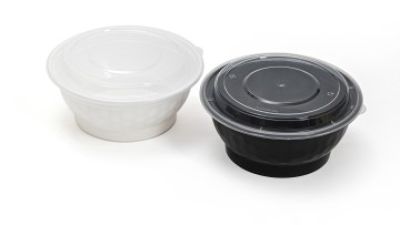
The HJ36 36oz leak-proof PP plastic bowl is designed for wholesale buyers looking for dependable everyday performance. With a capacity of 1,120ml, it combines a clear lid with a black or white base, offering a clean presentation for salads, noodles, prepared meals, and other takeaway foods. Each set weighs approximately 41.7g, while its 7.05 × 2.95-inch dimensions support efficient storage and handling. The polypropylene construction provides a practical balance of durability and low weight for distribution and daily use.

For bulk purchasing, the product is supplied in cartons containing 150 sets, with carton dimensions of 21.46 × 7.09 × 14.45 inches. A 40HQ container can hold approximately 1,940 cartons, helping importers optimize shipment capacity and manage per-unit logistics costs. Direct sourcing from qualified manufacturers in China also supports consistent specifications, color selection, and scalable wholesale supply.

FAQS

What should buyers check before choosing a plastic container supplier?

Review production experience, material controls, inspection records, and traceability. Ask whether the supplier manufactures the containers or resells them.

Which material details should buyers request?

Request resin specifications, batch numbers, and production dates. Confirm that each batch can be traced from raw material to finished cartons.

What should buyers inspect on container samples?

Check lid fit, wall thickness, surface finish, and resistance to cracking. Test samples from the intended mold, not just showroom pieces.

Which performance tests matter before placing an order?

Test stacking strength, drop resistance, seal performance, and cap torque under realistic conditions. Small dimension changes can cause leaks on filling lines.

How can buyers verify compliance documents?

Request current reports from competent laboratories. Check the material, test method, laboratory, issue date, intended use, and destination market.

Is a supplier’s certificate enough to confirm product quality?

No. A copied certificate proves very little. Compare reports with samples, carton labels, and the actual product application.

What production and inspection details should buyers confirm?

Ask about batch labels, defect records, rejected-product separation, quality checks, and corrective actions. Written answers matter.

What commercial details can affect the final budget?

Confirm minimum order quantities, tooling ownership, payment terms, capacity, and shipping schedules. Mold maintenance can raise costs unexpectedly.

Can a remote factory tour replace an independent inspection?

No. A video tour helps, but it cannot replace independent checks. Consider pre-shipment inspection for important orders.

What records should buyers keep after approving samples?

Keep approved samples, drawings, specifications, test reports, and written approvals. Testing delays happen, and expectations can drift.

Conclusion

Global buyers rely on Plastic Container suppliers for a broad range of packaging solutions, including bottles, jars, tubs, drums, and custom-designed containers. Different materials, such as PET, HDPE, PP, and recyclable alternatives, offer varying levels of strength, flexibility, chemical resistance, transparency, and temperature tolerance. These differences make certain containers more suitable for food and beverages, personal care, pharmaceuticals, household products, agriculture, and industrial applications.

Selecting the right supplier requires careful evaluation of product quality, manufacturing consistency, certifications, testing procedures, and regulatory compliance in the target market. Buyers should also compare pricing based on material, order volume, customization, molds, and packaging requirements. Shipping methods, lead times, minimum order quantities, and delivery reliability can significantly influence the total sourcing cost. Before placing an order, global buyers should verify samples, technical specifications, production capacity, quality-control systems, payment terms, documentation, and after-sales communication to ensure the supplier can support a stable and compliant long-term partnership.
Oliver

Oliver

Oliver is a seasoned marketing professional with extensive expertise in food packaging solutions, representing a company that has been at the forefront of the industry for over 20 years. With a passion for sustainability and innovation, he specializes in the promotion of disposable and recyclable......
Previous Top Polypropylene Container Manufacturers in China