Picking a reliable manufacturer for your Bento lunch boxes isn't just about finding a good deal—it’s a decision that really affects the safety, durability, and how customers see your brand. Sure, some less reputable suppliers might lure you in with low prices, but those tiny defects can pop up pretty quickly—hinges might come loose, seals could fail, or the printed logo might fade after washing a few times. It’s all about quality that lasts.
Thomas Bertrand, the guy who started Bento&Co, once said, “A bento box should make everyday meals simpler, cleaner, and more enjoyable.” That really hits home, doesn’t it? A lunch box isn’t just about looking nice in a picture—it’s got to hold up in real life routines. So, when you’re choosing a supplier, you should really dig into the materials they use for contact with food, do their testing for leaks and temperature retention, and check if they can keep production consistent. Plus, factory audits and solid quality records are super important.
Experience shows in the details. A trustworthy manufacturer will be able to explain their choice of materials, how they control molds, their inspection processes, and how they handle issues when something goes wrong. They should be willing to send samples before going big and be upfront about what they can or can’t do. It’s also good if they understand how a proper Lunch Packaging Box keeps products safe during shipping and display—things like carton strength, internal padding, and moisture barriers go a long way in avoiding unnecessary losses.
No manufacturing process is perfect—that’s just the way things are. Even seasoned suppliers might face issues like slight color differences, delays with parts, or reject batches sometimes. What really counts is how they handle these hiccups. Do they document the problem? Do they come up with real solutions? And do they learn from these issues to improve moving forward? A good partner won’t shy away from tough questions; they’ll show you real evidence rather than just making promises.
This article aims to highlight what makes a manufacturer trustworthy versus one that could be risky, because at the end of the day, every supply decision deserves careful thought—it's about more than just price, after all.
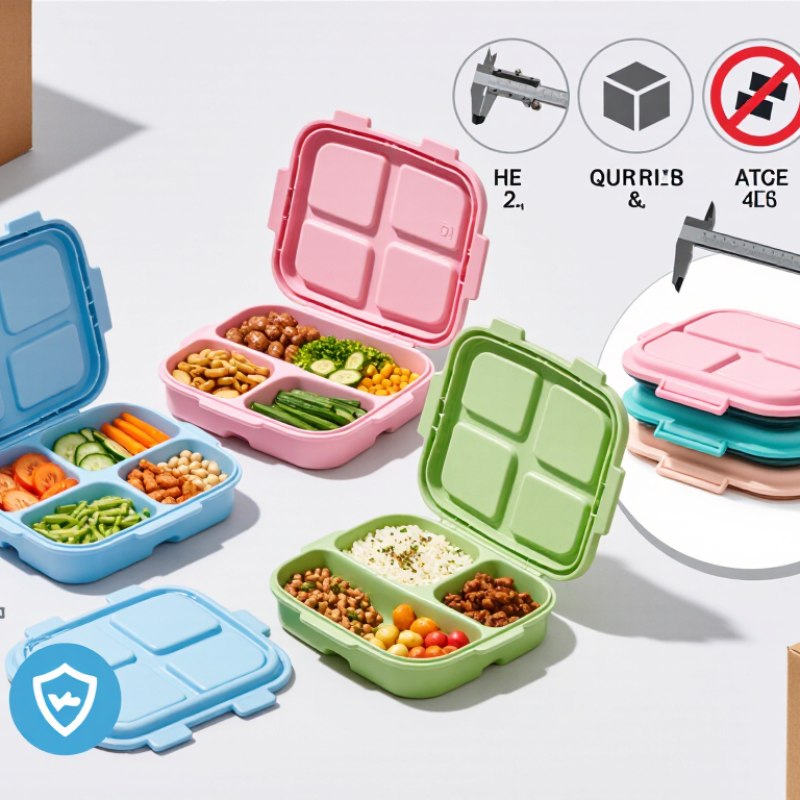
A reliable bento lunch box manufacturer proves quality through daily production, not attractive promises. In my experience, small details often reveal the difference. A secure lid should close evenly, without forcing one corner down. Compartments must remain stable after repeated washing and handling.
Professional manufacturers select food-contact materials with documented specifications. They should provide batch records, inspection reports, and clear testing procedures. Useful checks include odor, leakage, hinge strength, temperature resistance, and surface durability. The factory should also explain how it manages defects. Vague answers create unnecessary risk. Honest communication matters.
I once tested a sample that looked excellent but warped after hot-water cleaning. That mistake changed how I evaluate suppliers. A dependable manufacturer welcomes prototypes, records test results, and responds with practical adjustments. It should understand packaging needs, portion sizes, and real family routines. A rigid design may fail in a crowded school bag. A loose divider may mix rice with fruit.
Some buyers compare reusable products with a Plastic Disposable Lunch Box because the price seems lower. However, repeated use requires stronger materials and more careful engineering. Reliable suppliers should discuss lifespan, cleaning instructions, and responsible material choices. They should not hide limitations. No factory gets every sample perfect. What matters is whether it notices weaknesses and corrects them before mass production.
Why Choose a Reliable Bento Lunch Box Manufacturer?
How Manufacturing Expertise Affects Bento Box Quality
A bento box may look simple, but its quality depends on many small manufacturing decisions. Experienced manufacturers understand how material thickness affects strength, weight, and heat resistance. They also control molding temperatures carefully. This reduces warping around the lid and compartments.
In production, precise measurements matter. A lid that is slightly loose can leak soup inside a school bag. A hinge that is too stiff may crack after repeated use. Reliable factories test sealing performance, hinge cycles, surface smoothness, and compartment alignment. They should also provide food-contact material reports and keep inspection records for each production batch. These details show practical experience, not just attractive samples.
No factory gets every detail perfect. Even experienced teams may discover problems during transport testing. What matters is how quickly they investigate and improve the design. I have found that clear communication often prevents bigger quality issues. Buyers should ask about mold maintenance, random inspections, and traceability. These questions reveal whether a manufacturer treats quality as a process or a promise.
Tips: Check the lid seal by filling the box with water. Inspect corners for rough edges. Ask for sample testing records. Compare the finished sample with the approved drawing. Small differences deserve attention.
| Manufacturing Dimension | Typical Quality-Control Data | How Expertise Affects Bento Box Quality | Recommended Verification |
|---|---|---|---|
| Material Selection and Traceability | Material grade, supplier batch, colorant information, and food-contact documentation are recorded for each production lot. | Controls help reduce material mix-ups and support consistent odor, color, strength, and food-contact performance. | Review batch records, declarations of compliance, and applicable food-contact test reports. |
| Mold Design and Dimensional Control | Critical dimensions include lid alignment, compartment size, hinge position, wall thickness, and gasket seating surfaces. | Accurate tooling and measurement reduce lid gaps, uneven walls, deformation, and incompatibility between components. | Use calibrated gauges or coordinate-measuring equipment and retain first-article inspection records. |
| Lid and Gasket Sealing | Leak testing commonly checks the assembled box with water under defined orientation, time, and handling conditions. | Correct compression, material selection, and assembly control help prevent leakage during transport. | Define a written leak-test method and record pass/fail results by production lot. |
| Injection-Molding Process Stability | Important process variables include melt temperature, mold temperature, injection pressure, cooling time, and cycle time. | Stable parameters improve part weight, surface finish, strength, and dimensional consistency across batches. | Check process records, start-up samples, control charts, and corrective-action reports. |
| Heat and Temperature Resistance | Testing should reflect the intended use, such as hot-food contact, refrigeration, microwave use, or dishwasher cleaning. | Proper resin selection and design reduce warping, cracking, discoloration, and loss of sealing performance. | Verify the product against its declared temperature range and conduct repeated-use testing where applicable. |
| Mechanical Durability | Relevant checks may include hinge cycling, latch operation, drop testing, compression, and repeated opening and closing. | Experienced engineering teams can reinforce high-stress areas without creating unnecessary material use or difficult cleaning points. | Set cycle counts and drop conditions based on the product’s intended use and packaging configuration. |
| Food-Contact Compliance | Applicable requirements may include relevant food-contact rules in the destination market, such as EU Regulation (EC) No. 1935/2004 or applicable national regulations. | A knowledgeable manufacturer can identify material, additive, migration, and labeling requirements before mass production. | Confirm that reports match the exact material, color, product construction, and intended market. |
| Surface Finish and Cleanability | Inspection focuses on flash, sharp edges, sink marks, weld lines, scratches, trapped food areas, and surface uniformity. | Refined mold finishing and product design support smoother surfaces and fewer locations where food residue can collect. | Perform visual inspection and cleaning-use evaluations on production samples. |
| Quality Sampling and Inspection | Sampling plans may be based on ISO 2859-1 or an agreed inspection level, with separate checks for critical, major, and minor defects. | A structured inspection system makes acceptance criteria clear and reduces inconsistent decisions between production lots. | Approve a written inspection specification before production and review inspection records after completion. |
| Corrective Action and Batch Consistency | Nonconformities should include a defect description, root-cause analysis, corrective action, responsible person, and closure date. | Reliable follow-up prevents repeated defects and improves consistency across future orders. | Request corrective-action records and compare samples from different production dates or lots. |
Note: Test methods, acceptance limits, and legal requirements should be agreed according to the product design, materials, intended use, and destination market.
Choosing a reliable bento lunch box manufacturer starts with material control, not attractive packaging. Polypropylene is lightweight and commonly used for food containers. Stainless steel offers durability and avoids plastic contact. Food-grade silicone may help seal lids, but its fillers and pigments still require testing. A Plastic Lunch Box Disposable option needs closer scrutiny.
The OECD Global Plastics Outlook reported 353 million tonnes of plastic waste in 2019. Packaging represented about 40% of that waste. This figure makes material efficiency important, but safety comes first. Ask manufacturers for food-contact declarations, migration-test results, and traceable batch records. Testing should cover heavy metals, primary aromatic amines, BPA, and overall migration. It should also reflect real use, including hot rice, oily sauces, and repeated washing.
In practical audits, check the lid’s odor after heating and inspect corners for trapped food. Small details matter. The manufacturer should reference FDA food-contact requirements or EU Framework Regulation 1935/2004, where applicable. Plastic parts should also align with EU Regulation 10/2011 when sold in relevant markets. Accredited laboratories operating under ISO/IEC 17025 add credibility. Still, certificates can become outdated, and that is an uncomfortable weakness. Request current reports, production samples, and corrective-action records before approving a supplier.
A reliable manufacturer begins with real mealtime habits, not only attractive sketches. Designers study portion sizes, hand strength, cleaning routines, and bag space. A divided tray should separate rice, fruit, and sauces without wasted corners. Rounded edges help users scoop food and wash the box thoroughly. Small details matter.
Customization should solve practical problems. A manufacturer can adjust compartment depth, lid pressure, handle shape, and color coding. For office meals, a slim profile may fit beside a laptop. For children, lighter materials and simple clips can reduce frustration. Some buyers compare reusable formats with Lunch Box Containers Disposable options. The better choice depends on washing access, meal frequency, and waste concerns.
Functionality also requires careful testing. Samples should face repeated opening, drops from table height, temperature changes, and dishwasher cycles when suitable. Quality teams should check seals, hinges, odors, and surface damage. Food-contact documentation and production traceability add confidence. They do not replace experience.
No design is perfect. A tighter seal may require stronger fingers. A larger compartment may make the box harder to carry. Honest manufacturers explain these trade-offs before production. They revise prototypes after user feedback, even when the first sample looks impressive. That process builds a lunch box around daily needs, not showroom appearance.
Why Choose a Reliable Bento Lunch Box Manufacturer?
Why Quality Control and Product Testing Matter
A reliable bento lunch box manufacturer treats safety as a daily process, not a marketing phrase. The World Health Organization estimates that 600 million people suffer from foodborne illness each year. That figure makes material selection and hygiene controls especially important for food-contact products.
Quality control should begin with incoming materials. Inspectors can check resin identification, odor, color, dimensions, and surface damage. Product testing should also examine leakage, hinge strength, temperature resistance, and repeated washing. These checks reflect real use: a lunch box may sit in a warm car, carry soup, or open inside a crowded school bag. Testing laboratories can assess materials against applicable food-contact requirements, such as those referenced by the U.S. Food and Drug Administration and European food-contact frameworks.
Small details matter.
A strong manufacturer keeps batch records, inspection photos, test reports, and corrective-action logs. This evidence supports traceability when a defect appears. It also helps buyers compare products with Disposable Lunch Box Containers fairly, rather than trusting attractive packaging. In my experience, factories sometimes focus heavily on first-piece approval. That is not enough. Production drift can happen later, and one unnoticed change may affect fit or sealing. No test plan is perfect, so periodic retesting deserves honest review.
Tips: Request recent third-party reports, not only internal certificates. Ask how failed samples are handled. Check whether the tested model matches the delivered product, including its lid, gasket, and accessories.
Representative durability validation targets for reusable bento lunch boxes. Consistent testing helps manufacturers identify leakage, deformation, seal wear, and material-performance issues before products reach consumers.
Reference conditions commonly used in product validation programs; exact requirements vary by material, design, intended use, and applicable market regulations.
Choosing a reliable bento lunch box manufacturer starts with supply capacity, not attractive product photos.
Buyers need stable output during seasonal demand, school programs, and retail promotions. Ask for monthly capacity, current production load, and realistic lead times. A clear schedule should show material purchasing, molding, assembly, inspection, and packing dates. Request samples from regular production, not only polished showroom samples. This reveals lid fit, hinge strength, compartment sealing, and surface finish. Food-contact material documents and inspection records support responsible purchasing decisions. Capacity without control can create uneven batches. That risk deserves attention.
Communication shapes every order.
A capable supplier answers technical questions with measurements, drawings, and test details. Vague replies slow approvals and increase rework. Keep one shared specification sheet for dimensions, colors, packaging, carton marks, and acceptable tolerances. Confirm changes in writing. Short video calls can expose problems early, such as a warped lid or crowded logo area. Time zones may cause delays. Build response windows into the schedule. In practical sourcing work, fast replies are not enough; accurate replies matter more. Still, buyers sometimes explain requirements poorly. That mistake is easy to overlook.
Service support becomes visible after production begins.
Ask how the manufacturer handles damaged cartons, missing parts, quality claims, and replacement arrangements. A useful support team provides photos, investigation notes, and corrective actions. They should track recurring issues instead of treating each complaint separately. Pre-shipment inspections can check quantity, odor, scratches, sealing, and carton strength. No process is perfect. Even experienced buyers can approve a sample too quickly. Leave time for testing with hot food, cold food, washing, and daily handling before placing a large order. This practical step often changes the final specification.
Experienced teams control material thickness, molding temperature, and compartment alignment. This reduces warped lids and weak corners. Small decisions matter.
A loose lid may leak soup into a school bag. A stiff hinge can crack after repeated opening. Test both before approval.
Food-grade polypropylene is lightweight and practical. Stainless steel offers strength and avoids direct plastic contact. Silicone can improve sealing, but it still needs testing.
Request food-contact declarations, migration-test reports, and traceable batch records. Testing should cover heavy metals, aromatic amines, BPA, and overall migration. Certificates may be outdated.
Fill it with water and turn it upside down. Check for leaks, rough corners, trapped food, and unusual odors after heating. This simple test reveals useful faults.
Yes. Test hot rice, oily sauces, repeated washing, and frequent lid opening. A sample can look excellent but perform poorly later.
Records show whether quality is checked consistently. Ask about random inspections, hinge-cycle tests, surface checks, and batch traceability. Attractive samples prove very little.
The manufacturer should investigate the cause and adjust the design quickly. No team gets everything perfect. Slow communication remains a warning sign.
Choosing a reliable Bento Lunch Box Manufacturer is essential for obtaining products that are safe, durable, practical, and consistent in quality. A dependable manufacturer combines strong production expertise with carefully selected, food-safe materials and thorough compliance with applicable safety standards. Its manufacturing experience helps ensure secure lids, durable compartments, smooth edges, leak-resistant structures, and reliable performance during everyday use. Careful quality control and product testing at each stage can identify defects early and maintain consistent results across large orders.
A capable manufacturer should also understand how design, customization, and functionality support different user needs. Flexible options for sizes, colors, compartments, packaging, and branding can help buyers create suitable products for families, schools, offices, or outdoor activities. In addition, stable supply capacity, clear communication, responsive service, and dependable delivery support are important for building long-term cooperation. By evaluating these factors together, buyers can select a manufacturing partner that provides practical products, consistent quality, and professional support from concept development through final delivery.