Leave Your Message
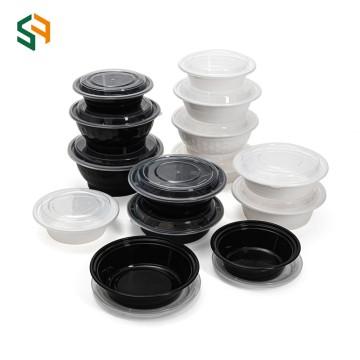
Explore our high-durability containers optimized for blast-freezing, automated packaging lines, and cold-chain transit.
The global food service landscape is undergoing a monumental shift. Central kitchens, once limited to large-scale institutional catering, have now emerged as the operational backbone of ready-to-eat (RTE) meals, quick-service restaurant (QSR) chains, and e-commerce meal prep deliveries. The success of this decentralized model relies entirely on the efficiency and reliability of frozen food distribution systems. Within this delicate supply chain, the choice of carry out food boxes is no longer just a packaging decision—it is a critical factor in food safety, quality preservation, and brand reputation.
As frozen foods travel through complex distribution channels, they experience severe environmental fluctuations, mechanical stresses, and pressure changes. Standard packaging fails under these conditions, leading to structural collapse, freezer burn, or contamination. To prevent these failures, modern central kitchens require specialized, high-performance carry out food boxes engineered to withstand extreme sub-zero temperatures while maintaining airtight seals and structural integrity.
Reinforced corners and ribbed walls prevent box collapse during high-stack palletization inside blast freezers and refrigerated trucks.
Manufactured in ISO Class 8 cleanrooms using 100% food-grade PP and bio-based materials, fully certified under HACCP and QS protocols.
When food is blast-frozen at temperatures ranging from -30°C to -40°C, typical plastic containers become brittle and prone to cracking under minor impacts. This brittleness poses a major risk during high-speed automated sorting, packing, and distribution. Advanced carry out food boxes designed for frozen food distribution must utilize modified polypropylene (PP) formulations or specialized bio-based sheets that maintain flexibility and impact resistance at sub-zero temperatures.
Freezer burn occurs when moisture escapes from the food product and sublimates on the colder surfaces of the freezer. To combat this, carry out food boxes must feature precision-engineered, airtight lids or be highly compatible with automated heat-sealing films. A perfect hermetic seal prevents oxygen ingress and moisture loss, preserving the texture, color, and nutritional value of the food over months of storage.
A primary convenience of ready-to-eat meals prepared in central kitchens is their transition from freezer to microwave. Polypropylene-based carry out food boxes are uniquely suited for this, withstanding temperatures from -20°C up to 120°C. This allows end consumers or commercial kitchens to safely reheat food directly in the container without warping, melting, or releasing harmful chemicals like BPA.
Modern central kitchens rely heavily on automation. Containers must feature precise denesting designs to ensure robotic arms can easily separate and place them onto conveyor belts without jamming the machinery. Flat, uniform rims are also critical for achieving consistent, leakproof heat seals at high production speeds.
The application of specialized carry out food boxes spans across multiple industries, each with unique operational and logistical requirements:
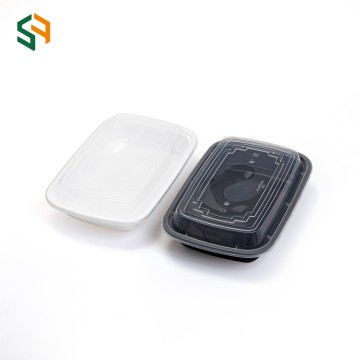
In the RTE sector, portion control, presentation, and shelf-life are key. Injection-molded multi-compartment boxes allow central kitchens to pack complete meals (such as proteins, starches, and vegetables) in a single container without cross-contamination. These containers must withstand the extreme cold of blast freezing, followed by rapid transport and final reheating in home microwaves.
Quick-service restaurant chains utilize central kitchens to pre-portion and freeze ingredients, sauces, or semi-finished items. These are distributed in bulk to individual franchise locations. The packaging must be highly stackable to maximize space inside refrigerated delivery vehicles, ensuring no deformation occurs under heavy loads.
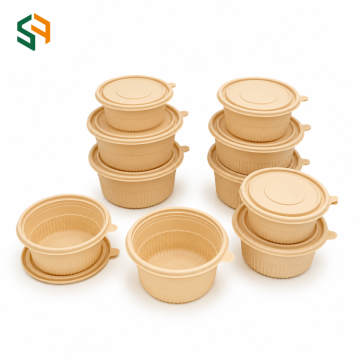
Hospitals and school districts require massive quantities of pre-packaged meals daily. The packaging must be hygienic, easy to open, and safe for large-scale convection oven or microwave reheating. Using eco-friendly corn starch or bio-based biodegradable containers helps public institutions meet strict sustainability quotas while maintaining strict hygiene protocols.
The boom in e-commerce meal kit delivery services has placed massive pressure on last-mile cold chain logistics. Carry out food boxes used in this sector must survive transit inside insulated shipping liners packed with dry ice or gel packs. Leakproof construction is non-negotiable to prevent any liquids from escaping during courier handling.
To be your trusted partner in sustainable food packaging – delivering high-value products, reliable quality, and excellent service.
With years of experience in disposable tableware, we use 100% compostable, bio-based, and biodegradable materials to reduce fossil fuel dependency. Precision manufacturing ensures every container is durable, safe, and able to return to nature responsibly.
We are committed to a greener future – helping you serve meals in a way that protects both health and the planet.
Our journey from precision manufacturing to global supply leadership (2005 - 2026)
As global environmental regulations tighten and labor costs rise, the packaging industry is rapidly evolving. The next generation of carry out food boxes is being developed with two key priorities: environmental sustainability and compatibility with advanced robotics.
With consumer demand for plastic-free alternatives growing, central kitchens are increasingly adopting bio-based sheets and compostable corn starch options. These eco-friendly materials are engineered to match the mechanical strength of traditional plastics. By integrating in-house sheet extrusion lines, manufacturers can optimize raw material blends, ensuring that biodegradable containers can withstand the freezing process without absorbing moisture or losing structural integrity.
The integration of QR codes, RFID tags, and temperature-sensitive inks directly onto food packaging is transforming frozen food distribution. These technologies allow logistics managers to monitor the temperature history of individual food boxes throughout transit. If a container exceeds safe storage temperatures, the smart label flags the breach, protecting consumers from foodborne illnesses and reducing liability for central kitchens.
By utilizing vertically integrated manufacturing processes—from raw material sheet extrusion to final thermoforming and automated packaging—manufacturers can significantly reduce the carbon footprint of their products. This ensures that global distributors receive highly consistent, zero-contamination packaging solutions that meet the stringent requirements of modern regulatory frameworks across North America, Europe, and Asia.
Explore our complete range of certified food packaging containers designed for commercial distribution and central kitchen workflows.