Leave Your Message
High-performance, food-grade containers designed to withstand high temperatures while preserving freshness and taste.
The global food service and retail sectors are experiencing an unprecedented paradigm shift. Driven by rapid urbanization, fast-paced lifestyles, and the explosive growth of online food delivery networks, the demand for disposable plastic boxes for food—specifically designed for microwavable, ready-to-eat (RTE) hot meals—has skyrocketed. Consumers no longer view takeout packaging as merely a transport container; it is now recognized as a critical link in food safety, thermal preservation, and culinary experience.
Historically, food packaging served a singular, passive function: containment. However, the modern ready-to-eat hot food sector demands active functionality. Packaging must keep food hot during transit, prevent leaks of complex sauces, withstand the intense heat of microwave regeneration without releasing harmful chemicals, and maintain its structural integrity under stack loading. This convergence of engineering, material science, and consumer convenience has elevated disposable food boxes to high-tech, highly engineered products.
From an industrial perspective, the manufacture of microwavable plastic containers has transitioned from simple thermal forming to highly automated, precision-engineered processes. Modern factories utilize multi-station positive and negative pressure automatic thermoforming machinery integrated with high-speed robotic arms to ensure rapid throughput, consistent wall thickness, and zero-contamination production environments. This industrial evolution is critical for keeping pace with the global market, which demands millions of units daily.
Commercially, food brands and quick-service restaurant (QSR) chains leverage customized packaging to establish brand identity and ensure customer satisfaction. The physical presentation of a meal upon arrival directly influences brand perception. A container that warps, leaks, or emits a chemical odor when microwaved can permanently damage a food brand's reputation. Consequently, commercial buyers are increasingly partnering with certified manufacturers capable of delivering ISO 9001, ISO 14001, and HACCP-certified packaging solutions that guarantee food safety and structural compliance.
Engineered using premium Polypropylene (PP) to withstand temperatures up to 120°C (248°F) without structural deformation or chemical leaching.
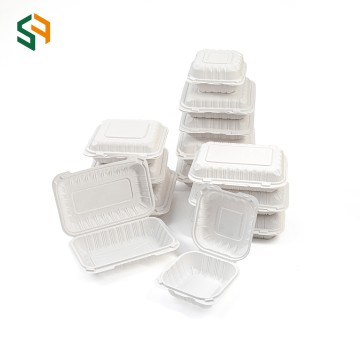
Precision-molded interlocking rims and snap-on lids prevent accidental spills, keeping sauces and liquids safely contained during transit.
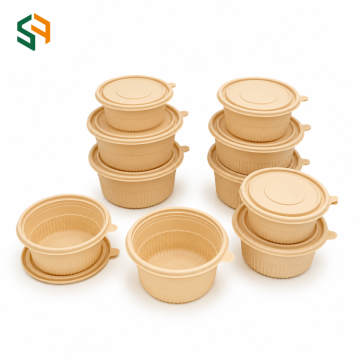
Integrating bio-based plastics and corn starch formulations to reduce reliance on fossil fuels and support global carbon neutrality goals.
When it comes to microwavable hot food packaging, material selection is the single most critical decision. Polypropylene (PP) stands out as the undisputed industry standard for several key reasons:
To further enhance performance, modern manufacturers utilize modified PP sheets. By incorporating mineral fillers or bio-based additives, the material's heat deflection temperature (HDT), tensile strength, and environmental footprint are optimized. This ensures that the disposable plastic boxes remain rigid when stacked with hot food inside, preventing collapse during transport.
The versatility of microwavable disposable food boxes makes them indispensable across various sectors of the modern culinary industry:
In the retail sector, convenience stores and supermarkets offer a wide array of chilled, pre-packaged meals. These meals require packaging that supports modified atmosphere packaging (MAP) to extend shelf life, showcases the food clearly through high-clarity lids, and allows consumers to microwave the meal directly in its original container. The packaging must withstand the rapid temperature transition from a refrigerated display case (4°C) to a microwave oven (100°C+) in minutes.
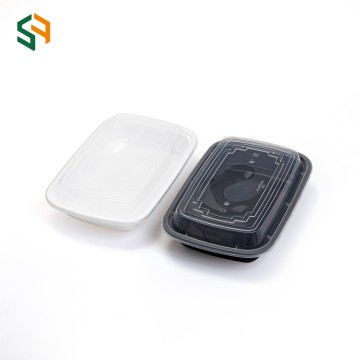
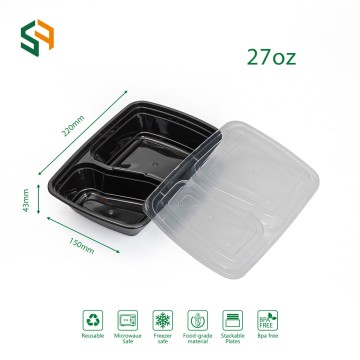
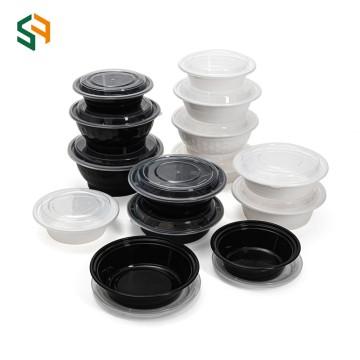
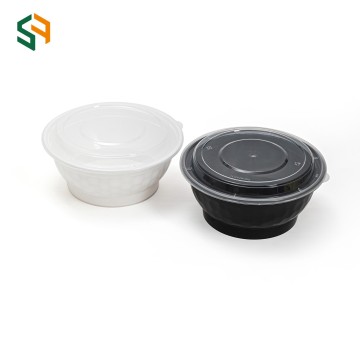
For the food delivery industry, packaging is the primary touchpoint between the kitchen and the diner. Delivery riders navigate bumpy roads, and meals must remain hot, fresh, and visually appealing. Multi-compartment rectangular plastic containers prevent flavor mixing, while leak-proof round bowls are ideal for hot soups, stews, and noodle dishes. The stackability of these containers ensures that delivery drivers can carry multiple orders safely.
Hospitals, schools, and corporate offices rely on large-scale catering services that require standardized, durable, and highly sanitary packaging. In these settings, food is often prepared in central kitchens, blast-chilled, transported to satellite sites, and reheated on-demand. The consistency and reliability of injection-molded PP containers are essential for maintaining hygiene and operational efficiency in these high-volume environments.
To be your trusted partner in sustainable food packaging – delivering high-value products, reliable quality, and excellent service.
With years of experience in disposable tableware, we use 100% compostable, bio-based, and biodegradable materials to reduce fossil fuel dependency. Precision manufacturing ensures every container is durable, safe, and able to return to nature responsibly.
We are committed to a greener future – helping you serve meals in a way that protects both health and the planet.
While PP remains the functional benchmark for microwavable packaging, the industry is undergoing a massive transformation driven by environmental sustainability. The modern market demands a dual approach: high-performance plastic engineering combined with ecological responsibility. This has led to the development of bio-based materials and hybrid formulations, such as starch-blended plastics.
By blending traditional polypropylene with bio-based materials like corn starch, manufacturers can reduce the carbon footprint of each container by up to 40% while maintaining the essential microwavable and leak-proof properties. These hybrid materials are designed to degrade more rapidly under industrial composting conditions than pure synthetic plastics. Furthermore, the integration of post-consumer recycled (PCR) food-grade PP is gaining traction, closing the loop in plastic manufacturing and promoting a circular economy.
To guarantee that disposable plastic food boxes are safe for direct food contact, manufacturing facilities must adhere to strict hygiene protocols. Leading manufacturers have upgraded their facilities to include ISO Class 8 high-standard dust-free cleanrooms. These controlled environments prevent airborne particulates, dust, and micro-organisms from contaminating the containers during the thermoforming or injection molding phases.
In addition to cleanliness, automation plays a pivotal role in maintaining consistent quality. Multi-station positive-negative pressure automatic thermoforming machines integrated with robotic arms ensure that every single container has precise wall thickness, perfect lid-fit tolerances, and clean, burr-free edges. This level of manufacturing precision is what separates premium, leak-proof microwavable packaging from low-quality alternatives that warp under pressure.
A timeline of engineering milestones, facility expansions, and global market integration from 2005 to 2026.
Explore our full range of microwavable, leak-proof, and eco-friendly food packaging solutions.