Leave Your Message
The rapid acceleration of urban lifestyles and the digital food revolution have catalyzed a massive surge in the demand for ready-to-eat (RTE) meals. In this fast-paced marketplace, the microwave oven has transitioned from a convenience appliance to a core culinary tool. Consequently, the role of disposable take out food containers has evolved. They are no longer simple vessels for logistics and transport; they are highly engineered thermal interfaces that must guarantee safety, preserve organoleptic food qualities, and withstand the rigorous thermal stresses of microwave reheating.
Today's food service providers, commercial kitchens, and food manufacturers face a complex challenge: delivering piping-hot meals to consumers while ensuring the packaging remains structurally sound, cool to the touch, and chemically inert. The demand for microwavable ready-to-eat hot food packaging has forced a paradigm shift in material science, structural engineering, and manufacturing precision.
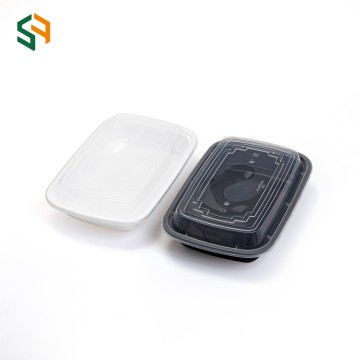
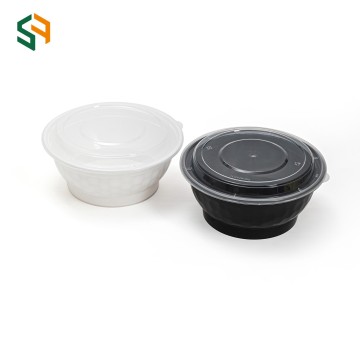
The global market for microwavable food packaging is experiencing an unprecedented expansion. Valued at billions of dollars, this sector is driven by the convergence of food delivery services, ghost kitchens (cloud kitchens), and specialized food manufacturing facilities. As consumers increasingly prioritize convenience, food service operators require containers that minimize preparation times, optimize storage, and offer superior heat retention.
From an industrial perspective, packaging manufacturers must optimize their supply chains to meet this massive volume. The production of disposable take out food containers has transitioned to highly automated thermoforming and injection molding processes. This automation ensures structural consistency, strict adherence to food safety standards, and reduced production costs. Furthermore, the integration of robotic automation in handling, packing, and quality control has enabled manufacturers to scale production while keeping defects close to zero.
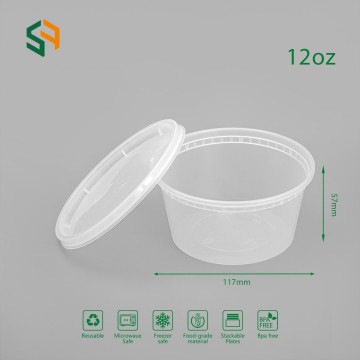
Engineered to withstand temperatures up to 120°C (248°F) without warping, melting, or releasing harmful chemicals.
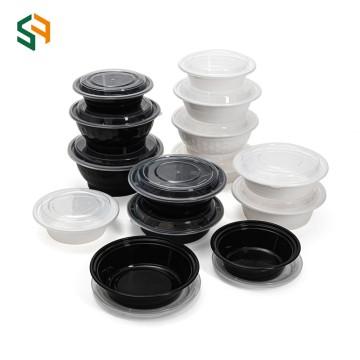
Advanced locking mechanisms and precision-fit lids ensure safe transport of hot liquids, gravies, and sauces.
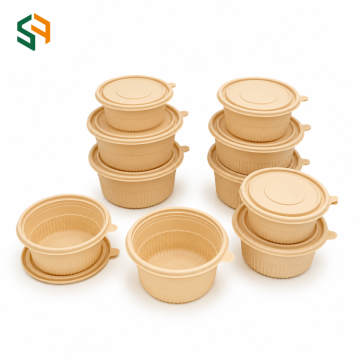
Utilizing recyclable polypropylene (PP) and bio-based starch blends to reduce fossil fuel dependence and carbon footprint.
When evaluating microwavable ready-to-eat hot food packaging, material selection is paramount. The primary polymer utilized in this category is Polypropylene (PP). Unlike PET (Polyethylene Terephthalate) or PS (Polystyrene), PP features a high melting point (approximately 160°C or 320°F). This thermal threshold allows PP containers to handle hot oils, boiling water, and intense microwave steam without structural collapse or chemical degradation.
When food is heated in a microwave, water molecules vibrate, generating steam and internal pressure. If a container is tightly sealed, this pressure can lead to container deformation or explosive lid separation. Modern microwavable containers incorporate engineered venting systems. These vents allow steam to escape while retaining enough heat and moisture to prevent the food from drying out. Additionally, double-walled or ribbed designs are utilized to increase rigidity and provide thermal insulation, making the container comfortable for consumers to hold immediately after heating.
Safety is the cornerstone of food packaging. High-quality microwavable containers are manufactured from 100% virgin, food-grade PP that is completely free from Bisphenol A (BPA), phthalates, and other harmful additives. Under microwave radiation, these materials must not leach any substances into the food, complying with rigorous global food safety standards, including the US FDA and European EFSA regulations.
The utility of disposable take out food containers spans across various sectors of the modern food industry. Each application presents unique demands that packaging must satisfy:
Convenience store chains rely on "heat-and-eat" systems. Ready-to-eat meals are stored in refrigerated display cases and heated at the point of sale in commercial-grade microwaves. The packaging must feature excellent clarity so consumers can assess food freshness, and it must withstand rapid heating cycles (often less than 90 seconds in high-wattage microwaves) without structural failure.
In centralized meal prep and cook-chill operations, food is cooked, portioned, sealed, and rapidly chilled or frozen. The packaging must withstand freezing temperatures down to -18°C without becoming brittle, and then transition directly to microwave heating. This requires polymers modified for low-temperature impact strength combined with high-temperature resistance.
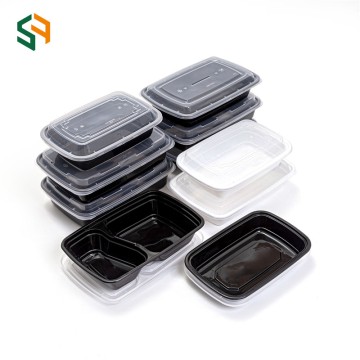
For premium dining brands, food presentation and texture are critical. Multi-compartment microwavable containers are designed to keep proteins, starches, and sauces separated during transport. The consumer can reheat the entire meal in the microwave, and the engineered heat distribution ensures all components reach the correct temperature simultaneously without getting soggy.
The future of microwavable ready-to-eat hot food packaging is defined by two major forces: sustainability and smart technology. As global regulations tighten and consumers demand eco-friendly alternatives, manufacturers are developing hybrid materials. This includes blending traditional PP with bio-based materials like corn starch or utilizing compostable polymers that offer high heat resistance.
Furthermore, smart packaging is on the horizon. This includes containers embedded with color-changing indicators that signal when the food has reached a safe internal temperature. The integration of QR codes on packaging also allows consumers to trace the origin of the ingredients and access precise disposal or recycling instructions, promoting a circular economy.
To be your trusted partner in sustainable food packaging – delivering highvalue products, reliable quality, and excellent service.
With years of experience in disposable tableware, we use 100% compostable, bio-based, and biodegradable materials to reduce fossil fuel dependency. Precision manufacturing ensures every container is durable, safe, and able to return to nature responsibly.
We are committed to a greener future – helping you serve meals in a way that protects both health and the planet.
Our Journey of Precision Manufacturing and Global Expansion (2005 - 2026)