Leave Your Message
Explore our premium range of leak-proof, microwave-safe, and eco-friendly containers tailored for diverse food service needs.
The global food service landscape is undergoing a massive structural shift. With the explosive growth of food delivery apps, cloud kitchens, and premium bakery chains, the reliance on high-performance food packing container disposable solutions has reached critical levels. No longer just a means to transport food from point A to point B, modern packaging acts as a safeguard for food quality, a driver of brand value, and a major factor in global carbon footprint reduction.
When packaging delicate bakery products, viscous sauces, or diverse side dishes, manufacturers and food brands face unique physical and chemical challenges. Bakery items require protection from moisture accumulation to prevent sogginess, while maintaining structural integrity to protect delicate frostings. On the other hand, sauces and side dishes demand absolute leak resistance, temperature stability, and oxygen barrier properties to preserve taste and freshness.
1. The Bakery and Pastry Segment: Balancing Moisture and Protection
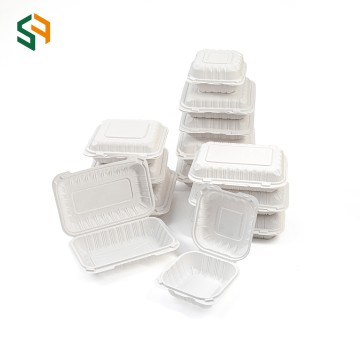
Bakery products, ranging from warm artisanal breads to delicate cream-filled pastries, present a complex packaging environment. If a container traps too much steam, crispy pastries quickly become soggy. Conversely, if the seal is poor, the product dries out and loses its freshness. Advanced thermoformed clamshell containers address this by combining micro-ventilation designs with high-clarity materials like PET or modified PP. This allows the consumer to inspect the visual quality of the product while ensuring it remains fresh during transit.
2. Sauces, Gravies, and Condiments: Engineering the Perfect Leak-Proof Seal
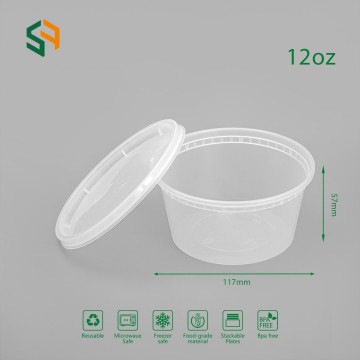
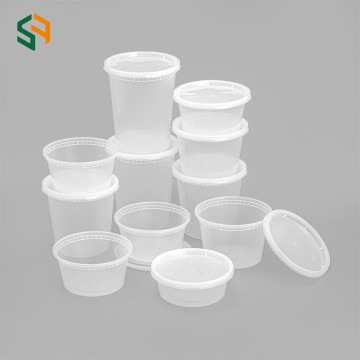
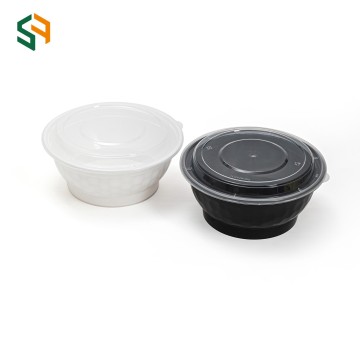
The commercial transportation of liquid condiments is notoriously difficult. Viscous sauces, oily dressings, and hot gravies are highly prone to leakage during delivery, which can compromise the entire order. To combat this, precision-manufactured PP cups with matching airtight lids are utilized. These containers must feature snap-tight or threaded locking mechanisms that withstand external pressure changes. High-precision injection molding ensures that tolerances between the lid and the cup are virtually zero, preventing messy spills.
3. Side Dishes and Ready Meals: Multi-Compartment and Thermal Adaptability
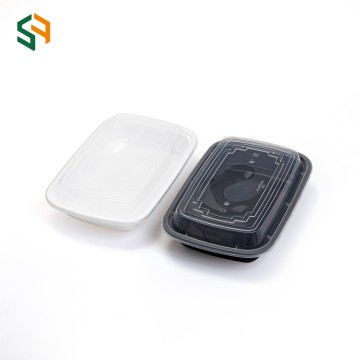
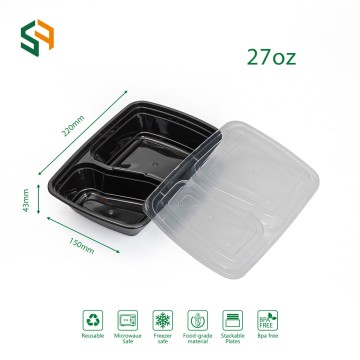
Side dishes—such as hot mashed potatoes, cold pickled vegetables, or fresh salads—are crucial components of modern meals. Multi-compartment rectangular containers allow food service providers to pack different food items without cross-contamination. These containers must be thermotolerant, allowing consumers to safely reheat food in a microwave (typically requiring PP construction) or store leftovers in the freezer without the plastic cracking.
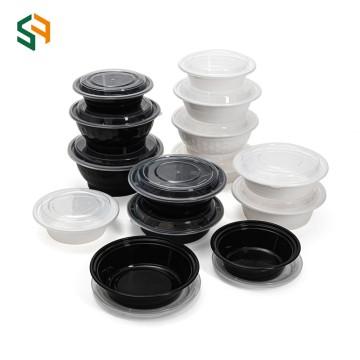
As global regulations on single-use plastics tighten, the manufacturing sector is heavily investing in material science. Traditional petroleum-based plastics are being replaced or modified. Polypropylene (PP) remains highly popular due to its excellent heat resistance (up to 120°C) and chemical inertness. However, manufacturers are now introducing mineral-filled or modified PP, which reduces polymer usage while maintaining—and sometimes improving—rigidity.
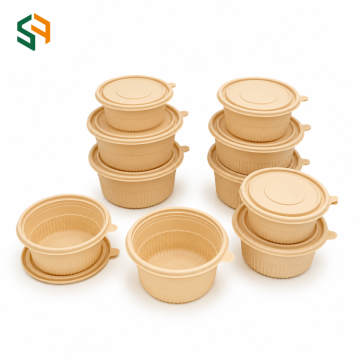
Simultaneously, bio-based materials like corn starch and PLA (Polylactic Acid) are gaining significant market share. These materials offer a path toward carbon neutrality. Under industrial composting conditions, bio-based containers break down into natural elements, leaving no harmful microplastics behind. This dual approach—optimizing PP for heavy-duty, heat-resistant applications and scaling bio-based materials for quick-consumption packaging—defines the future of the industry.
Producing high-quality food containers requires state-of-the-art facilities. The transition from traditional thermoforming to multi-station positive and negative pressure automatic thermoforming machines integrated with robotic arms has revolutionized production efficiency. This high degree of automation ensures that each container has consistent wall thickness, precise lid fitment, and robust impact resistance.
Furthermore, food safety begins in the factory. Operating within ISO Class 8 dust-free cleanrooms ensures that the containers are free from microbial contamination, dust, and manufacturing residues. This cleanroom manufacturing process, backed by international certifications like ISO 9001, ISO 14001, and HACCP, ensures compliance with strict food-contact regulations across North America, Europe, and Asia.
To be your trusted partner in sustainable food packaging – delivering high-value products, reliable quality, and excellent service.
With years of experience in disposable tableware, we use 100% compostable, bio-based, and biodegradable materials to reduce fossil fuel dependency. Precision manufacturing ensures every container is durable, safe, and able to return to nature responsibly.
We are committed to a greener future – helping you serve meals in a way that protects both health and the planet.
A journey of manufacturing excellence, expanding capacity, and pioneering eco-friendly packaging solutions.
Founded Fuzhou ZhengYiJia Plastic Products Co., Ltd., focusing on high-precision industrial blister trays.
Laid a solid manufacturing foundation with customized industrial packaging solutions.
Expanded to an 8,000 m² high-standard dust-free workshop.
Obtained ISO 9001 quality management system certification and QS certification to ensure a stable and controlled production environment that meets food safety requirements.
Upgraded from traditional thermoforming production lines to multi-station positive-negative pressure automatic thermoforming machines integrated with robotic arms.
Production efficiency and first-pass yield increased by over 30%, setting a new benchmark for precision and consistency in the industry.
Launched a full range of injection-molded lunch boxes for the fast-growing ready-to-eat meal market.
Built a 12,000m² high-standard clean workshop (equivalent to ISO Class 8) to achieve zero-contamination food packaging.
Obtained ISO 9001, ISO 14001 environmental management system, HACCP food safety management system, and QS certification, fully complying with global food contact material standards.
Established Fujian SeaFancy Technology Development Co., Ltd., primarily to produce American-style injection-molded lunch boxes and hinged-lid food containers, expanding into the global disposable food container market.
Launched dual-color corrugated boxes and bio-based biodegradable lunch boxes in response to global carbon neutrality goals.
Built an in-house sheet extrusion line to achieve full-process independent production of modified PP and bio-based biodegradable sheets – optimizing the supply chain and reducing carbon footprint.
Added another 6,000 m² high-standard clean workshop, bringing the total clean production area to 17,000 m².
Enabled large-scale, zero-contamination food packaging production to meet growing global demand, further deepening commitment to sustainable manufacturing.
Our complete range of disposable food packing containers designed for bakery products, sauces, condiments, and hot or cold side dishes.