Leave Your Message
High-quality, leak-proof, and eco-friendly containers designed to maintain meal integrity from kitchen to doorstep.
The global restaurant industry has undergone a massive structural transition. Food delivery and takeout have shifted from being secondary convenience options to primary revenue drivers. This behavioral change, accelerated by digital ordering systems and mobile food delivery apps, has highlighted the critical importance of the food packing container disposable for restaurant food delivery and takeout. Packaging is no longer just a vessel; it is a critical touchpoint that determines food quality, safety, brand reputation, and environmental footprint.
Historically, basic paper cartons and low-grade plastics sufficed. However, modern culinary delivery demands sophisticated engineering. Meals must travel miles, withstand temperature shifts, resist physical compression, and remain completely leak-proof, all while presenting the food in an appetizing manner. As a result, the manufacturing of disposable containers has evolved into a highly technical industry combining polymer chemistry, structural engineering, and ecological responsibility.
Advanced structural designs and material selections that minimize heat transfer, ensuring hot meals arrive warm and cold desserts remain chilled.
Precision-engineered rims and lids that snap shut securely, eliminating spills of liquids, oils, and sauces during high-impact transit.
Incorporation of bio-based materials and highly recyclable polymers to align with global environmental regulations and consumer preferences.
Today's food service providers face the challenge of choosing the right materials. Polypropylene (PP) remains the gold standard for microwaveable, high-heat applications due to its durability and high melting point. Concurrently, bio-based alternatives such as cornstarch-derived polymers are rapidly gaining market share as businesses seek to minimize their carbon footprint and comply with strict municipal single-use plastic bans. Navigating this landscape requires a deep understanding of packaging science and supply chain variables.
To be your trusted partner in sustainable food packaging – delivering high-value products, reliable quality, and excellent service.
With years of experience in disposable tableware, we use 100% compostable, bio-based, and biodegradable materials to reduce fossil fuel dependency. Precision manufacturing ensures every container is durable, safe, and able to return to nature responsibly.
We are committed to a greener future – helping you serve meals in a way that protects both health and the planet.
Different culinary offerings require specific packaging properties. A container suitable for a fresh salad could fail catastrophically when filled with boiling broth. Understanding the precise application scenarios of disposable food packaging is essential for maintaining food quality standards.
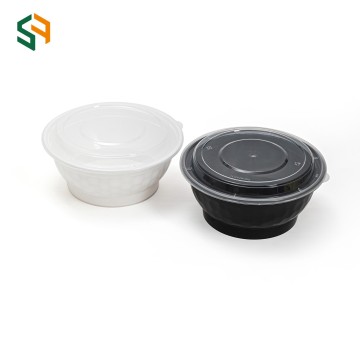
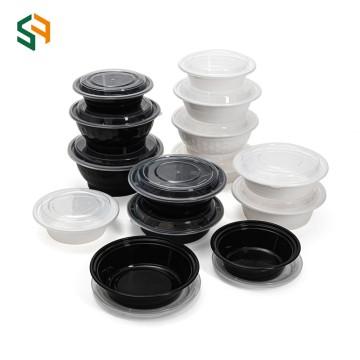
Liquid-heavy dishes require absolute seal integrity. Leak-proof round PP bowls feature reinforced rims that create a tight snap seal with matching lids. This prevents pressure-induced leaks and preserves heat, ensuring that liquid dishes like ramen, laksa, and stews arrive intact and piping hot.
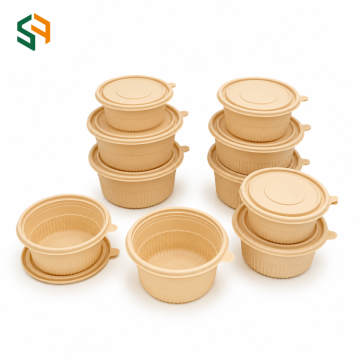
For cold or warm salads, grain bowls, and organic meals, eco-friendly cornstarch bowls offer the perfect aesthetic and structural solution. They provide excellent grease resistance and structural strength without relying heavily on fossil-fuel plastics, appealing to environmentally conscious consumers.
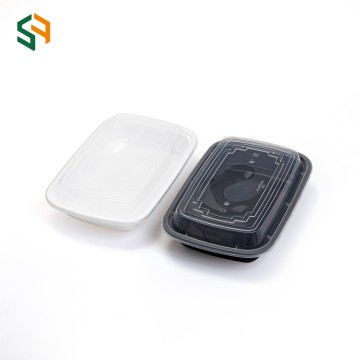
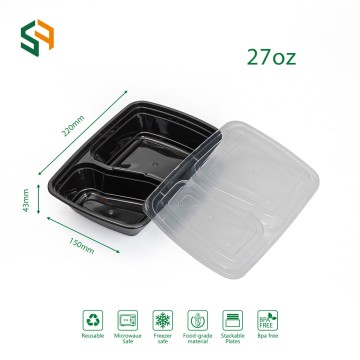
Compartmentalized rectangular containers are vital for meal prep services and multi-component dinners. By keeping proteins, starches, and side dishes separated, they prevent flavor mixing and preserve the visual appeal of the meal. They are also designed to be microwave-safe for easy consumer reheating.
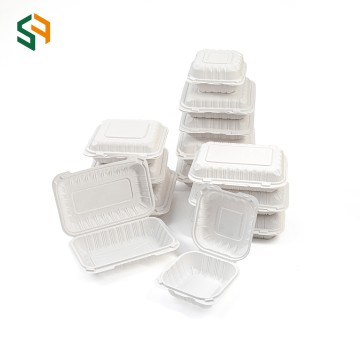
In high-speed kitchens, speed of packaging is critical. Pressure-proof clamshell containers with integrated hinged lids allow kitchen staff to package burgers, fries, and wings in seconds. The structural ribbing ensures the boxes can be stacked high in delivery bags without collapsing.
By selecting application-specific packaging, restaurants can reduce customer complaints regarding soggy food, cold meals, or leaks. Furthermore, high-performance packaging acts as a silent brand ambassador, showing customers that the restaurant respects its own culinary creations enough to protect them during transit.
The global market for disposable food packaging is undergoing rapid transformation, driven by three major forces: regulatory compliance, material science breakthroughs, and shifting consumer demographics. Governments worldwide are implementing bans on expanded polystyrene (EPS) and single-use plastics, driving the adoption of bio-based materials and highly recyclable polymers like PP. This has forced manufacturers to innovate, creating hybrid materials that blend natural starches with synthetic polymers to maintain durability while improving environmental metrics.
From an industrial perspective, vertical integration has become a major competitive advantage. Leading manufacturers no longer simply buy sheets of plastic to thermoform; they formulate their own raw materials, extruding customized sheets in-house to optimize thickness, heat resistance, and tensile strength. This level of control ensures that containers perform consistently, even under extreme delivery conditions. Additionally, cleanroom manufacturing standards (such as ISO Class 8) have become standard for premium suppliers, ensuring that containers are free from industrial particulates and pathogens before they ever touch food.
A timeline of scaling up technology, quality certifications, and sustainable packaging solutions.
The choice of material dictates the performance limits of a food container. Polypropylene (PP) is widely favored for its thermal stability, allowing it to withstand temperatures up to 120°C (248°F) without warping or leaching harmful chemicals. This makes it the ideal material for microwave-safe containers, hot soup bowls, and ready-to-eat meal trays. However, PP is derived from fossil fuels, which presents long-term sustainability challenges.
To address this, material scientists have developed bio-based alternatives like cornstarch-derived polymers and PLA (Polylactic Acid). These materials significantly reduce carbon emissions during production and are designed to compost under industrial conditions. The challenge lies in matching the physical properties of PP—such as tensile strength and moisture resistance. Modern manufacturing techniques achieve this by modifying the molecular structure of bio-plastics, creating hybrid containers that deliver the structural performance of plastic with a much lower environmental impact.
In addition to material selection, structural engineering features like anti-fog lid technology, pressure-release vents, and stackable modular designs are critical. Anti-fog lids ensure that steam does not obscure the customer's view of the meal, maintaining visual appeal. Pressure-release vents prevent lids from warping or popping off due to steam buildup, while stackable designs allow delivery drivers to safely transport multiple orders simultaneously.
Explore our full range of high-performance disposable food containers designed for professional food service delivery.