Leave Your Message
Engineered for durability, thermal stability, and precise volume control. Explore our premium selection designed for commercial prep kitchens, fitness meal plans, and modern food service industries.
In today's fast-paced global economy, the intersection of nutrition, convenience, and logistics has birthed a massive industry dedicated to meal preparation and portion-controlled dieting. Historically, food containers were viewed simply as transport vessels. Today, they are critical components of the supply chain for commercial kitchens, subscription meal delivery brands, health-conscious consumers, and medical nutrition programs. The global market for portion control packaging is expanding rapidly, driven by the rise of urban living, fitness tracking, and the need for restaurants to deliver high-quality dining experiences directly to consumers' doors.
Automated positive-negative pressure thermoforming ensures that every single container has consistent wall thickness, weight, and sealing capabilities to prevent leaks and optimize heat retention.
From an industrial standpoint, the manufacturing of these containers requires extreme precision. Modern meal prep providers rely on automated packing lines where containers must be perfectly uniform. Any structural deviation can cause automated sealing machines to fail, leading to leaks, contamination, and product waste. Furthermore, the shift toward sustainable materials has forced manufacturers to innovate. We are seeing a significant transition from traditional single-use plastics to highly recyclable Polypropylene (PP), bio-based polymers, and compostable alternatives that do not sacrifice the durability or microwaveability required by modern consumers.
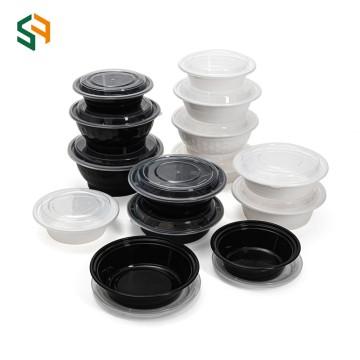
Meal prep containers must survive a wide range of temperatures. They are filled with hot food at the production facility, blast-frozen for preservation, shipped in cold chains, and finally microwaved by the consumer. Polypropylene (PP) has emerged as the material of choice due to its high melting point (approx. 160°C) and food-safe nature. Unlike lower-grade plastics, PP does not leach harmful chemicals when exposed to heat, ensuring that portion-controlled meals remain healthy and safe.
Advanced manufacturers are also integrating active barrier technologies. These barriers prevent oxygen penetration, extending the shelf life of fresh food from days to weeks without the need for artificial preservatives. This is a critical factor for commercial subscription services that ship meals nationwide.
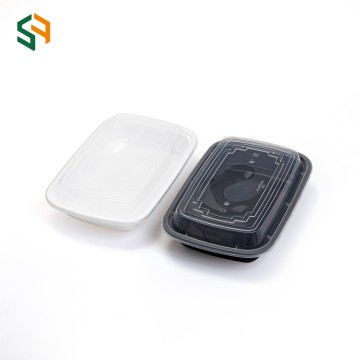
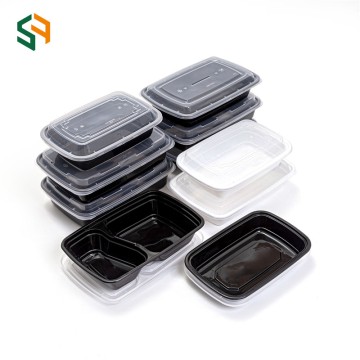
Portion control is a science that relies heavily on visual guides and physical boundaries. Multi-compartment containers allow for precise separation of macronutrients—proteins, carbohydrates, and healthy fats. This compartmentalization is vital for athletes, fitness enthusiasts, and patients managing chronic illnesses like diabetes or hypertension.
From a design perspective, the container must feature secure, leak-proof locking mechanisms. Hinged lids, snap-on seals, and ribbed structural supports prevent liquid migration between compartments. This ensures that a sauce in one compartment does not ruin the crispness of a salad in another, preserving the texture and aesthetic appeal of the meal.
To be your trusted partner in sustainable food packaging – delivering high-value products, reliable quality, and excellent service.
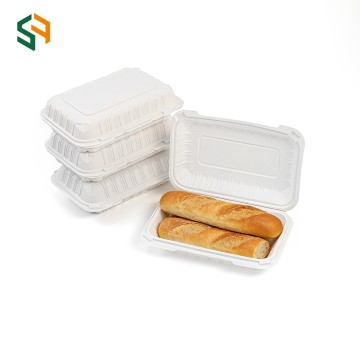
With years of experience in disposable tableware, we use 100% compostable, bio-based, and biodegradable materials to reduce fossil fuel dependency. Precision manufacturing ensures every container is durable, safe, and able to return to nature responsibly.
We are committed to a greener future – helping you serve meals in a way that protects both health and the planet.
Understanding the diverse environments where these containers are deployed highlights the complexity of their design requirements. Here are three primary sectors driving the demand for advanced portion control packaging:
The commercial meal prep model relies on speed, consistency, and branding. High-performance containers act as the face of the brand. They must stack efficiently in delivery vans, resist crushing under pressure, and remain completely sealed during bumpy transits. Once in the consumer's hands, they must be easy to open, microwave-safe, and aesthetically pleasing enough to eat directly from.
In hospitals, rehabilitation centers, and senior living facilities, portion control is often a matter of clinical necessity. Precise compartment sizes allow dietary staff to quickly measure food weight and volume, ensuring patients receive the exact caloric and nutritional intake prescribed by their doctors. Cleanliness is paramount here; thus, containers must be produced in certified dust-free cleanrooms to guarantee zero contamination.
The explosion of delivery-only "ghost kitchens" has changed restaurant economics. Without a physical dining room, the packaging is the only physical touchpoint with the customer. High-quality, microwaveable containers that keep food hot, organized, and beautifully presented are essential for maintaining customer loyalty and driving repeat orders.
A timeline of technological breakthroughs, capacity expansions, and our commitment to eco-friendly manufacturing from 2005 to 2026.
As we look toward the future, the integration of technology and sustainability will continue to redefine food packaging. One of the most exciting trends is the development of "Smart Packaging." By incorporating QR codes or RFID tags, manufacturers can allow consumers to scan their meals to instantly log nutritional data into fitness trackers. This bridges the gap between physical packaging and digital health monitoring.
Furthermore, circular economy initiatives are pushing the industry toward 100% closed-loop recycling systems. The challenge lies in creating packaging that is both highly durable for multiple reuses and easily recyclable at the end of its lifecycle. Through advanced material engineering, such as modifying polypropylene with natural minerals, we can achieve lighter, stronger, and more sustainable products that meet the rigorous demands of global distribution.
Explore our comprehensive range of high-quality, food-grade packaging containers optimized for meal prep, portion control, and industrial food service operations.