Leave Your Message
Engineered for structural integrity, thermal efficiency, and food safety during microwave heating.
The global market for ready-to-eat (RTE) meals is undergoing a profound transformation. Driven by urbanization, shifting consumer lifestyles, and the rapid expansion of food delivery platforms, the demand for microwavable packaging that balances performance, safety, and environmental sustainability has reached unprecedented levels. Modern consumers no longer view convenience packaging as a simple containment vessel; it is now recognized as a critical component of food preservation, heating efficiency, and dining experience.
In the industrial food manufacturing sector, packaging design is intrinsically linked to logistics, shelf-life preservation, and consumer safety. The rise of convenience stores (C-stores), supermarket hot-food bars, and quick-service restaurant (QSR) delivery services has created a massive demand for structural packaging that can withstand extreme temperature variations—from sub-zero blast freezing to high-temperature microwave heating (often exceeding 120°C).
Manufacturers are tasked with producing packaging solutions that prevent chemical migration, maintain seal integrity under pressure, and feature advanced venting technologies to release steam safely. This industrial shift has driven substantial R&D investments into modified polypropylene (PP) formulations, bio-based polymers, and multi-layer co-extrusion technologies that optimize barrier properties against moisture and oxygen.
The global microwavable packaging market is projected to expand at a CAGR of over 5.8% annually. The growth is heavily concentrated in high-performance polymers and bio-based composite structures that satisfy both circular economy requirements and strict food safety regulations (FDA, EU food contact guidelines).
Microwavable ready-to-eat hot food packaging operates in highly demanding environments. Different food profiles—ranging from high-fat gravies and acidic tomato sauces to delicate proteins and vegetables—require tailored physical and chemical properties from their containers.
Chilled and frozen ready meals must transition directly from cold storage (-18°C to 4°C) into a microwave oven without cracking, warping, or losing structural rigidity. High-impact polypropylene (PP) is engineered with specific elastomeric modifiers to prevent low-temperature embrittlement while retaining its heat resistance during microwave cycles.
Microwave heating of foods with high fat or sugar content can generate localized "hot spots" exceeding 130°C. Standard plastics can melt or deform under these conditions, leading to potential chemical migration. Advanced injection-molded containers utilize homopolymer PP structures with high heat deflection temperatures (HDT) to guarantee safety and stability.
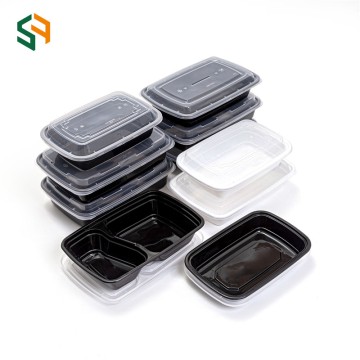
Modern consumers demand balanced meals with distinct components (e.g., protein, starch, and vegetables). Multi-compartment trays prevent flavor mixing, control moisture migration between food items, and ensure even heat distribution. Designing these containers requires advanced finite element analysis (FEA) to balance material thickness and structural strength.
The delivery boom demands packaging with leak-proof, hermetic seals. Hinged-lid containers and rigid trays designed for heat-sealing films must maintain a perfect barrier during transit. These designs incorporate anti-fogging agents in clear lids to ensure product visibility while preventing condensation buildup during hot holding.
The core challenge in microwavable ready-to-eat hot food packaging is balancing thermal performance with environmental sustainability. Traditional plastics are being re-engineered, and new bio-based materials are emerging to meet the demanding requirements of both food brands and regulatory bodies.
Thermal Stability: Materials must withstand continuous microwave exposure without losing rigidity.
Steam Venting: Integrated self-venting lid geometries prevent pressure buildup and potential explosive failure.
BPA-Free Compliance: Strict adherence to zero-migration regulations for chemical safety.
As global carbon neutrality targets approach, the industry is transitioning toward bio-based and biodegradable materials. Modified polylactic acid (CPLA), polyhydroxyalkanoates (PHA), and bagasse-plastic composites represent the next frontier. These materials are engineered to offer the necessary heat deflection temperatures while offering certified compostability at the end of their lifecycle.
Furthermore, vertical integration in manufacturing—such as in-house sheet extrusion and custom blending—allows for the optimization of material density, reducing the overall plastic weight per container (lightweighting) without sacrificing mechanical performance.
To be your trusted partner in sustainable food packaging – delivering high-value products, reliable quality, and excellent service.
With years of experience in disposable tableware, we use 100% compostable, bio-based, and biodegradable materials to reduce fossil fuel dependency. Precision manufacturing ensures every container is durable, safe, and able to return to nature responsibly. We are committed to a greener future – helping you serve meals in a way that protects both health and the planet.
ISO 9001 and HACCP certified production lines guarantee contamination-free, food-grade packaging.
Advancing the circular economy with bio-based materials and closed-loop recycling processes.
Multi-station positive-negative pressure automatic thermoforming for structural excellence.
A timeline of manufacturing precision, automation, and sustainable progress (2005 – 2026)
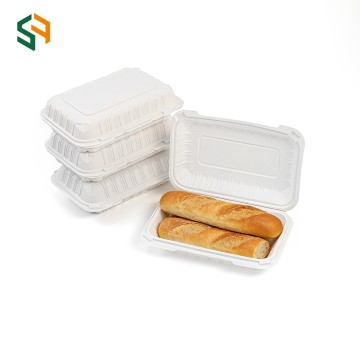
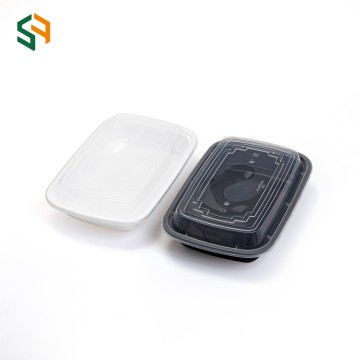
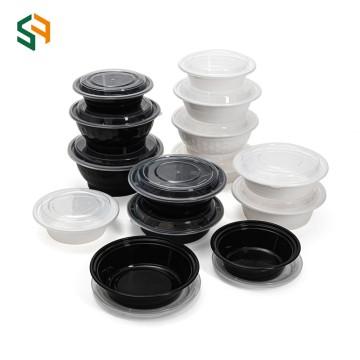
Select from our comprehensive range of high-performance, food-grade containers designed for global distribution.