Leave Your Message
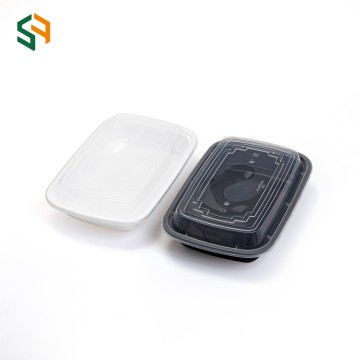
The global restaurant industry has undergone a monumental shift toward off-premise dining, fueled by digital ordering portals, automated ghost kitchens, and courier fleets. Today, a plastic clamshell container for restaurant food delivery and takeout is no longer just a passive box—it serves as the critical thermal vessel bridging culinary quality between the kitchen line and the diner’s table.
In high-density urban environments, meals encounter rough transit scenarios involving motorized scooters, variable handling orientations, temperature drops, and prolonged humidity entrapment. Traditional expanded polystyrene (EPS) foam packaging, once dominant due to cost, is facing comprehensive global regulatory phase-outs due to non-biodegradability and brittle structural performance under hot oil contact.
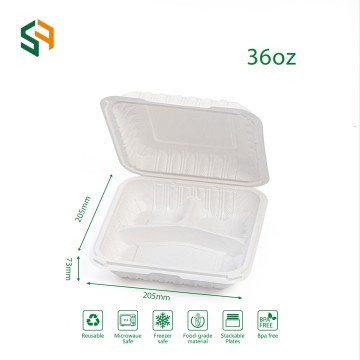
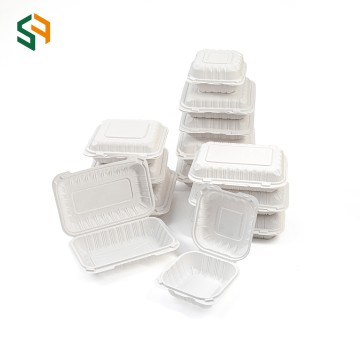
Modern commercial foodservice now specifies food-contact polypropylene (PP) and mineral-filled polypropylene (MFPP) hinged clamshells. These advanced structural polymers balance weight-to-stiffness ratios, withstand microwaving and dishwashing cycles, and maintain reliable perimeter seals even under sudden impact deceleration.
By blending natural mineral compounds with virgin polypropylene resin, MFPP decreases virgin polymer dependency by up to 40%. The resulting crystalline structure raises heat tolerance up to 120°C (248°F) while dramatically boosting stack stability under intense vertical compression.
Reliable takeout execution relies on thermoformed precision tolerances. We design dynamic stress-relief zones, engineered perimeter latches, and structural fluting to ensure optimal performance in real-world delivery conditions.
Kitchen crews work under fast-paced packing constraints. Our proprietary perimeter dual-catch lock produces a tactile, audible click that confirms full perimeter engagement, preventing costly in-transit lid pop-offs without requiring secondary tape seals.
Vertical rib geometries and angled chamfers resist compressive buckling when couriers stack 5 to 7 bagged orders together. The ribbed wall dynamics redistribute vertical loads uniformly across the container perimeter base.
Deep-fried items quickly turn soggy if steam is trapped, while hot entrees dry out if too much moisture escapes. Tuned micro-dome condensation channels guide water runoff safely to container margins away from the food, retaining crispness.
Different restaurant concepts present unique physical packaging demands. Engineered plastic clamshells accommodate diverse menu portfolios with specialized compartment geometries and thermal resistance.
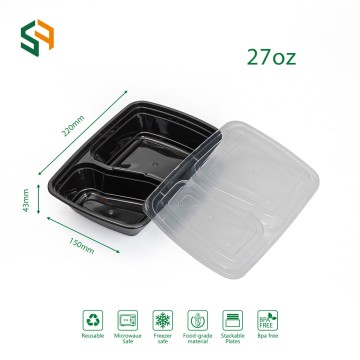
Our 2-compartment and 3-compartment configurations isolate braised proteins and saucy curries from fragile basmati rice, steamed vegetables, or cold slaw. High interior barrier dividers prevent flavor cross-contamination during bumpy delivery transit.
High-order fulfillment centers demand rapid nesting, swift one-handed closure, and steady denesting speeds. Hinged clamshell boxes eliminate the need to hunt for separate lids, cutting packaging handling time by up to 35% on high-volume packing stations.
Medical, educational, and corporate meal deliveries require verified food hygiene certifications and temperature stability. PP clamshell solutions survive heated holding carts (up to 85°C/185°F) for extended durations without softening, chemical leaching, or warping.
| Material Engineering Factor | Virgin Food-Grade PP | Mineral-Filled PP (MFPP) | Legacy Polystyrene (Foam) |
|---|---|---|---|
| Operating Temperature | -20°C to 120°C (-4°F to 248°F) | -15°C to 125°C (5°F to 257°F) | 0°C to 75°C (32°F to 167°F) |
| Microwave Safe & Reheat Integrity | Superior (Stable polymer matrix) | Exceptional (High heat absorption) | Fails (Melts / Chemical leaching) |
| Grease & Hot Cooking Oil Barrier | Hydrocarbon resistant (No softening) | Total barrier (No delamination) | Degrades rapidly under boiling oil |
| Virgin Plastic Reduction Metric | Baseline benchmark | Reduces virgin polymer up to 40% | High petroleum resin dependency |
| Recycling Compatibility | Resin Identification Code #5 | Standard Polypropylene Stream | Banned in many jurisdictions |
To be your trusted partner in sustainable food packaging – delivering highvalue products, reliable quality, and excellent service.
With years of experience in disposable tableware, we use 100% compostable, bio-based, and biodegradable materials to reduce fossil fuel dependency. Precision manufacturing ensures every container is durable, safe, and able to return to nature responsibly.
We are committed to a greener future – helping you serve meals in a way that protects both health and the planet.
Get comprehensive insights into materials, regulatory certifications, and thermal performance metrics for takeout packaging solutions.
Mineral-Filled Polypropylene (MFPP) incorporates natural mineral filler (calcium carbonate or talc) into the polypropylene resin. This structural hybrid reduces petroleum content by up to 40%, lowers cost volatility, strengthens edge stiffness, and offers greater temperature resistance without the brittleness or environmental bans associated with expanded polystyrene (EPS).
Our containers utilize 360-degree raised perimeter nesting tongues and recessed female grooves. When closed, they form a tight mechanical labyrinth that arrests liquid seepage even during tipping. Dual-corner tactile snap locks keep the hinged lid firmly compressed against the base under vibration.
Yes. Polypropylene and MFPP polymers offer continuous heat tolerance up to 120°C (248°F) and are resistant to boiling vegetable fats and gravy oils. Consumers can place the container directly into standard residential or commercial microwaves without melting, wall collapse, or BPA/phthalate migration.
Our thermoformed and injection-molded containers are produced in high-standard clean workshops equivalent to ISO Class 8 (totaling 17,000 m² clean production area). Our manufacturing systems are audited and certified under ISO 9001, ISO 14001, and HACCP, fully complying with US FDA (21 CFR 177.1520) and EU No 10/2011 food contact requirements.