Leave Your Message
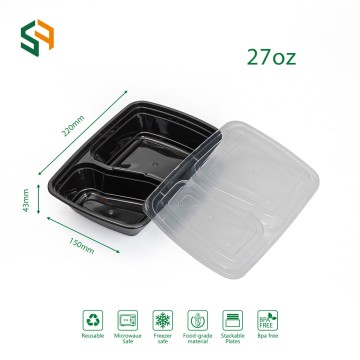
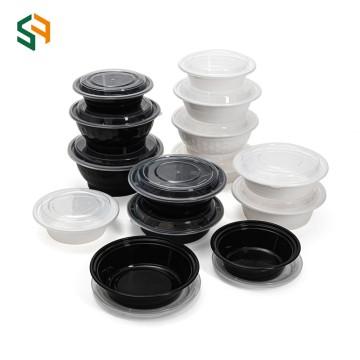
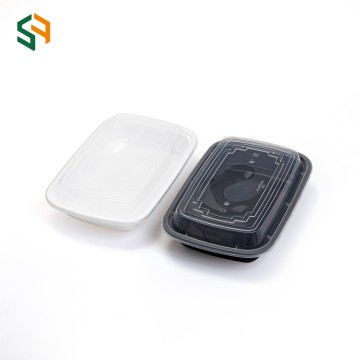
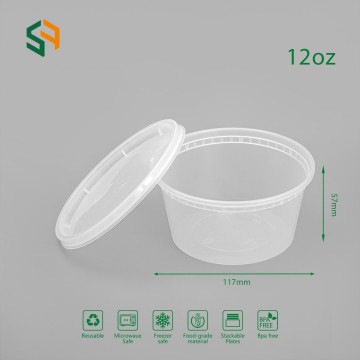
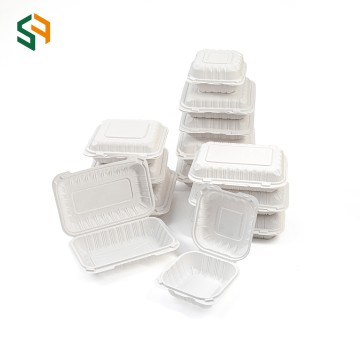
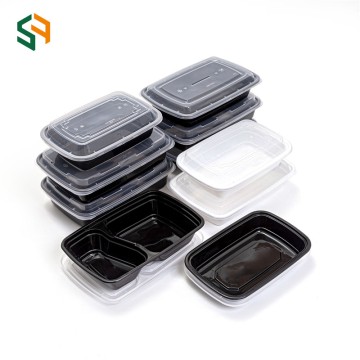
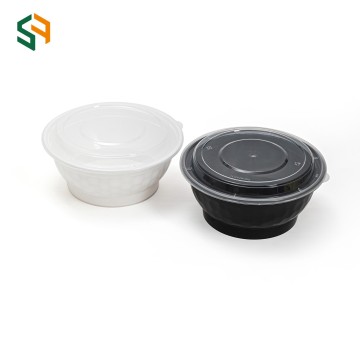
The global food industry is undergoing a monumental shift. Driven by rapid urbanization, accelerating lifestyles, and the rise of digital food delivery platforms, the demand for convenience has reached unprecedented heights. Ready-to-eat (RTE) meals, pre-packaged hot foods, and instant takeaway cuisines have evolved from occasional alternatives to daily dietary staples. Central to this convenience revolution is the packaging technology that protects, preserves, and facilitates the preparation of these meals: Plastic Takeaway Containers For Microwavable Ready-to-eat Hot Food Packaging.
Today's consumers demand more than just a container; they expect packaging that maintains the visual appeal, texture, and nutritional value of food throughout transportation and subsequent microwave heating. Consequently, the commercial and industrial landscape of takeaway food containers has transitioned from simple, single-use designs to highly engineered, smart packaging solutions. These modern containers are designed to handle temperatures ranging from sub-zero refrigeration to high-temperature microwave heating, ensuring structural integrity and chemical safety at every stage.
Optimized for supply chains, reducing transport costs through nesting and stackable designs, while extending food shelf life under cold chain conditions.
Engineered using food-grade Polypropylene (PP) and bio-based polymers that are 100% BPA-free and fully compliant with FDA and EU food contact regulations.
Designed to withstand high heat deformation (up to 120°C/248°F) without releasing toxic chemicals, softening, or leaking during reheating cycles.
The primary material utilized in microwavable takeaway packaging is Polypropylene (PP). PP is a thermoplastic polymer renowned for its high melting point (approximately 160°C to 171°C), which allows PP-based containers to comfortably withstand typical microwave heating temperatures of 100°C to 120°C. Unlike other plastics such as Polystyrene (PS) or Polyethylene Terephthalate (PET), which can deform or leach chemicals at elevated temperatures, PP retains its structural rigidity and chemical inertness when heated in a microwave.
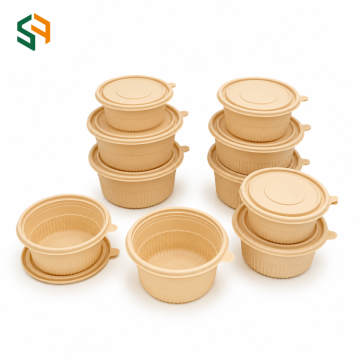
To meet modern industrial demands, polymer engineering has introduced modified PP and bio-based composites. These materials are customized to improve impact resistance at low temperatures (for frozen or chilled ready-to-eat meals) while maintaining high heat deflection temperatures. Furthermore, the integration of bio-based materials—such as corn starch blends—helps manufacturers reduce fossil fuel dependency, aligning production cycles with global carbon neutrality and environmental sustainability goals.
Modern meal prep services and central kitchens prepare foods in bulk, flash-freeze or chill them, and distribute them across vast logistics networks. Containers must possess exceptional sealing capabilities (often utilizing heat-sealable films) and high resistance to low-temperature cracking to protect food throughout the cold chain.
For immediate consumption, restaurants rely on containers that keep food hot during transit while preventing condensation buildup. Lids engineered with integrated steam-venting channels prevent pressure buildup and stop soggy food textures, ensuring an optimal dining experience upon arrival.
Retail environments require packaging that combines high-clarity anti-fog lids with sturdy bases. This allows consumers to clearly view the freshness of ready-to-eat meals on refrigerated shelves and directly place the container into a commercial microwave for quick heating without removing the lid.
Schools, hospitals, and corporate cafeterias require standardized, highly stackable, and multi-compartment containers. This helps keep different food components (such as protein, starch, and vegetables) separated to maintain flavor profiles and portion control during high-volume distribution.
To be your trusted partner in sustainable food packaging – delivering high-value products, reliable quality, and excellent service.
With years of experience in disposable tableware, we use 100% compostable, bio-based, and biodegradable materials to reduce fossil fuel dependency. Precision manufacturing ensures every container is durable, safe, and able to return to nature responsibly.
We are committed to a greener future – helping you serve meals in a way that protects both health and the planet.
The transition from traditional thermoforming to advanced positive-negative pressure automatic thermoforming has revolutionized the production of takeaway packaging. By integrating multi-station thermoforming machinery with robotic handling arms, modern manufacturing facilities can achieve high output speeds while maintaining strict dimensional tolerances. This precision is critical to ensuring that lids fit tightly onto containers, preventing leaks during transportation—a common pain point in the food delivery sector.
Furthermore, producing food-contact packaging demands strict hygiene standards. Leading manufacturers operate within high-standard clean workshops (equivalent to ISO Class 8) to eliminate dust and chemical contamination. Achieving certifications such as ISO 9001 (Quality Management), ISO 14001 (Environmental Management), and HACCP (Hazard Analysis Critical Control Point) is essential for supplying global food brands and complying with international import regulations.
Founded Fuzhou ZhengYiJia Plastic Products Co., Ltd., focusing on high-precision industrial blister trays.
Laid a solid manufacturing foundation with customized industrial packaging solutions.
Expanded to an 8,000 m² high-standard dust-free workshop.
Obtained ISO 9001 quality management system certification and QS certification to ensure a stable and controlled production environment that meets food safety requirements.
Upgraded from traditional thermoforming production lines to multi-station positive-negative pressure automatic thermoforming machines integrated with robotic arms.
Production efficiency and first-pass yield increased by over 30%, setting a new benchmark for precision and consistency in the industry.
Launched a full range of injection-molded lunch boxes for the fast-growing ready-to-eat meal market.
Built a 12,000m² high-standard clean workshop (equivalent to ISO Class 8) to achieve zero-contamination food packaging.
Obtained ISO 9001, ISO 14001 environmental management system, HACCP food safety management system, and QS certification, fully complying with global food contact material standards.
Established Fujian SeaFancy Technology Development Co., Ltd., primarily to produce American-style injection-molded lunch boxes and hinged-lid food containers, expanding into the global disposable food container market.
Launched dual-color corrugated boxes and bio-based biodegradable lunch boxes in response to global carbon neutrality goals.
Built an in-house sheet extrusion line to achieve full-process independent production of modified PP and bio-based biodegradable sheets – optimizing the supply chain and reducing carbon footprint.
Added another 6,000 m² high-standard clean workshop, bringing the total clean production area to 17,000 m².
Enabled large-scale, zero-contamination food packaging production to meet growing global demand, further deepening commitment to sustainable manufacturing.
As environmental regulations tighten globally, the packaging industry must balance functional performance with ecological responsibility. The future of microwavable food packaging lies in achieving a circular economy. This involves designing containers that are not only recyclable but are actively recycled through post-consumer waste streams. Manufacturers are increasingly utilizing single-polymer designs (such as pure PP) to simplify the recycling process, avoiding complex laminates that are difficult to separate.
Additionally, vertical supply chain integration is becoming a key competitive advantage. By manufacturing raw plastic sheets in-house, packaging companies can optimize material formulations for specific ready-to-eat hot food applications while maintaining strict control over the carbon footprint of their manufacturing processes. This holistic approach ensures that the convenience of microwavable takeaway food does not come at the expense of environmental health.
Partner with an industry leader backed by over two decades of manufacturing excellence, state-of-the-art cleanroom facilities, and a steadfast commitment to eco-friendly innovations.
Explore Our Full Range