Leave Your Message
Explore our top-tier, pressure-proof, and temperature-resistant containers specifically designed to maintain culinary integrity during transit.
The global foodservice industry has undergone a paradigm shift. Off-premise dining—comprising online delivery, curbside pickup, and traditional takeout—is no longer a secondary revenue stream for restaurants; it is a primary driver of brand equity and commercial growth. In this highly competitive digital marketplace, the physical container acts as the bridge between the kitchen and the dining table. The choice of plastic tray food packaging for restaurant food delivery and takeout is no longer just about containing food; it is about preservation, customer experience, and operational economics.
From an industrial perspective, the demands on food packaging have multiplied. Consumers expect meals to arrive at their doorsteps at optimal temperatures, visually intact, and completely leak-free. A single spill or soggy meal can result in immediate negative reviews, customer churn, and financial losses through refunds. Consequently, food packaging has transitioned from generic wrapping materials to highly engineered, structural solutions. Modern plastic trays utilize advanced polymer chemistry and precise thermoforming designs to withstand the rigorous conditions of transit via third-party delivery networks.
Studies show that over 60% of consumers cite food temperature and packaging integrity as critical factors when rating a delivery service. Upgrading to high-rigidity, microwave-safe, and leak-proof plastic trays directly reduces refund requests by up to 40% in high-volume delivery operations, converting packaging from a cost center into a customer retention asset.
In the manufacturing of plastic food containers, two primary processes dominate: thermoforming and injection molding. Thermoforming involves heating a plastic sheet (such as modified Polypropylene or PET) and forming it over a mold using vacuum and air pressure. This method is highly efficient for producing lightweight, high-volume containers with thin walls, offering cost-effective solutions for fast-casual takeout. Injection molding, on the other hand, injects molten plastic into a precision cavity, resulting in thicker walls, exceptional structural strength, and highly detailed features like secure snap-fit lids and integrated hinges. Modern manufacturers leverage both technologies to cater to diverse restaurant needs, balancing structural integrity with cost efficiency.
To be your trusted partner in sustainable food packaging – delivering high-value products, reliable quality, and excellent service.
With years of experience in disposable tableware, we use 100% compostable, bio-based, and biodegradable materials to reduce fossil fuel dependency. Precision manufacturing ensures every container is durable, safe, and able to return to nature responsibly.
We are committed to a greener future – helping you serve meals in a way that protects both health and the planet.
Every culinary style presents unique structural challenges to packaging. A container that works perfectly for a cold Caesar salad will fail catastrophically when filled with steaming ramen or a dense, multi-component curry. To address these challenges, packaging design must be tailored to specific application scenarios.
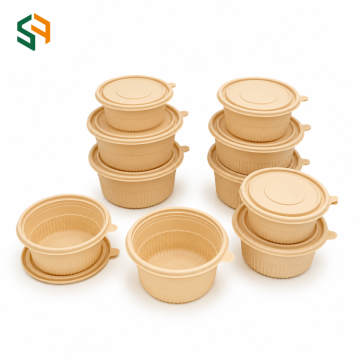
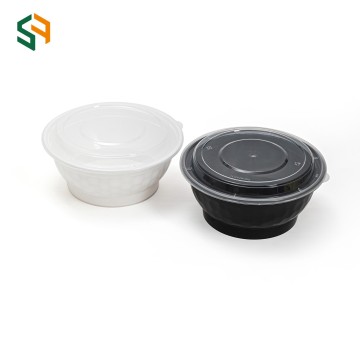
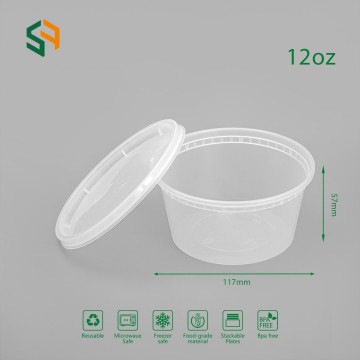
Liquid-heavy dishes require the absolute highest standard of leak prevention and thermal stability. Standard containers often warp when exposed to liquids above 90°C, causing the lid seal to fail. Advanced round PP (Polypropylene) bowls are engineered with double-rimmed hermetic seals and reinforced sidewalls. This prevents the container from collapsing when stacked and ensures that the steam pressure generated by hot liquids does not push the lid off during transit. Furthermore, microwave compatibility is crucial, allowing consumers to reheat the soup directly in its container without releasing harmful chemicals.
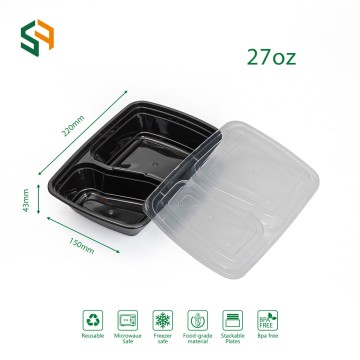
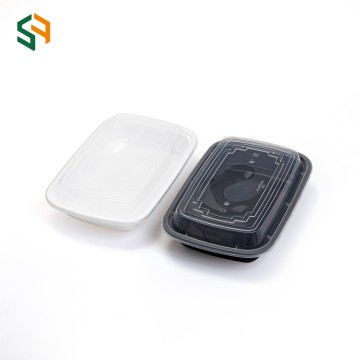
For premium bento boxes and healthy meal-prep services, presentation is paramount. Keeping components separate is essential to preserve individual textures and flavors—preventing sauce from migrating into rice or crispy vegetables from absorbing moisture. Multi-compartment rectangular plastic trays feature internal dividing walls that seal flush against the lid. This creates individual, air-tight zones within a single package, ensuring that cold salads and hot proteins can coexist in the same container without flavor cross-contamination.
Prevents cross-contamination of sauces and liquids between compartments during bumpy transits.
Maintains crystal-clear visibility of the food inside, enhancing premium visual presentation.
Enables delivery riders to stack multiple orders vertically in courier backpacks without crushing.
Withstands temperatures from -20°C to 120°C, ideal for storage, transport, and reheating.
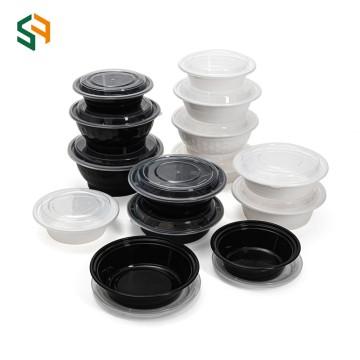
In high-velocity cloud kitchens, speed of assembly is a critical metric. Packaging must be designed for rapid "denesting"—meaning individual trays must separate easily from the stack without sticking. Lids must snap on securely with minimal physical effort from kitchen staff, yet remain firmly closed during transit. Additionally, space-saving nestable designs reduce warehouse storage requirements, optimizing the physical footprint of urban fulfillment centers.
The global push towards environmental sustainability has catalyzed significant innovations in material science. Historically, petroleum-based plastics dominated the market due to their low cost and excellent physical properties. Today, the industry is transitioning towards a hybrid approach that balances performance with environmental responsibility.
PP remains the gold standard for hot food delivery. It possesses a high heat deflection temperature, allowing it to withstand microwave heating without structural degradation. In modern manufacturing, PP is often modified with mineral fillers (such as calcium carbonate) to increase stiffness, reduce cooling times during thermoforming, and lower the overall polymer content. Furthermore, PP is 100% recyclable, fitting neatly into global circular economy initiatives. Closed-loop recycling systems are increasingly turning post-consumer PP into non-food-contact industrial items, reducing the demand for virgin fossil fuels.
To meet carbon neutrality targets, manufacturers have developed bio-based alternatives. Corn starch-derived polymers represent a major breakthrough. By blending natural starches with biodegradable polyesters, manufacturers produce sheets that behave similarly to traditional plastics during thermoforming but have a significantly lower carbon footprint. These containers are designed to biodegrade under industrial composting conditions, offering restaurants a powerful marketing tool to appeal to eco-conscious demographics.
Food security has become a primary consumer concern. Tamper-evident packaging features built-in locks or tear strips that must be broken to access the food. This guarantees to the customer that the meal has remained sealed since leaving the kitchen, eliminating anxiety regarding food safety during transit. Additionally, the integration of QR codes and smart tracking labels allows consumers to trace the origin of the ingredients and verify the sterilization standards of the packaging facility.
As the food delivery ecosystem continues to expand, the technical demands on packaging will only increase. Partnering with a manufacturer that controls the entire production cycle—from sheet extrusion to cleanroom thermoforming and injection molding—ensures consistent quality, supply chain resilience, and the ability to customize designs to meet evolving regulatory and market demands. High-performance, sustainable plastic tray packaging is ultimately an investment in your brand's reputation and operational success.
Browse our full range of certified, food-grade takeout bowls, cups, and multi-compartment lunch boxes.