



Leave Your Message
Standardized high-performance vessels formulated from bio-based starch composites and precision polypropylene to maximize operational velocity and delivery integrity.
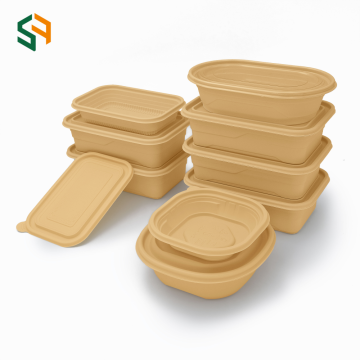
Engineered for dense entree stacking and superior thermal insulation in high-output delivery fleets.
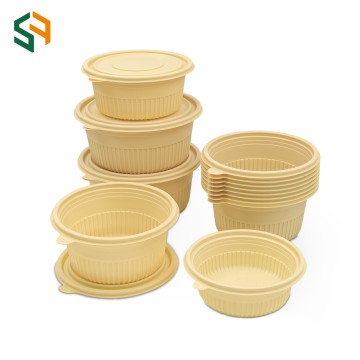
Deep-draw circular geometry built for broths, ramens, and curries with zero sidewall deformation.
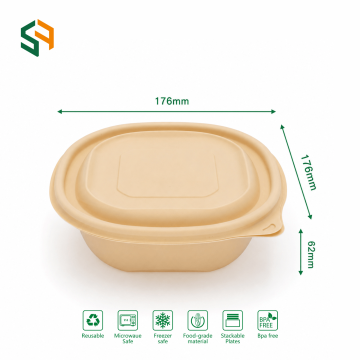
Compact cubic layout designed for standardized cloud kitchen bagging and quick meal assembly.
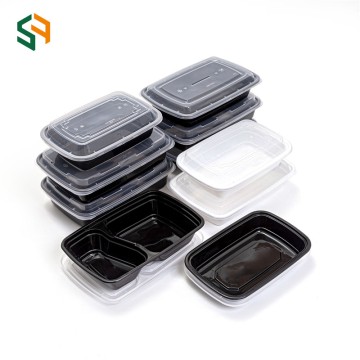
Anti-fog clear closures coupled with heat-resistant bases for seamless chef-to-courier validation.
The global commercial food service sector has undergone an irreversible structural migration toward decentralized, off-premise dining. Virtual kitchens, commonly designated as ghost kitchens or cloud kitchens, operate without traditional front-of-house customer touchpoints. Within this high-velocity operational paradigm, the takeaway container is no longer merely a packaging vessel; it constitutes the sole physical embodiment of the culinary brand and the critical interface governing food safety, heat retention, sensory preservation, and customer retention.
In high-density commercial kitchens where multiple virtual storefronts operate across parallel cooking lines, packaging standardization represents a fundamental profitability lever. Kitchen staff encounter split-second packaging windows. Food packaging that warps under boiling oil contact, leaks along perimeter seals during delivery transit, or generates lid-fitment ambiguity on the staging counter introduces immediate operational friction, inflating order error rates and triggering devastating negative online reviews.
Smart condensation venting prevents crisp coatings from degrading into moisture saturation while safeguarding core culinary temperatures above 65°C throughout 45-minute dispatch windows.
Continuous perimeter snap-beading eliminates oil creeping and liquid seepages under violent motorcycle delivery vibrations and multi-tier stacking compression loads.
High-proportion cornstarch biopolymer blends combined with modified mineral PP matrixes drastically lower reliance on virgin petroleum resins without compromising structural rigidity.
Enterprise procurement directors managing cloud kitchen facilities must evaluate food containers against rigorous Key Performance Indicators (KPIs): denesting speed, universal lid cross-compatibility, vertical compressive strength, and material compliance across global jurisdictions such as the European Single-Use Plastics Directive and US FDA food contact mandates. Precision-molded containers engineered with robotic automation ensure repeatable geometric tolerances down to the sub-millimeter level, eliminating human packaging failures at scale.
Navigating thermal resilience, hydrophobic resistance, and bio-based resin compositions across modern commercial foodservice platforms.
Commercial takeaway engineering relies on materials that can balance thermal insulation, non-reactive chemical stability against high-acidity tomato sauces, and greasy lipids at temperatures exceeding 100°C. Modified food-grade Polypropylene (PP) provides industry-benchmark resistance against grease permeation and supports safe microwave reheating without leaching endocrine-disrupting plasticizers.
Concurrently, cornstarch-based bio-composites blend industrial agricultural starches with degradable polymers to achieve a significantly lowered carbon footprint. The resulting bio-based meal boxes exhibit natural matte aesthetics, superior tactile rigidity, and elevated thermal retention, satisfying the urgent consumer demand for authentic environmental stewardship.
To be your trusted partner in sustainable food packaging – delivering highvalue products, reliable quality, and excellent service.
With years of experience in disposable tableware, we use 100% compostable, bio-based, and biodegradable materials to reduce fossil fuel dependency. Precision manufacturing ensures every container is durable, safe, and able to return to nature responsibly.
We are committed to a greener future – helping you serve meals in a way that protects both health and the planet.
From precision industrial blister manufacturing to global-scale bio-based cleanroom production lines, our corporate evolution reflects an unyielding commitment to industrial excellence.
Founded Fuzhou ZhengYiJia Plastic Products Co., Ltd., focusing on high-precision industrial blister trays.
Laid a solid manufacturing foundation with customized industrial packaging solutions.
Expanded to an 8,000 m² high-standard dust-free workshop.
Obtained ISO 9001 quality management system certification and QS certification to ensure a stable and controlled production environment that meets food safety requirements.
Upgraded from traditional thermoforming production lines to multi-station positive-negative pressure automatic thermoforming machines integrated with robotic arms.
Production efficiency and first-pass yield increased by over 30%, setting a new benchmark for precision and consistency in the industry.
Launched a full range of injection-molded lunch boxes for the fast-growing ready-to-eat meal market.
Built a 12,000m² high-standard clean workshop (equivalent to ISO Class 8) to achieve zero-contamination food packaging.
Obtained ISO 9001, ISO 14001 environmental management system, HACCP food safety management system, and QS certification, fully complying with global food contact material standards.
Established Fujian SeaFancy Technology Development Co., Ltd., primarily to produce American-style injection-molded lunch boxes and hinged-lid food containers, expanding into the global disposable food container market.
Launched dual-color corrugated boxes and bio-based biodegradable lunch boxes in response to global carbon neutrality goals.
Built an in-house sheet extrusion line to achieve full-process independent production of modified PP and bio-based biodegradable sheets – optimizing the supply chain and reducing carbon footprint.
Added another 6,000 m² high-standard clean workshop, bringing the total clean production area to 17,000 m².
Enabled large-scale, zero-contamination food packaging production to meet growing global demand, further deepening commitment to sustainable manufacturing.
Configured engineered packaging matched directly to high-turnover dark kitchen hubs, central commissary distribution networks, and institutional dining platforms.
Engineered for dense thermal consolidation when bundling disparate virtual storefront orders into solitary courier dispatches.
Designed with structural anti-implosion sidewall ribs that resist hydraulic pressure spikes encountered in delivery transits.
Optimized footprint fitting standardized corrugated shipping totes for refrigerated DTC macro-balanced dietary services.
Anti-fog lid polymer formulation ensures culinary presentations remain vibrant under hot holding heat lamps.
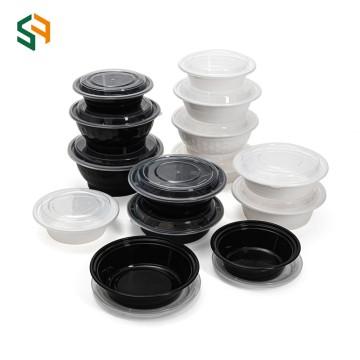
Ultra-durable injection-molded food vessels tailored for high-speed robotic packing lines and bulk sauce delivery.
Fluorochemical-free hydrophobic coatings withstand searing stir-fry oils without surface softening or bottom seepages.
Enhanced rigidity at refrigerator temperatures prevents crisp produce from sweating and losing textural distinction.
Designed for high-speed automated denesting equipment across university dining, hospital systems, and airline commissaries.
Enterprise procurement professionals auditing disposable tableware across franchised restaurant networks and cloud kitchen conglomerates evaluate packaging through Total Cost of Ownership (TCO). While raw unit pricing remains an essential financial metric, indirect operational expenses associated with carton palletization density, lid inventory consolidation, assembly line speed, and delivery leakage chargebacks constitute up to 40% of the true realized cost per meal delivered.
By leveraging integrated extrusion and precision thermoforming, our standardized footprint architecture enables cross-lid interoperability: a single lid size seals across multiple container depth profiles (e.g., 500ml, 750ml, and 1000ml). This consolidates kitchen SKU management, reduces operator handling errors during peak delivery rushes, and optimizes warehouse pallet volumetric efficiency by up to 22%.
Furthermore, vertical integration—spanning raw modified PP and bio-based starch sheet extrusion through to robotic thermoforming in our 17,000 m² clean production facility—shields international enterprise buyers from intermediate markups and shipping volatility. Rigorous adherence to ISO 9001, ISO 14001, and HACCP compliance standards guarantees full batch traceability, seamless customs clearance across European and North American borders, and uncompromised food safety assurance for global dining brands.