Leave Your Message
High-clarity, high-rigidity food packaging designed specifically for extreme thermal gradients, commercial microwave re-thermalization, and rapid automated filling lines.
How geometric optimization, polymer heat performance, and automated cold-chain logistics have shifted demand toward square-footprint microwavable vessels.
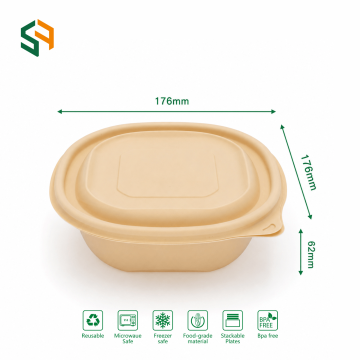
Square polypropylene containers deliver up to 28% higher space utilization inside secondary master cartons, automated automated guided vehicle (AGV) racking, and retail refrigerated display shelves compared to conventional round formats, drastically reducing per-unit shipping carbon footprints.
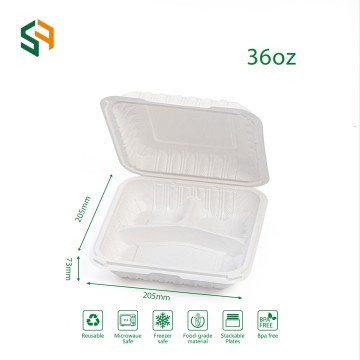
Engineered food-contact grade PP resins endure electromagnetic radiation without polymer degradation or plasticizer migration. Our containers withstand operating temperatures from -20°C deep freezing up to +120°C high-energy microwave regeneration without deformation.
Engineered perimeter flanges and dual-seal snap-fit rims prevent oily liquid venting and condensation leaks during the violent boiling phases of hot curry, soup bases, and gravy reheat cycles during microwave reheating.
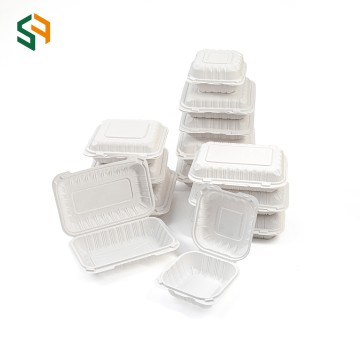
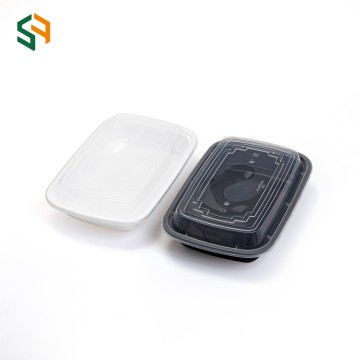
The global ready-to-eat (RTE) meals landscape has witnessed unprecedented velocity, spurred by consumer convenience habits, accelerated dark-kitchen models, and the institutionalization of super-chilled convenience food displays. Central to this supply chain is the functional integrity of the packaging substrate. While round vessels were historic standards due to mold simplicity, modern industrial food packaging demands rigorous cube-space optimization and consistent volumetric heat dispersion. Square plastic food storage containers for microwavable ready-to-eat hot food packaging have emerged as the definitive solution for commercial food processors, commissaries, and commercial brands demanding both logistical yield and end-consumer safety.
A primary failure mode in microwave food packaging is brittle fracture during cryogenic distribution, followed by structural softening, sidewall sagging, or hot-oil pinholing during microwave heating. Polypropylene (PP) is the gold standard for microwave compatibility, yet standard injection polymers often fail under combined freeze-and-heat duty cycles.
By compounding specialized random copolymers or utilizing mineral-filled polypropylene (MFPP), our containers achieve a balanced flexural modulus and thermal deflection limit. When hot entrées containing dense lipid concentrations (such as butter curries, braised pork sauces, or emulsified oils) reach localized thermal spikes above 105°C under 1000W microwave radiation, the polymer matrix resists melting, leaching, and odor dissipation.
In freight transportation and warehouse logistics, empty perimeter space equates to stranded expenditure. Round plastic bowls inherently create void space ratios approximating 21.5% inside a standard pallet footprint (due to radial tangent gaps). In contrast, square containers engineered with calculated corner draft angles virtually eliminate dead freight volume.
This structural geometry brings multiple benefits throughout commercial production:
The applications for high-performance square microwavable packaging extend far beyond standard takeout leftovers:
A. Centralized Kitchen Batch Preparation: Industrial commissaries cooking thousands of portions daily require containers capable of accepting hot-fill gravies up to 85°C, surviving blast chillers down to -18°C within two hours, and maintaining hermetic seal integrity throughout automated distribution.
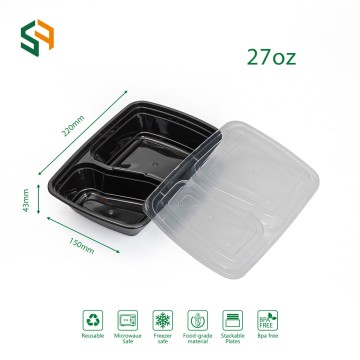
B. Institutional & Healthcare Dietary Distribution: Hospitals, care facilities, and airline catering rely on square multi-compartment containers to keep proteins, starches, and steamed vegetables organoleptically separated without flavor cross-contamination prior to microwave regeneration.
C. Commercial Vending and Micro-Markets: Unattended corporate pantries and smart induction/microwave kiosks require structurally rigid containers that do not crush when dropped via gravity-fed internal vending coils or pick-and-place grippers.
As single-use plastics face stringent regulatory oversight worldwide (such as the EU Packaging and Packaging Waste Directive and state-level EPR regulations across North America), material innovation has become mandatory. The shift encompasses two complementary trajectories:
First, lightweighting through high-precision micro-cavity injection molding reduces gross plastic mass per unit without sacrificing top-load compression resistance. Second, integrating bio-based additives such as food-grade cornstarch and mineral fillers (MFPP) diminishes reliance on virgin petrochemical feedstocks while accelerating degradability pathways or mechanical recycling streams under standardized PP recycling #5 codes.
To be your trusted partner in sustainable food packaging – delivering high-value products, reliable quality, and excellent service.
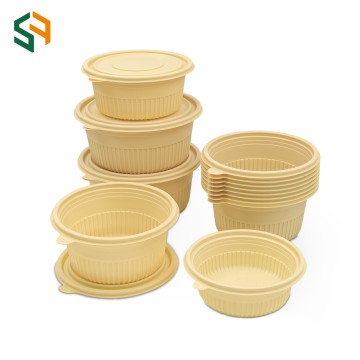
With years of experience in disposable tableware, we use 100% compostable, bio-based, and biodegradable materials to reduce fossil fuel dependency. Precision manufacturing ensures every container is durable, safe, and able to return to nature responsibly.
We are committed to a greener future – helping you serve meals in a way that protects both health and the planet.
Two decades of manufacturing evolution, continuous workshop expansion, and technological innovation in clean food packaging solutions.
Explore our full line of thermoformed and injection-molded meal containers, engineered for superior microwave performance, thermal resilience, and eco-friendly compliance.