Leave Your Message
In the rapidly transforming global food and beverage landscape, off-premise dining has transitioned from a secondary revenue stream to the core business model for thousands of operators. With the meteoric rise of third-party delivery applications, digital ordering platforms, and specialized cloud kitchens—often called ghost kitchens or virtual brands—the physical connection between the kitchen and the diner has changed forever. Today, the dining room is replaced by a delivery vehicle, and the table setting is replaced by the take out container. As a result, commercial food service packaging is no longer just a vessel for transport; it is the ultimate physical touchpoint of your brand, dictating food quality, consumer satisfaction, and operational viability.
For cloud kitchens operating high-volume, multi-brand operations under one roof, speed and efficiency are critical. In these environments, chefs do not have time to struggle with complex or unreliable packaging. Lids must snap shut quickly and securely, containers must stack safely without slipping, and the packaging must maintain food temperature during long transits. Modern commercial food service operators require packaging solutions designed with industrial precision, balancing material performance, thermal efficiency, and environmental sustainability.
Global consumer demand has shifted permanently toward convenience. However, this convenience cannot come at the expense of product presentation or environmental integrity. Modern takeaway containers must deliver a premium unboxing experience while utilizing recyclable or bio-based materials to meet strict carbon-neutral targets.
The manufacturing and design of take out containers have undergone significant technological advancements. Historically, the food service industry relied heavily on expanded polystyrene (EPS) and single-use plastics. However, regulatory bans and shifting consumer expectations have driven a massive industrial migration toward advanced polymers like Polypropylene (PP) and bio-based, compostable alternatives. PP has become the industry standard for microwavable food containers due to its exceptional heat tolerance, structural integrity, and recyclability. Unlike older materials, modern PP containers can withstand temperatures up to 120°C (248°F), making them completely safe for microwave reheating and hot-fill applications.
From an industrial manufacturing perspective, the focus is now on high-precision automation. Advanced thermoforming processes utilizing multi-station positive and negative pressure machines ensure consistent wall thickness, tight lid-to-container tolerances, and structural reinforcement in critical stress zones. This precision is vital: even a fraction of a millimeter deviation in lid fitment can result in leakage during delivery, leading to customer complaints and refunded orders. By integrating robotic arms and cleanroom manufacturing (equivalent to ISO Class 8 standards), manufacturers can achieve zero-contamination production at a scale that satisfies the massive demand of global restaurant chains and cloud kitchen networks.
Cloud kitchens operate differently than traditional restaurants. They are highly optimized, technology-driven spaces focused purely on preparation speed and delivery logistics. The packaging chosen must reflect this operational reality. Let us explore the deep application scenarios where specialized take out containers make a decisive difference:
During peak hours, a single cloud kitchen station may process hundreds of orders for multiple virtual brands. Packaging must be designed for rapid deployment. Containers with ergonomic nesting designs allow staff to separate and grab individual containers instantly. Lids with tactile and audible snap-fit mechanisms let packers know a container is sealed without wasting time checking the edges, accelerating the pass-through time from kitchen to courier.
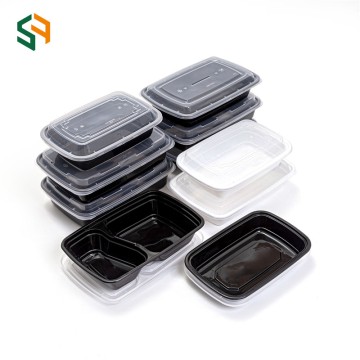
Delivery food is subject to long transit times, often in varying weather conditions. The thermal dynamics of the packaging are critical. Rectangular microwavable containers with clear lids provide excellent insulation to retain heat. At the same time, engineered venting solutions help manage steam release. Without proper venting, steam condenses on the lid and drips back onto the food, turning crispy textures soggy. Modern packaging solves this by incorporating micro-vents or anti-fog coatings on clear lids, keeping food fresh and visually appealing.
Courier bags are packed tightly, and delivery riders often travel via motorcycles or bicycles over uneven roads. Containers must stack securely on top of one another without sliding. Base-to-lid interlocking designs ensure that stacked containers lock into place, distributing vertical pressure evenly and preventing the bottom containers from crushing. This structural stability is essential for preserving the presentation of multi-course meals during transit.
When food arrives, consumers expect convenience. Microwavable takeaway containers allow customers to reheat their meals directly in the packaging. This eliminates the need to transfer food to domestic dishes, reducing household cleanup and enhancing the overall dining experience. The use of clear lids also allows consumers to monitor the reheating process without removing the cover, preserving moisture and flavor.
To be your trusted partner in sustainable food packaging – delivering high-value products, reliable quality, and excellent service.
With years of experience in disposable tableware, we use 100% compostable, bio-based, and biodegradable materials to reduce fossil fuel dependency. Precision manufacturing ensures every container is durable, safe, and able to return to nature responsibly.
We are committed to a greener future – helping you serve meals in a way that protects both health and the planet.
As we look toward the future of commercial food service, several trends are poised to redefine the packaging industry. Operators who adapt to these trends early will secure a significant competitive advantage:
While traditional PP remains highly recyclable, the industry is investing heavily in bio-based alternatives. These materials, derived from renewable resources such as corn starch, sugarcane, or bamboo fibers, offer a significantly lower carbon footprint. When integrated with advanced manufacturing techniques, these biodegradable sheets can match the strength, oil resistance, and thermal properties of conventional plastics, allowing brands to transition to fully compostable solutions without sacrificing performance.
As cloud kitchens rely entirely on digital transactions, packaging is becoming digitized. The integration of QR codes on lids or containers allows brands to engage with consumers post-delivery. Through a simple scan, customers can access allergen information, track the carbon footprint of their packaging, view cooking or reheating instructions, or unlock loyalty discounts. This digital bridge helps virtual brands build lasting relationships with customers in the absence of a physical dining room.
Global supply chain volatility has highlighted the importance of vertical integration in packaging manufacturing. Companies that control the entire production process—from raw material sheet extrusion to final thermoforming and packaging—can guarantee consistent quality, mitigate supply chain delays, and optimize production costs. This vertical control allows for rapid prototyping and customization, enabling food service brands to design and deploy bespoke packaging shapes that fit their unique menu items perfectly.
Innovation, Quality & Sustainability