Leave Your Message
Engineered for maximum thermal efficiency, leak prevention, and seamless stackability in fast-paced delivery environments.
The global quick-service restaurant (QSR) and fast-food landscape is undergoing a monumental paradigm shift. Once dominated by simple, single-use paper wraps and expanded polystyrene (EPS) clamshells, the industry has transitioned into a sophisticated space where packaging is recognized as a critical touchpoint for brand identity, operational efficiency, and environmental responsibility. With the meteoric rise of third-party delivery applications and mobile ordering, packaging is no longer just a container; it is the physical extension of the restaurant's kitchen, tasked with preserving food integrity across miles of transit.
Today's food service chains face a multi-faceted challenge: they must source containers that are cost-effective, structurally resilient, thermally efficient, microwave-safe, and visually appealing, all while complying with increasingly stringent global plastic bans and sustainability regulations. This has driven massive innovation in materials science, leading to the development of advanced polypropylene (PP) formulations, bio-based composites, and mineral-filled structures that dramatically reduce fossil fuel dependency while retaining the mechanical properties required for hot, oily, and heavy food items.
From an industrial standpoint, the fast-food supply chain demands packaging that can withstand intense physical stress. During peak hours, QSR staff must pack meals at lightning speed. Containers must stack seamlessly without slipping, resist crushing when stacked multiple layers high in a delivery rider's thermal bag, and feature secure closure mechanisms that give a distinct "snap" to confirm a leak-proof seal. Furthermore, the rise of ghost kitchens—optimized strictly for delivery—has put even greater pressure on packaging manufacturers to deliver standardized, high-yield solutions that integrate seamlessly with automated or semi-automated kitchen assembly lines.
Different culinary offerings demand tailored packaging dynamics. A container designed for a cold Caesar salad will fail miserably if filled with piping-hot teriyaki chicken. Understanding these application scenarios is crucial for QSR chains looking to optimize their packaging inventory.
For hot entrees, soups, and gravies, the container must handle temperatures exceeding 100°C. Traditional polystyrene melts and releases harmful chemicals under these conditions. Modern microwavable takeaway containers utilize high-grade polypropylene (PP) or mineral-filled PP. These materials remain structurally sound in the microwave, allowing consumers to reheat their meals safely at home without transferring food to another dish. The inclusion of integrated steam vents in the clear lids prevents pressure buildup while allowing steam to escape, keeping fried items crispy rather than soggy.
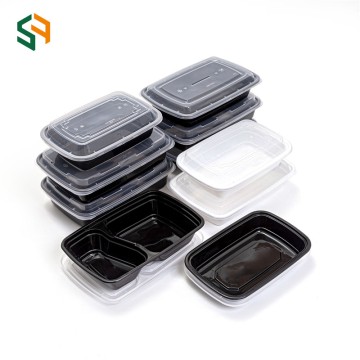
The modern delivery ecosystem involves multi-stop routes where containers are stacked in insulated backpacks. Our rectangular and round take out containers feature engineered perimeter reinforcing ribs. This design distributes the vertical load outward rather than downward, allowing up to five filled containers to be stacked safely without the bottom container buckling. The matching clear lids are designed with recessed wells that lock into the base of the container above it, preventing lateral shifting during transit on motorcycles or bicycles.
Cold food packaging requires a focus on visibility and freshness preservation. High-clarity lids treated with anti-fog coatings are essential here. Condensation inside a container can make fresh greens look unappealing and damp. By applying food-safe anti-fog technology, the lid remains crystal clear, highlighting the vibrant colors of ingredients and driving impulse purchases in grab-and-go displays. Additionally, tight perimeter seals keep oxygen exchange to a minimum, extending the shelf-life of pre-packaged salads and cold wraps.
To be your trusted partner in sustainable food packaging – delivering highvalue products, reliable quality, and excellent service.
With years of experience in disposable tableware, we use 100% compostable, bio-based, and biodegradable materials to reduce fossil fuel dependency. Precision manufacturing ensures every container is durable, safe, and able to return to nature responsibly.
We are committed to a greener future – helping you serve meals in a way that protects both health and the planet.
As regulatory landscapes evolve, packaging manufacturers must innovate beyond conventional plastics. The integration of bio-based materials, compostable polymers, and highly recyclable post-consumer resins (PCR) is shaping the future of QSR packaging. By utilizing modified polypropylene (PP) and bio-based sheets, we achieve a significant reduction in carbon footprint without compromising the structural integrity, oil resistance, or thermal properties that fast-food operators depend on.
Furthermore, our in-house sheet extrusion lines allow for full-process control. We can adjust the density, thickness, and composition of the raw materials to meet specific client needs. For example, by introducing natural minerals into the PP matrix, we can reduce the overall plastic content by up to 40%, creating a container that is stiffer, more heat-resistant, and significantly more eco-friendly. This vertical integration ensures that every step of production—from raw pellet to finished container—is optimized for resource efficiency and quality assurance.
A journey of manufacturing excellence, automation breakthroughs, and global expansion from 2005 to 2026.
As we look toward the future of the food service industry, several key trends are emerging that will define the next generation of take out containers. First, the integration of smart indicators—such as temperature-sensitive color-changing inks—will offer consumers visual proof that their food has been kept at safe temperatures during transit. Second, the push for circular economy systems means containers must not only be recyclable in theory but widely recycled in practice. This requires clear labeling, standardized resin usage, and partnerships with local waste management facilities.
Furthermore, food safety standards will continue to tighten globally. Brands that proactively eliminate PFAS (per- and polyfluoroalkyl substances) and other harmful chemical additives from their packaging lines will gain a significant competitive edge. By maintaining ISO Class 8 cleanrooms and adhering to strict HACCP protocols, we ensure that every single container leaving our facility meets the highest global standards for food safety and purity, protecting both your customers and your brand reputation.
Explore our full range of high-durability, microwavable, and eco-friendly takeout packaging solutions.